

The Mountain Path is the official journal of Sri Ramanasramam, Tiruvannamalai.
Mountain Path is dedicated to Bhagavan Sri Ramana Maharshi
Mountain Path - Founded 1964 By Arthur Osborne
Editor: Dr. Venkat S. Ramanan, President, Sri Ramanasramam
This is the web version of the 'Mountain Path' Journal
The aim of this journal will be to set forth the traditional wisdom of sanatana dharma with emphasis on Vedanta, as testified and taught by the great sage Sri Ramana Maharshi, and to clarify his path for seekers in the conditions of our modern world.
CONTENTS
- Divine Names of Arunachala - S. Lazar
- From the Editor’s desk
- The Divine Framework of Ramana Bodham - Dr. S. Ram Mohan
- Maharshi – Vaisvanara – The Fire - Part Two - Kays
- The Sat-Guru - Dr. T.N.K
- Tirukkuṛaḷ: The Wisdom of Sage Tiruvaḷḷuvar - M.R. Kodhandram
- Essence of Sri Ramana Paravidyopanishad - V. Krithivasan
- Muruganar in His Own Words - Part Six - Hari Moorthy
- Pratyabhijñā and the Teachings of Ramana Maharshi - B. Ganeshan
- The Divine Grace - V.S. Krishnan
- The Blessed Life of Sant Bhanudasa - Nabaji Siddha
- Keyword: Hṛdaya - Part Two - Ramesh Iyer
- The Paramount Importance of Self-Attention - Sadhu Om
- Bhagavan: His Teachings Are His Presence - D. Thiyagarajan
- Association With Sages - B.K. Croissant
- Question & Answer
- Nondi’s Corner and Youth Corner
- Book Review - M. Giridhar
- Ashram Bulletin
Divine Names of Arunachala
38. |
ॐ कालमूर्तये नमः |
OM kaalamuurttiH namaH |
|
Embodiment of time. |
One of Lord Siva's most beloved forms is that of Kala Bhairava. Kala means time, emptiness, and blackness, while Bhairava is open to several interpretations, including "one whose roar is terrible" and "he who bears the universe." Thus, the name Kala Bhairava refers to one who controls time, but who is also beyond it and, in fact, feared by time itself.
The origin of this form of Lord Siva is familiar. The Siva Purana states that Lord Brahma, the Creator, became arrogant in supposing that he was equal to Lord Siva. On hearing this, Lord Siva created another form of himself, more terrible - naked, wearing a garland of skulls, baring vicious fangs. This new being promptly severed Brahma's fifth head, and the Creator became repentant.
Lord Brahma, just as in the origin story of Arunachala as a column of light, represents the mind. This mind is capable of spinning innumerable universes. What it is not capable of creating is the effect of time, that ultimate law which matures all karmas and which is the seed of liberation.
Arunachala, in the form of Kala Bhairava, the embodiment of the laws of the universe which are ultimately out of our control, is that which impels us, ultimately, to surrender to the realization of something greater than ourselves. Then we will see that those natural processes of death and decay were themselves also the work of divine grace, the awesome beauty of our own beneficence.
— S. Lazar
FROM THE EDITOR'S DESK
The Importance of Enthusiasm and Cheerfulness
All meaningful achievements require strong self-motivation and a steady, cheerful spirit. These qualities arise naturally when the goal is deeply meaningful, inspiring an unwavering commitment to its pursuit.
Consider a person aspiring to become a world champion in tennis. To achieve their dream, they need a clear vision of success (lifting the Wimbledon trophy), essential qualifications (physical and mental stamina, athletic ability), a capable guide (an exceptional coach), a well-defined path (a regimen of exercise, diet, and practice), and financial resources (to support training and travel).
When all these elements align, it is a rare blessing. A mature person recognizes this good fortune and moves forward tirelessly and joyfully, driven by their dream. Even through setbacks, they summon enthusiasm and persist. Though the journey may take years of effort, it is cherished rather than resented, for it gives life purpose.
In contrast, those without a clear goal often drift into habits that drain vitality, such as excessive TV, idle gossip, or endless scrolling on their phones. Over time, these distractions lead to emptiness and negativity, leaving many to face old age with regret.
The Spiritual Quest is No Different
Adi Shankara, in Vivekachudamani1 (verse 3), states:
"There are three things rare indeed and due to the grace of God---namely, a human birth, the longing for Liberation, and the protecting care of a perfected sage."
A mature seeker recognizes the immense fortune of having all three blessings upon coming to Bhagavan - the sadguru.2 In his poetic composition, Appalam Paatu, Bhagavan condenses the essence of Self-enquiry and the path to realization:
A clear vision of success -- Attaining jnana - the truth of Being-Awareness-Bliss2, abiding as the Self alone. 3
Essential qualifications -- Holy company, mind control, self-restraint, non-attachment, and virtuous inclination.4
A capable guide -- Bhagavan, the sadguru.2
A well-defined path -- Heed the word unique, unspoken, taught by the sadguru.2
No financial resources required -- This is an internal quest, accessible to all.
Clarity of the Goal Fuels Enthusiasm
The first step in cultivating enthusiasm is to understand the goal. Without clarity, the spiritual path may feel arduous, as it demands discipline and detachment from worldly pleasures. Many seekers remain unclear about the goal, what the truth of Being-Awareness-Bliss means, or what abiding as the Self alone entails. Some mistakenly believe the aim is acquiring supernatural powers, mystical experiences, or material blessings.
Since the Self cannot be grasped by the senses, only a sadguru can illuminate the goal. Bhagavan clarifies this in Who Am I? (Q.25):
"Remaining quiet is what is called jnana drishti (wisdom-insight). To remain quiet is to resolve the mind in the Self. Telepathy, knowing past, present, and future happenings, and clairvoyance do not constitute wisdom-insight."
The question then arises --- why resolve the mind in the Self? Unless the result is compelling, one will lack the inspiration to pursue it. Through his life and teachings, Bhagavan shows that abiding as the Self brings true peace --- lasting happiness, clarity, a deep sense of protection, and unwavering inner fullness. This is not an abstract ideal but the most practical and worthwhile goal.
Bhagavan often referred to deep sleep as an example, where we are free from mind and body identification (mind is resolved in the Self) yet experience complete rest.5 He explained that the spiritual path enables us to bring this same bliss into the waking state through self-enquiry. Unlike worldly success, which relies on external factors that come at a price, this bliss is naturally within us, costing nothing, just like sleep.
The Joy of Wholehearted Pursuit
When we develop the spiritual maturity to recognize that this is life's highest goal, everything changes. Life becomes deeply purposeful. Accepting Bhagavan as our Guru, we follow his teachings with enthusiasm, and he blesses us with the inspiration to persevere with joy.
Bhagavan describes the ideal spirit in Appalam Paatu:
"In the heart-mortar, place the dough,/ And the mind-pestle inward turned,/ Pound it hard with strokes of 'I, I', / Then flatten it with the rolling pin Of stillness on the level slab (of Being), Work away, untiring, steady, cheerful."
The manner in which this song emerged highlights Bhagavan's cheerful approach to life. His mother wished to make appalams for him, knowing he liked them. In response, rather than delivering a solemn sermon, he playfully composed this song, turning appalam-making into a blueprint for the spiritual quest. How blessed Mother Azhagammal was to receive this priceless teaching from her son, captured in such beautiful poetry for the lasting benefit of devotees!
A devotee once asked Bhagavan how to deal with lapses in practice6:
D: When an effort is made to live rightly and focus on the Self, there are often setbacks. What should be done?
M: It will come all right in the end. Your steady impulse of determination sets you back on your feet after every fall. Gradually, obstacles dissolve, and your current grows stronger. Everything comes right in the end. Steady determination is what is required.
Similarly, in the Bhagavad Gita (18.26), Lord Krishna describes the qualities of an ideal seeker:
"The performer is said to be in the mode of goodness when he or she is free from egotism and attachment, endowed with enthusiasm and determination, and equipoised in success and failure."
The Fruit of Such an Attitude
Bhagavan approached every task with total absorption, never with dullness. His alertness, enthusiasm, and unwavering focus remained constant. Even in illness, he bore suffering without complaint, accepting everything as God's gift (prasadam). He wrote inspired poetry and exuded warmth and joy. Far from an aloof sage, he was a delight to be around---children and animals were naturally drawn to him. His laughter filled the air, uplifting all in his presence.
By following Bhagavan's path, we imbibe this spirit. We perform our worldly duties sincerely, without the burden of doership. Work is done with full attention, without brooding over results. The mental clutter reduces automatically. Efficiency improves, and we gain the respect and affection of others. The rest of our time is dedicated to turning inward---through japa, selfless service, and vichara. Wealth, fame and power may or may not come, as these are tied to karma, but life becomes harmonious, filled with light and contentment.
Just as disciplined training becomes second nature to an athlete, sadhana that once seemed laborious becomes effortless with practice. We look forward to Satsanghs, where we meet fellow Ramana devotees to practice His teachings at regular intervals. Chanting hymns, whether aloud or in the mind, brings joy. Reading and discussing Bhagavan's life and teachings nourishes the soul. Solitude and meditation bring profound peace. Gratitude fills our hearts, as we see everything, both joys and hardships, as his prasadam, guiding us closer to him.
Holding onto the I-thought and tracing its source becomes our focus. Gradually, unnecessary thoughts fade, and we sense the presence of the true Self within as a steady current. Attractions to worldly pleasures such as movies, sports, and parties, diminish, not through forced renunciation, but naturally. As Arthur Osborne beautifully put it7: "And the result? Not boredom, as some might suppose. Boredom is in the mind, in fact, is the mind's defense against anything approaching a vacuum. Rather, there was an immense euphoria." The fruit is therefore not dull quietness, but a vibrant inner calm that remains unaffected by external circumstances.
The Role of Grace
Only when we glimpse the greater beauty within do we understand the true import of Bhagavan's teachings. That glimpse is grace. When a devotee asked Bhagavan how to gain divine grace, he replied, "Surrender." 8 Let us then surrender completely to Bhagavan and pray to him as he did to Arunachala in Aksharamanamalai (verse 8). 9
Bhagavan declared:"The only useful purpose of the present birth is to turn within and realize the Self. There is nothing else to do."10
Thus, the pursuit of jnana is life's highest purpose. The sooner we recognize this truth and commit ourselves wholeheartedly to the journey with Bhagavan's grace, the more fulfilling our lives will become.
In humility and devotion,
Venkat S. Ramanan
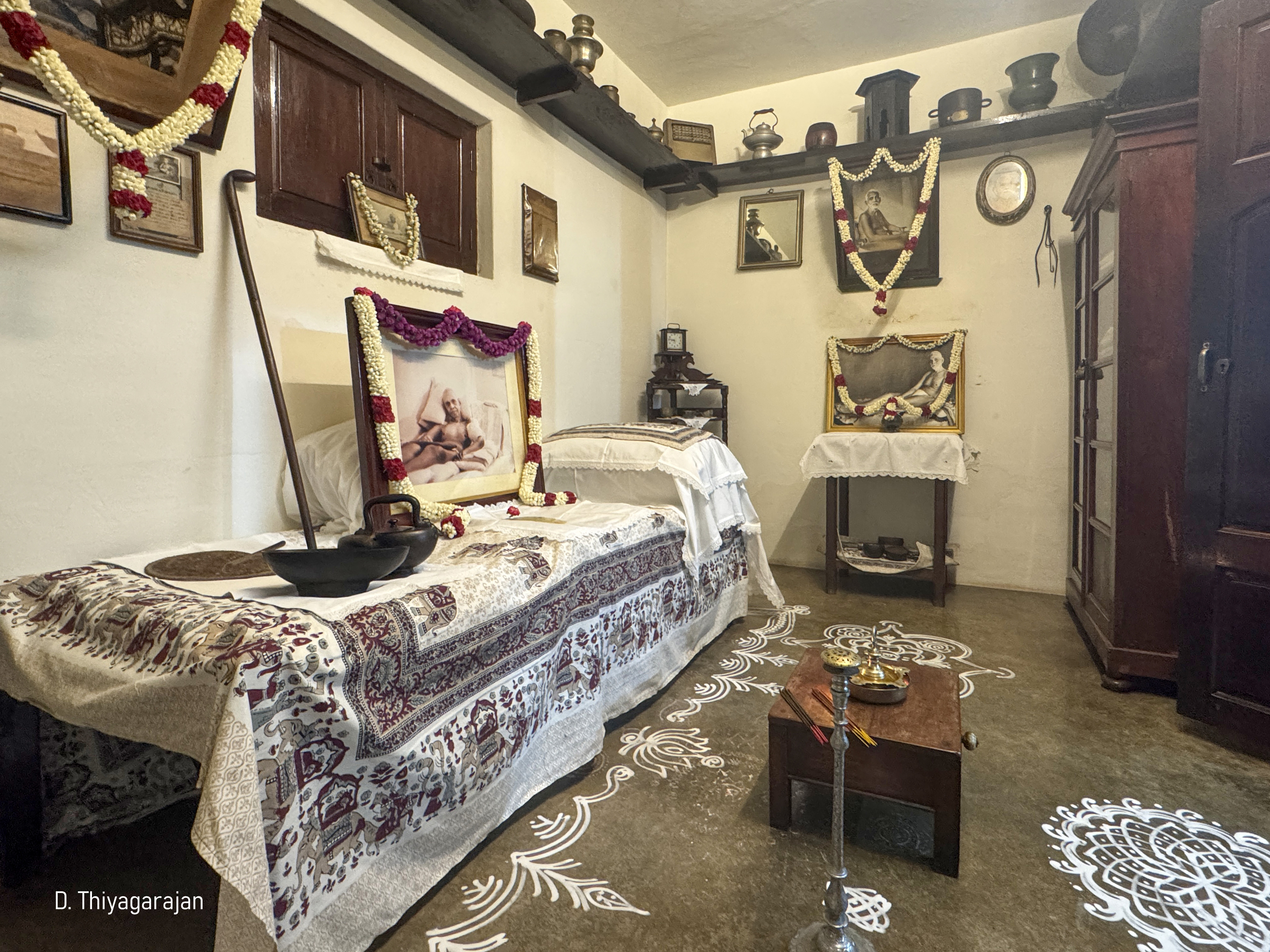
The Divine Framework of Ramana Bodham
S. Ram Mohan
Dr. S. Ram Mohan is the author of numerous articles on Bhagavan’s teachings and is currently the editor of Ramanodhayam, the Tamil magazine of the Ramana Kendra in Chennai.
The workings of the Divine are governed by an ever-evolving universal plan. Throughout the ages, this plan adjusts itself in harmony with the inner nature and aspirations of humanity. In each era, it manifests through the grace of realised masters. In this current age, it has taken the form of Ramana Bodham --- the spiritual wisdom revealed through Sri Ramana. Ramana Bodham is not a rigid doctrine; it accommodates the varying capacities (adhikāra-bheda) of seekers. Yet its essence remains simple and profound: "Find out who you are."
Essence of Advaita in Ramana BodhamAt its heart, Ramana Bodham reflects the core Advaitic principle: "There is only one Reality --- the Self (atman); all else is a play of perception." This truth echoes the Upanishadic vision: ekam sat viprā bahudhā vadanti -- The Truth is One, sages call it by many names. In his commentary on Devikalottaram, particularly verse 13, Bhagavan proclaims that the sense of 'I am' is none other than Shakti --- divine energy. The universe shines through this energy, born of the Self's illumination. When the mind, which is also an expression of Shakti, becomes detached, what remains is the formless jñāna, the pure state of 'I.'
Self-Enquiry: The Heart of the TeachingIn Atma Sakshatkara Prakaranam, verse 35, Siva instructs Kumara that the highest mantra is the inquiry into the Self: "Who am I?" Bhagavan emphasizes that this is the supreme idol of worship, the greatest penance and is the most direct path to Self-realization. He urges seekers to discard all thoughts and focus solely on the Self. svaroopa dhyānam (abidance in the Self) is the essence of all sadhanas. Bhagavan repeatedly underscores that true meditation is nothing but turning the mind inward and dissolving it into its source.
In Upadesa Undiyar, verse 30, he offers a powerful directive: "Instead of looking outward, turn within and seek the source of the 'I' thought." Similarly, in Ulladu Narpadu, verse 40, he likens the process to a diver plunging into a deep well, emphasizing the need to go inward with focused intensity.
Mind and the Illusion of the WorldBhagavan gives a striking analogy: Just as a spider spins a web from its own substance and later withdraws it, the mind projects the world from itself. But ultimately, there is no independent mind --- it is a bundle of thoughts, memories, and desires. When not sustained by external objects or ideas, it ceases to exist, revealing the space of silent awareness.
To Ganapati Muni's question on mantra and thought, Bhagavan responded: "Find where the 'I' arises. Similarly, trace the origin of the mantra's sound. Abiding in the source, the mind subsides." This is the direct path --- Self-enquiry as the means to Self-realization.
Vision of Arunachala: Symbol of the SelfIn Arunachala Ashtakam, verse 2, Bhagavan recounts his inner awakening: "The moment I saw Arunachala, the mind turned inward. The ego was destroyed, and the Self revealed itself as the eternal substratum." This echoes the Upanishadic line: "yato vācho nivartante, aprāpya manasā saha" -- Where words and thoughts cannot reach. In Arunachala Pancharatnam, verse 3, he says: "By seeking the source of the 'I' consciousness, one merges in Arunachala as the river merges with the ocean." This is the culmination of Self-enquiry --- the dissolution of the ego and merging into the heart of being.
The Stillness of the Spiritual HeartIn Upadesa Undiyar, verse 10, Bhagavan declares: "When the mind becomes completely still, it abides in the heart --- the essence of karma, bhakti, yoga, and jñāna." All spiritual paths --- whether action, devotion, knowledge, or meditation --- ultimately aim to dissolve the ego into the spiritual heart. This heart is not a mere chakra; it is the core of our being, beyond body and mind. When thoughts subside and ego is destroyed, the pure 'I' shines forth as the supreme fullness of Being (purnam). As the Isha Upanishad affirms: "All this is pervaded by the Self."
A Framework for All SeekersBhagavan has given a framework tailored to seekers of varying capacities. Though the starting points may differ, all paths---if pursued with sincerity --- lead to the same destination: Self-realization. The teachings of Ramana Bodham can be seen as flowing through four powerful waves:
1. Translation of Eternal Truths into Accessible Language: Sri Ramana reinterpreted ancient Indian philosophical ideas in clear and lucid Tamil, making them comprehensible to both laypersons and advanced seekers.
2. Direct Teaching through Dialogues and Silence: Sri Ramana's teachings often took the form of direct conversations, marked by clarity, compassion, and the transformative power of silence.
3. Embodiment of the Teachings: His own life was a living demonstration of Vedantic truth --- a message expressed not merely in words, but through the radiance of his presence.
4. Teachings through Devotees: His close disciples preserved and spread his teachings through their writings and experiences.
These are the sacred ladders that help us ascend to the Divine Garden of Ramana Bodham. Let us walk this path with the powerful tool he has given us --- Self-enquiry, the key to eternal freedom.

Maharshi – Vaisvanara – The Fire
Part Two
KAYS
Bhagavan was the Fire and also the Transcendent Light, and his presence was akin to 'Savitr' -- the ineffable, beneficent light verily illuminating the hearts of ardent seekers. Achutadasa (Abbhoy Naidu) warned the disciples who wanted to touch Bhagavan's feet, "Beware! This is a Hill of Fire; the fire of eternal wisdom."1 Ganapati Muni often told his disciples that Bhagavan was a personification of Agni. To be in his presence was to be in the midst of fire. Those who performed japa in his presence would feel an intense burning sensation. The results of acts performed in his presence were deemed equivalent to those performed in sacred places.2
Proclaiming silently "ahameva param jyoti" (I am indeed the Supreme Light), Bhagavan revealed his true visage to his mother, as "appearing as a Linga of light," 3 as recorded by Muruganar. During Suddhananda Bharati's first visit, as he wondered where Bhagavan was, Ganapati Muni, who was reciting the Vedas, stopped midway to show him. Lo! When he turned, he beheld Bhagavan as a "total incandescence of conflagration"4 and described him as the "Ocean of gnosis," 5 and "the Hill of Fire."
Bhagavan's attendants always found Bhagavan's body hot like a furnace. Once, when Balarama Reddy could not pick up the book that Bhagavan wanted from the almirah, Bhagavan found it in a trice and sat beside him on the floor. He documents his experience as such: "the spiritual power emanating from his body was like an electric dynamo and I was thrilled to the core of my being."6 His form was an "unearthly mass of vibrations encased in a thin human vesture and almost bursting out of it."7
Sure enough, it was the effulgence of the Heart that shone as all-pervading light. Santammal, who worked in the kitchen, once saw a massive light issuing out of Bhagavan's head and filling the hall. "In that light," she avers, "everything disappeared, including Bhagavan. Only the feeling of 'I' was floating in a luminous void."8
Muruganar was another one of this tribe of devotees who beheld Bhagavan as fire and light. Even as he was looking at him, Bhagavan's form disappeared, transforming itself into fire, which he celebrates in many a dulcet verse: "shining as the Hill of Fire, Tiru Annamalai."9
Bhagavan, the Fire of Knowledge encased in a corporeal frame transcending earth, carried one beyond the phenomenal. He, the Flare of Fire, was also the infinite light of grace, which, like Brahmavari (River Ganga), gurgled forth in powerful cascades of Love and Compassion. In the manifestation of his cool, comforting grace, Bhagavan essentially became "the holy water of Annamalai," the most sanctifying waters of the Hill of Fire. 10 His natural outpourings of love and compassion, the divine lila, etched his presence into the chit sabha (The Hall of Consciousness), where the Supreme Paramatman performs the cosmic dance with abandon.
He radiated the flame of jnana and his resplendent presence, kindled the fire of initiation in all earnest seekers and lit the lamp of true knowledge in many a heart. Rightly does Muruganar exclaim to those who behold the red effulgence -- Ramana -- that the darkness of delusion will fly and true jnana will dawn.11
Says the Rig Veda, "Agni is the protector of all, glowing in spiritual striving and the light of Truth that grows within,"12 In the same way, Bhagavan, besides shining a kindly light in their search for Truth, protected all devotees by bestowing pakvam (competence).
That He was the soothing fire of Love was proved time and again. When Ganapati Muni had to bear excessive heat due to 'kapala bheda,' Bhagavan affectionately passed his hand over his head and told him not to worry. Later, on his way back, Bhagavan said, "He tells me; to whom can I say?"13 indicating he himself was fire.
Further, He, the primal effulgence and the Fire of Love most dear to the heart, dissolved the ego of many who, like skylarks, were singing of freedom from bondage in his presence. He became sweet music through his devotees, their lives becoming so many flutes from which his love could issue forth. He, the Fire of Grace, consumed -- nay, still consumes -- our lowly huts made of a poverty of spirit, reducing them to ashes.
He was the holy fire of turiya and his eyes radiated jnana, transmitting the experience he obtained from Arunachala. The wonder of his matchless gaze, which burned like coals, holding the eyes of devotees in a tight grip, tempted Muruganar to compare them to 'Vadavagni.'
Papa Ramdas records, "His very sight was burning with all consuming fire of the world,"14 and Wolter Keers wrote, "One gets glued to his grilling fire look," 15 while Muruganar wrote, "They were the electric light that drives the darkness hard to dispel."16 His effulgent potency was like the incandescence caused by crores of Suns.
The Rig Veda extols Agni in these words: "Agni is the offspring of Truth, the wise one, the poet, the sovereign, Home of all nourishment, of great splendour and fame." Bhagavan embodied all these qualities.
Bhagavan's teachings, like the eternal flame of jnana, continue to burn brightly in the hearts of devotees. His Arunachala Stuti Panchakam, a perfect blend of supreme devotion and jnana, breathes this dual fire into the reader, marking him as the Poet of Divine Grace.
Seated on the throne of the Heart, Bhagavan reigns supreme as one Brahman, shining in the grandeur of Self-effulgence, nourishing his devotees with copious grace.
A treasure trove of tapas, transcending time, Bhagavan incessantly transmitted the fire of Realization to others. This Fire, free from fear and desire, became the source of courage and fulfillment for multitudes. As a scion of a family renowned for the yagna (fire offering) of hospitality, he tended the fire in the pakasala (kitchen) with boundless compassion. This fire, much like the jnana agni, roared like the sacred fire of a Vedic yagna. Both fires still burn.
Bhagavan, the Supreme Self---the highest form of fire within---bestowed upon humanity the supreme yagna of atma vichara as the foremost exemplar of the jnana marga. On this path, one is restored to one's true nature --- the Fire of the atman.
This flame of the Self is the true presence and power underlying everything -- hidden like fire in fuel, obscured by the ego. Every being is predestined to realize its true Self. Just as fire scorches whatever touches it, even an accidental brush with Bhagavan, ignites the dormant fire of vichara. When the subtle enquiring mind and the object of inquiry meet, like flintstones striking each other, the ignited fire---the Truth of Oneself---rises into a towering flame.
When all aspects of our being, including the ego, are traced back to their source in the Heart and offered as the final oblation to this all-consuming Fire, It burns away all thoughts, consumes the universe, and jnana dawns. One then becomes the inextinguishable universal fire --- "that Light of all lights seated in the Heart."17 In this grand yagna, Bhagavan, the Hill of Fire emerging from the Hill of Fire, is also the Fire that ignites aspiration, devotion, and purification.
This Fire of Love, born of Love itself, consumes the ego entirely. Thus, Bhagavan embodies both the path and the goal. In this realization, one perceives the Hill Ramana - the Form of Fire - as the Supreme Brahman, the Light of all lights, and the true essence of 'I.'
Choosing jnana yoga, the quintessential path to transcending the mind, marks an epoch in one's spiritual journey. Bhagavan made this esoteric path, hitherto the domain of the learned alone, available to all through his Ashram at the foot of Arunachala. He, the Hill of Fire, often remarked, "My Fire is at the bottom of the Hill." When an old devotee, Taneja, wished to climb the Hill, he heard a voice say, "Why should you go to the top? My Fire is at the base."18
Subrahmanya Bharati, the famed Tamil poets sings, "A fledgling of fire (enquiry) I found, I placed it in the bottom (Heart) of a tree (body); The wild wide Forest (of vasanas and karmas) was burnt to ashes." 19
The world bore witness to his absorption into his true Form as Light and thus Sadhu Om sings, "Behold. He indeed is the Supreme, creating a splendour of Light both while assuming and shedding his human frame." 20
Though Bhagavan's human form is no longer amidst us, the eternal pillar of Light that is Arunachala remains. "All Vedas, Upanishads, and Puranas speak of 'Ramana' and show the path to realize Him. His name is the Brahman of the Upanishads, the Paramatman of Yoga, and the God of gods. He is the Self of All."21
Let us unite our hearts and hands and pray to the Hill and Bhagavan with the Vedic hymn: "May the Light immortal within mortals save us with His Grace."22 and with the poem by Suddhananda Bharati:
"Blaze on, O Light Divine
Swallow I and mine.
Behold the beacon of 'I'
Inner Light of every Eye."23
The mountain path archive
The Sat-Guru
Dr. T.N. Krishnaswami
This article appeared 60 years ago in the July, 1965 issue of Mountain Path. The author of this article, T.N.K (Dr. T. N. Krishnaswami), was a prolific photographer of Sri Ramana.
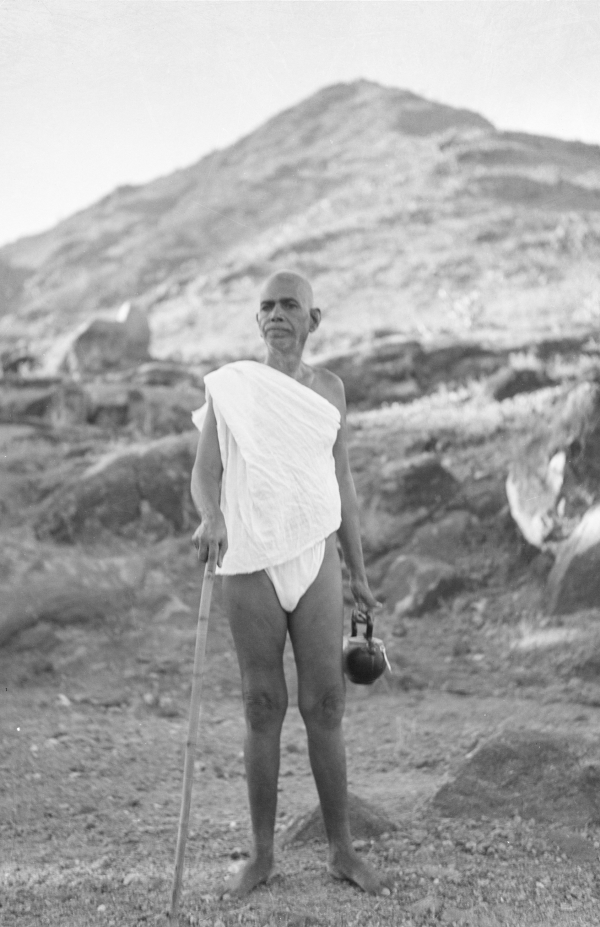
"From darkness lead me to light," says the Upanishad. The Guru is one who is competent to do this, and such a one was Bhagavan Sri Ramana Maharshi. The Guru is the dispeller of ignorance and awakener of understanding. Throughout the ages India has produced such.
Ignorance is not merely absence of knowledge. This ignorance cannot be corrected by thought nor right knowledge awakened by an intellectual process, because it is the intellect itself which is the limiting factor. The Sat-Guru, who is Divine Consciousness in human form, is the only guide to Enlightenment. He is the only bridge between mental concepts, in which the disciple is enclosed, and spiritual consciousness. Said Sri Shankara: "Even though you possess learning and all gifts and endowments, yet it will not avail you unless your mind is protected by the Guru and absorbed in him." And again, in Vivekachudamani, he says: "There are three things that are rare and due to the Grace of God: a human birth, thirst for Liberation and the protective care of the Guru."
Were it not for this manifestation of absolute Reality or pure Consciousness (which are the same) in human form, spiritual knowledge would be lost to the world. The Guru, who is a knower of Brahman, is equated in the Upanishads with Brahman Himself. Though living as a man in our midst, he is conscious of his Divine Identity. Were there none such, the doctrine of the Self would remain a mere theoretical concept for the discussion of philosophers. The mind of man has to be shown the way. For this the pure Consciousness embodied in the Guru mingles with the same Consciousness awakened by him in the disciple. The Guru is ever ready to help and uplift those who appeal to him. To disregard such help would be folly. It is vanity and pride to suppose that one's own unaided efforts will suffice. To accept a Guru does not mean accepting the guidance of another man but of pure Consciousness shining through a human psychosomatic instrument.
Spiritual tradition has always accepted the need for initiation and guidance by a Master. "What is commonly called 'self- reliance' is only ego-reliance," the Maharshi said. And again: "God, Guru and Self are the same." Only he in whom this Divine Consciousness is awakened can lead one beyond the range of human perception. There are various ways in which the Guru can initiate and guide the disciple, but that he should do so has always been held necessary. Those who attack this tradition are really only attacking their own false conception of it.
Guru has already trodden the path and can show it to the seeker. Even if he has arrived spontaneously at the goal, as did Bhagavan, he can still see and indicate the approaches to it. He may even transmit direct experience to the disciple as Sri Ramakrishna did for Swami Vivekananda. However, this can never be stabilised so long as the disciple's vasanas or inherent tendencies remain, since they drag him away again to the illusory world of sense perception. There is no wisdom that can be given to all alike, says the Gita: "This wisdom must not be given to one who has no tapas, is not a devotee and is not in earnest." This does not mean that the Guru holds guidance or Realization back from any one. The Maharshi once said that if the Guru could simply give Realization there would not be even a cow left unrealized. Most people do not want spiritual knowledge, and it cannot be given to those who do not try to awaken it in themselves. It cannot be grasped by reason. Therefore, the Guru will not respond to those who question him or try to argue with him out of mere academic curiosity: "This wisdom is not to be had by reasoning."
A Guru is only for those who seek contact with him for the sake of spiritual understanding, because this means seeking contact with the Truth in one's own heart through him. One who lives at a distance and approaches him in this way may receive guidance, while one who lives near him may not know how to ask. "The real Guru is in the heart," the Maharshi said, "the task of the outer Guru is only to turn you inward to the Guru in your heart." We are told that the Divine dwells in the innermost recess of the heart, but how many of us are competent to look inward and realize it? The power of the Guru in helping one to do so is far more important than any merely verbal explanation he may give, for this latter touches only the mental understanding. "A silent Guru is very potent," said the Maharshi, "his work goes on inwardly where it is not apparent to the disciple." And he gave assurance that "as the disciple dives inwards in search of the Self the Guru will do his part."
But can this not be done without the intervention of an outer Guru? The Maharshi admitted that it can, but he added that there are very few who are so close to Enlightenment that they can dispense with the need for an outer Guru. This is because it is not a case of something new to be discovered but of the removal of obstructions to Realization of the ever-existing Self. And since these obstructions are more emotional than theoretical, rooted rather in the desires than the intellect, outer aid is usually necessary to destroy them. "Sadhana is for the removal of ignorance, which is ingrained wrong ideas. It is not for acquiring the Self, because the Self is always there, but for becoming aware of it."
Even though the disciple believes that Consciousness is One, he accepts the duality of Guru-disciple in order to transcend it. He serves the outer Guru in order to realize the inner. "The disciple must work inwardly, but the Guru can work both inwardly and outwardly," the Maharshi explained.
One should approach the Awakened and listen to his teaching, then dwell on it as a guidance to sadhana. When instruction comes from a Guru it carries power. Out of the relationship of Guru and disciple Realization is born, as the fire of knowledge from the former is kindled in the heart of the latter.
The Upanishad says that the knower of Brahman is Brahman himself. This is an indication that if we are unable to meditate on the Formless Brahman we should meditate on a knower of Brahman. He teaches the right doctrine, but it is very different from the same doctrine learnt from a book. He himself is the living teaching. His presence inspires and strengthens us. His teaching has the authority of experience. It does not matter if the disciplines prescribed by the Masters vary or even if their doctrines differ on the mental plane; the essence of their teaching is the same, just as the milk from cows of different colours is all white.
"The spirit of the disciple is moribund owing to his forgetfulness of his true nature. The Guru revives him by removing his supposed identity with body and mind." The mind is apt to deny the existence of Self because Self is not an object of the senses. It can never be the object of knowledge but is itself the sole knower. Therefore a search for it by the mind can never succeed. "Logical explanations have no finality. Why look outward and explain phenomena? One should learn to attend to the knower of the phenomena." The knower of the phenomena is Reality. It just is; it is not affected by discussions or logical conclusions. It is the Grace of the Guru that enables us to realize our identity with this Reality. Since it is the Reality it is not something to be acquired in the future; it just is, now, eternally.
So long as the disciple lives in duality but seeks to transcend it, he feels oppressed by burdens and hindered by obstacles. These are in fact mere manifestations of the tendencies in his own mind that hold him back from Enlightenment and make him cling to the duality he seeks to escape from. To such a one the Guru appears as the bearer of burdens and remover of obstructions, the destroyer of ignorance and giver of Liberation. But effort must be made by the disciple to remove the obstructions, and therefore although it is true to say that the Guru is the giver of Liberation, it is also true, to say that the disciple must earn it by making himself fit to receive it.
The Guru does not add to the ideas or theories to the already cluttered mind of the disciple. Rather he induces cessation of thought. "The mind creates the world and life and obscures Self. Becoming obscures Being." It often happened that someone came to the Maharshi with a long list of questions, only to find, while sitting in his presence, not so much that the answers came, but that the questions themselves faded away, having ceased to be important.
Life has plunged us into a state that can be called sleep --- spiritual sleep. All our life activities are done in this sleep. The Guru is the Awakened; he does not become involved in this sleep but helps us to awaken from it.
You encounter life through a thing called 'yourself'--- that is through a fictitious apparatus for living. It is this which takes charge of body and senses, thinks through your mind, talks through your mouth, uses your name and mistakes itself for you. But just as it mistakes itself for you, so it mistakes the Guru for another separate self outside of you. However, that is its fatal error, for the Guru, having freed himself from the clutches of this fiend, can free you from it and lead you to the experience of the One Self. Thereby he gives a new meaning to the word 'I.' Before meeting him you attributed it to this pseudo-self, but 'I' or aham,' is the name of Being, of God. He alone can call Himself 'I.' You only can insofar as you are One with Him. Individual human life goes on like a dream. In a dream you mistake the dream-self for 'I.' Similarly in this life you mistake the fictitious pseudo-self for 'I.' The Guru helps you to awake from this illusion. "To keep the I-thought alert is the only upadesa (teaching)." He teaches you to abide in and as the Self while apparently living in the world. "One should not lose consciousness of his 'I' under any circumstances. This is the remedy for all the ills of life." "The 'I' springs up from the centre of our being and our only concern should be with this 'I.'"
The true Self is qualityless and therefore beyond description or even knowledge. It is thought that obscures it. "Give up thoughts. You need not give up anything else. The body and the comforts of life are no hindrance to Realization. The loss of the body is not Enlightenment, it is death. The loss of the ego-sense, the I-concept, is what is required." The very presence of the Guru calms down the waves of the mind and brings it to that condition of stillness in which it is simply aware.
Those who saw the Maharshi sitting in samadhi were moved and awed by it. He radiated peace as the sun radiates light. His imperturbable composure impressed some, his lively explanations others, his grace and compassion yet others. Some enjoyed his conversation and some his tremendous silence. Thousands flocked for a sight of him. People felt that here was God Incarnate walking on earth. He assured us when leaving the body that he was not going away: "People say that I am going away, but where can I go? I am here." Being universal, there was no going from here to there for him. Having realized that he was not this body, there was no return to any other body. He has assured us that, "he who is ready for Divine Knowledge will be led to it."
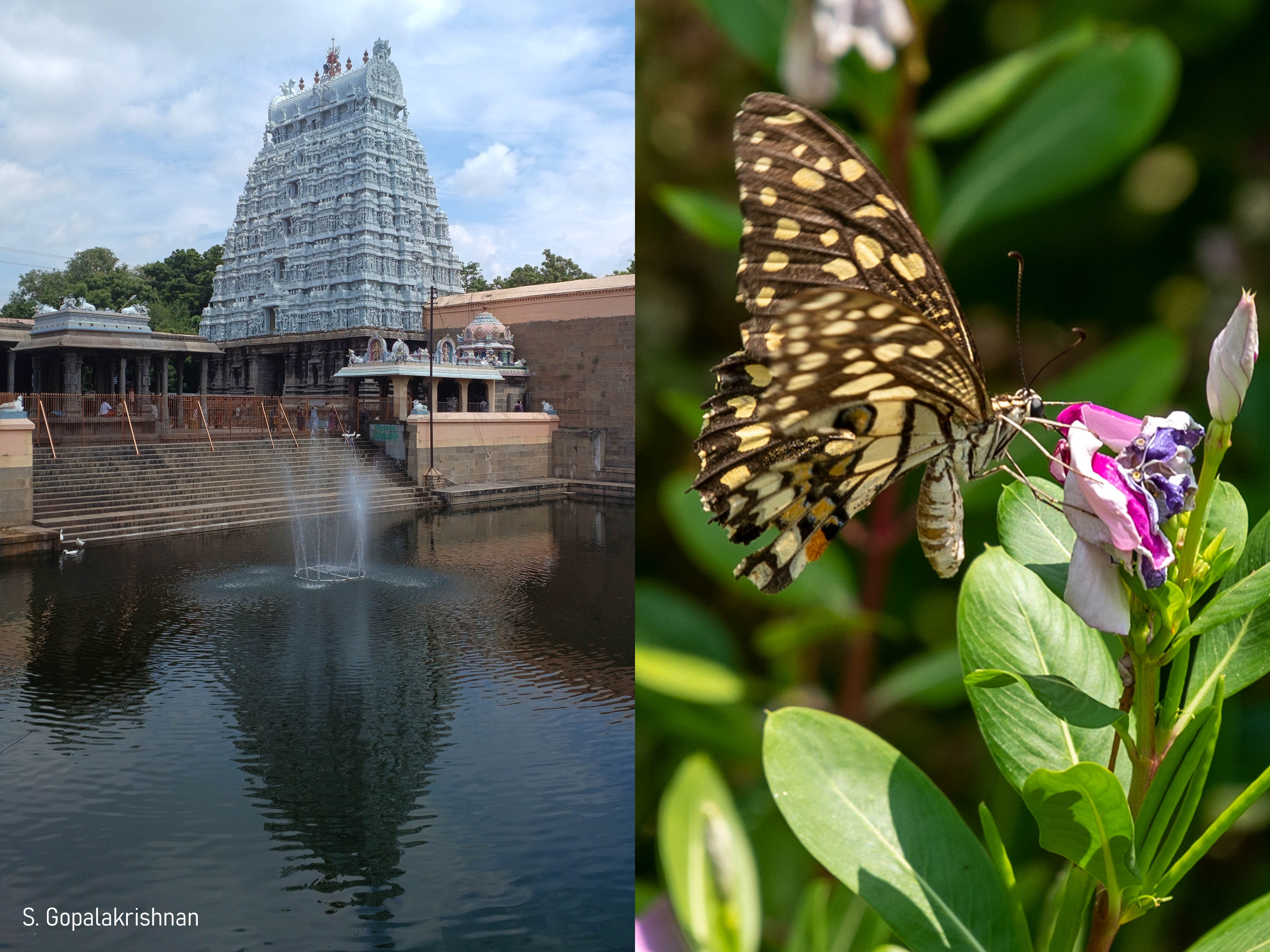
Tirukkuṛaḷ: The wisdom of Sage Tiruvaḷḷuvar
M.R. Kodhandram
M.R. Kodhandram is a postgraduate from the IIT Madras. He has lived in Tiruvannamalai for the past 22 years and has published two commentaries in English on Andal’s Tiruppavai and Bhagavan’s Upadesa Saram. He has also written commentaries in English on Bhagavan’s Bhagavad Gita Saram, Atma Bodha, Aksharamanamalai, Dakshinamurti Stotram and Guru Stuti, and the great Tamil scripture Tirukkuṛaḷ
31. சிறப்பீனும் செல்வமும் ஈனும் அறத்தினூஉங்கு
ஆக்கம் எவனோ உயிர்க்கு?
siṛappīnum selvamum īnum aṛattin-ūuṅgu
ākkam evanō uyirkku?
Meaning
Is there a greater gain to a person (in life) than Jnana or Self-Realisation, which fetches both Happiness and Liberation?
[அறத்தின் ஊஉங்கு ஆக்கம் எவனோ உயிர்க்கு (ஊஉங்கு = greater; ஆக்கம் = gain; எவனோ = is there; உயிர் = person, soul, life; அறம் = Virtue, Jnana) = is there a greater gain to a person (in life) than Jnana or Self-Realisation? சிறப்பு ஈனும்
செல்வமும் ஈனும் (சிறப்பு = supreme state, liberation; செல்வம் = wealth, happiness; ஈனும் = fetches) = which fetches both happiness and liberation]
Commentary
The word *aṛam* not only means Virtue but also Jnana, as per the Tamil Lexicon, depending upon the context. In Sanskrit, it is known as dharma. Jnana means Wisdom/Self-Knowledge/Self-Realisation. Virtue is wisdom in action. Only a wise
person can be a truly virtuous person. Harishchandra refused to utter even one lie and was prepared to face any amount of misery on account of it. His integrity and sacrifices are legendary. A wise man knows the art of right living so
that it is in consonance with the Laws of Nature. He will acquire wealth and also live in happiness because he will acquire wealth in the right manner and not do anything sinful to cause misery later on. Normally, we would find that
wealthy people are not necessarily happy, though they may have all the comforts in life. Happiness comes only out of wisdom. A wise man will surely lead a virtuous life and will not indulge in any wrongdoing to earn wealth. He will be
contented with whatever wealth he gets as per his *prarabdha*. Even if he gets a lot of wealth, he will not get lost in it or crave for more. He would be happy to share his surplus wealth with the needy. He would be more concerned about
morality and propriety than merely acquiring wealth. Thus, he will not do anything in life that would bring him bad karmas. Therefore, we need to first learn the art of right living so that we not only earn wealth but also lead a happy
life.
What is the greatest wealth one can acquire? It is the wealth of Jnana or Self-Realisation. Such spiritual wealth confers the highest happiness or bliss. This is the greatest gain in one's life as it puts a permanent end to all our misery, including the misery of rebirth. Only the wealth of Jnana is permanent, leading to Liberation from the cycle of birth and death. In contrast, material wealth is petty and transient.
Thus, it is important to acquire the right knowledge about life through the Guru and the scriptures and strive to practise them in our day-to-day life. When we practise the teachings given to us, the knowledge we have acquired would become wisdom and elevate us, leading finally to Liberation from the cycle of birth and death through Self-Realisation. Only when we get the right spiritual knowledge will we know what is right and wrong and thus be able to lead a virtuous life. We would not cheat or lie for the sake of money. Nor would we hurt or harm anybody. Also, we would create many punya karmas through the proper performance of our duties and many good deeds for the welfare of others without any expectations. Leading a virtuous life and doing selfless service as an offering to God will purify our mind and show the way to Liberation.
Thus, we see that Jnana is the greatest and imperishable gain in life as it helps one to lead a life of virtue, prosperity, contentment, continuous happiness untainted by misery, and Liberation from the cycle of birth and death. Can anything be a greater gain than this?
32. அறத்தினூஉங்கு ஆக்கமும் இல்லை அதனை
மறத்தலின் ஊங்கில்லை கேடு.
aṛattin-ūuṅgu ākkamum illai adanai
maṛattalin ūṅgillai kēḍu.
Meaning
There is nothing more beneficial than the performance of virtuous deeds; there can be no greater misery than neglecting it.
[அறத்தின் ஊஉங்கு ஆக்கமும் இல்லை (அறம் = virtue) = there is nothing more beneficial than the performance of virtuous deeds; அதனை மறத்தலின் ஊங்கு இல்லை கேடு = there can be no greater misery than neglecting it]
Commentary
There is nothing more beneficial than the performance of virtuous deeds as it would bring us many punya karmas that would not only protect us and make our life happy, but also take us on the spiritual path when we become ripe and ready.
If the punya karmas are less, you will only lead a happy and comfortable life. But true and lasting happiness can come only when you go on the spiritual path for which you need to do a lot of punya karmas without expectations, which
means it should be a selfless service. However, one must also put in the effort to transform himself. Otherwise, one cannot come to the spiritual path. Just because one does some charity, he does not automatically get transformed into a
better person --- he does not give up his anger, jealousy or hatred because of charity.
Thus, self-effort is required to change our attitude; mere charity won't help. When we put in the self-effort, people with punya karmas will succeed faster in transforming themselves. Suppose we are getting angry about something. If we don't feel bad about it and try to restrain ourselves, it will not help us to overcome the defect, despite having punya karmas. We may justify our anger due to our ego. However, if we realise our mistake and try to control ourselves through enquiry and prayer, we would get the Grace to overcome it. This is the way to utilise our punya karmas for our evolution. Only then would we be launched on the spiritual path and be able to evolve in life and attain the Supreme Goal of life, which would liberate us from the cycle of birth and death.
If we fail to do punya karmas in life, there will not be any protection for us from our bad karmas of the past. There will not be God's Grace to bail us out of difficulties. When we do not perform virtuous deeds, our transformation in life will come about only slowly, probably over many births (janmas). Till then, our life would just go on mechanically, and we would continue to add bad karmas to our life and face misery consequently. That is why Sage Tiruvaḷḷuvar says that we can afford to neglect virtuous deeds only at our peril.
33. ஒல்லும் வகையான் அறவினை ஓவாதே
செல்லும்வாய் எல்லாம் செயல்.
ollum vagaiyān aṛa-vinai ōvādē
chellum-vāy ellām seyal.
Meaning
Wherever required, in all possible ways, perform virtuous deeds without avoiding.
[ஒல்லும் வகையான் = in all possible ways; அறவினை செயல் = pe--rform virtuous deeds; ஓவாதே = without avoiding; செல்லும்வாய் எல்லாம் (செல்லும்= required; வாய் = place) = wherever required]
Commentary
Again and again, Sage Tiruvaḷḷuvar emphasises the need to do virtuous deeds for us to progress in life. Whenever and wherever we get an opportunity to help someone in need, we should quickly seize it and try to help him in all possible
ways without avoiding it. Bhagavan Ramana says in "Who am I?", "Everything offered to others is truly an offering to oneself; if only this truth is realised, who is there who would refuse to give anything to others?" It means that
whatever we do for others, we are doing only for ourselves, as there are no others. We alone exist in all the forms as the one Self. Virtuous deeds include doing all our duties perfectly without trying to escape. Only then would we get
the much-needed punya karmas to evolve in life. What we do for others will come back to us when we are in need. Therefore, we should try to help others physically, financially, morally and intellectually, to the extent possible without
expectations. Even when we become old, we would still be able to help others financially, morally and intellectually. Thus, we should always be alert and ready to do virtuous deeds whenever an opportunity arises, without trying to avoid
them. All the good deeds done by us would purify the mind and also protect us from evil, and our good deeds would follow us even after death. Thus, we should utilise every opportunity to be of help to others without any expectations,
and also fulfil all our duties and responsibilities perfectly.
34. மனத்துக்கண் மாசிலன் ஆதல் அனைத்தறன்
ஆகுல நீர பிற.
manattukkaṇ māsilan ādal anaittaṛan
ākula nīra piṛa.
Meaning
Virtue has the ability to make our mind free of all its impurities; all else will bring only misery.
[மனத்துக்கண் மாசு இலன் ஆதல் = to make our mind free of all its impurities; அறன் = virtue; அனைத்து = அத்தன்மைத்து = has the ability; ஆகுல = misery; நீர = தன்மை = ability, nature; பிற = all else, that which is other (than virtue); ஆகுல
நீர பிற = those which are other than virtue (vices) have only the ability to bring misery]
Commentary
Our minds have become impure due to the performance of many evil deeds over janmas due to ignorance. It is like a copper vessel that has been kept in the attic for many generations. It will look more like an iron vessel than a copper
vessel. You need to scrub it well with a cleaning powder for a long time and also use tamarind before it will regain its original appearance. The more you rub, the cleaner and brighter it will become. So is with our mind in which the
impurities have settled and hardened over the janmas. Only through the performance of many good deeds without expectations over a long period of time will the mind get purified. The performance of good deeds is like scrubbing a copper
vessel to clean it. Even if you have cleaned the copper vessel today, it would again become dark tomorrow. So you need to clean it every day like how we clean our body every day by bathing. Similarly, we need an inner bath to keep our
mind ever pure by the daily performance of good deeds, including puja, chanting, meditation, prayers, Satsangh, study of scriptures, enquiry, helping others, and doing our duties perfectly. We should also refrain from doing wrong things
even in thought. When the mind is pure, we will be happy.
Thus, through the regular performance of good deeds, the mind will be gradually purified, and we will be happy in life. All the good deeds performed will protect us from harm when the bad karmas of the past bear fruit and also make the mind receptive to spiritual knowledge. When spiritual knowledge is given to such a person, he would be able to practise it and transform his life. If one has not done good karmas, even if spiritual knowledge is given to him, he will not be able to practise and benefit from it. Thus, good karmas will purify the mind and make it fit for receiving spiritual knowledge, which would help us to achieve the Supreme Goal of life, which is Liberation. Therefore, we should keep our mind pure through good actions and conduct, and be alert to our faults and rectify them. Then we will be happy. If our actions are not good, they will only bring us misery.
35. அழுக்காறு அவாவெகுளி இன்னாச்சொல் நான்கும்
இழுக்கா இயன்றது அறம்.
azhukkāṛu avā-veguḷi innāc-chol nāngum
izhukkā iyanḍṛadu aṛam.
Meaning
Jealousy, greed, anger and harsh words ― renouncing these four (negative qualities from one's conduct) constitutes virtue.
[அழுக்காறு அவா வெகுளி இன்னாச்சொல் = Jealousy, greed, anger and harsh words; நான்கும் = these four; இழுக்கா = இழுக்கு + ஆ; இழுக்கு = to give up, to destroy; ஆ= ஆகும். This ஆகும் should be added to the last word அறம் to make it அறமாகும் =
constitutes virtue; இயன்றது = to be able to; நான்கும் இழுக்கா இயன்றது அறம் = to be able to give up these four (bad qualities) constitutes virtue]
Commentary
We need to give up all the negative emotions from the mind such as jealousy, greed and anger, and also avoid harsh words in our conduct. They are the consequence of the ego rising in the mind, leading to such reactions. Sage
Tiruvaḷḷuvar refers to three negative qualities that occur in the mind, and the fourth is of the mouth in the form of harsh words, which is a consequence of these negative emotions. Thus, he is asking us to purify our thoughts and words
so that our deeds will be pure and virtuous. Here, one can note that jealousy has been placed first in the list of qualities one should conquer because it is the worst of the lot. It is the worst of all negative feelings as there will
be no peace in a mind that is jealous. They will be all the time agitated inside. Even Swami Vivekananda has mentioned that jealousy is our national sin, which means it is widely prevalent among the Indian people. It is the worst defect
in the character of Indian people that is obstructing their development or success.
Therefore, we have to put in efforts to root out this bad quality from our system by being alert. If we are jealous or greedy, our actions would not be virtuous but only selfish. Why does jealousy arise in our mind? It is because somebody has something which we don't have and we want to possess it. Jealousy arises due to our inability to bear the prosperity, happiness, success, name, fame, smartness, etc., of others. We should be alert to jealousy because it is a subtle thought which is not easy to perceive. If we allow it to persist, it will lead to anger and hatred. In anger, we tend to commit mistakes such as hurting or harming others. In the process, we will incur sins like Duryodhana. We normally become angry if we don't get what we want or if things happen against our expectations. It is a reaction that happens due to the ego rising in the mind. What about greed? It is wanting more and more of something, much more than what one needs. For this, one will not hesitate to cheat or loot others to gain what they seek. When such negative emotions arise in the mind, they will be first evidenced in the form of harsh words coming out of the mouth, which will hurt others, leading to sin.
Thus, one should conquer all these four evil qualities because they make you commit numerous sins, leading to bad karmas that would give you much suffering in life and the afterlife too. This is possible only if we alertly put in efforts to check these tendencies as and when they rise in the mind through timely enquiry and prayers and make the mind positive. If thoughts are not controlled, we would become rude in words and behaviour, which would only add to our bad karmas.
Even if somebody is talking negative things to us due to anger, greed, jealousy, etc., we should learn not to take them inside and make our mind heavy through reaction. We should reach a stage where we take in only good things and ignore the rest. This is how we can always keep the mind light. We should not allow ourselves to be affected by what others say or do. We should learn to let go of them quickly. This is the way to make our minds subtle and evolve. Only then can we understand and practise the teachings of scriptures like *Tirukkuṛaḷ* and *Bhagavad Gita*.
Thus, Sage Tiruvaḷḷuvar is showing us how to keep our mind and speech pure to lead a life of virtue, and all these negative qualities will block our spiritual evolution.
36. அன்றறிவாம் என்னாது அறஞ்செய்க மற்றது
பொன்றுங்கால் பொன்றாத் துணை.
anḍṛaṛivām ennādu aṛañcheyga maṭṛadu
ponḍṛuṅkāl ponḍṛāt tuṇai.
Meaning
Do not postpone doing virtuous deeds, as they (alone) will be your sure protection when bad times befall you.
[அன்று = later; அறிவாம் = I will think; என்னாது = without saying; அன்றறிவாம் என்னாது = without saying, I will think (about doing virtuous deeds) later; அறம் செய்க = do virtuous deeds (from now onwards); மற்றது = மற்று + அது = as that;
பொன்றுங்கால் = during bad times, at the time of ruination; பொன்றாத் துணை = it will be a sure protection]
Commentary
Sage Tiruvaḷḷuvar is advising us to quickly start doing virtuous deeds without postponing them. He does not want us to say, "I will think about it later." Virtue includes the performance of our duties, not only to our family but also to
society. We need to fulfil all our duties in life in a perfect and timely manner without trying to escape. In addition, we should help others who are in need in whatever way possible. This also is our duty. We tend to say that we will
do charity when we get a lot of money. First of all, how do we know we will get a lot of money? Even if we get money, would we have the heart to give to others? Some people say that they have no time to spare for others now because they
are very busy and will help society after they retire. Only the performance of duties and other virtuous deeds will give us the much-needed punya karmas, which alone would protect us when bad times befall us. If we fall off a motorcycle
due to bad karmas, our good karmas will protect us in the form of a helmet. If we fall into poverty, the good karmas will protect us from ruination. If we fall ill, the good karmas will help us to bear the pain and see through the
illness. And only through the performance of good deeds can we get God's Grace, which is so vital for our progress. When we are facing troubles in life, it is only God's Grace that can save us. But to receive His Grace, we need to do a
lot of good deeds and make ourselves deserving.
We do not know when bad times will come in our life. We do not know how long we will have good health and prosperity, which are required for the performance of good deeds. It all depends on the karmas we have in our account. Therefore, without giving lame excuses in ignorance, we should start doing good deeds speedily. Each can do whatever they can as per their resources and abilities. Swami Vivekananda says, "They alone live, who live for others; the rest are more dead than alive!" If we just lead a life only for ourselves and the family, there would be very little merit in our life. We need to help others in life and relieve them of their misery as and when we come across. Every good turn will come back to us and protect us in times of adversity, unfailingly. Even at the time of death, the good karmas will accompany the soul and protect us in the afterlife and the next birth too.
37. அறத்தாறு இதுவென வேண்டா சிவிகை
பொறுத்தானோடு ஊர்ந்தான் இடை.
aṛattāṛu iduvena vēṇḍā sivigai
poṛuttānōḍu ūrndān iḍai.
Meaning
Do not correlate the benefits of virtue by comparing it with the man riding in a palanquin and his bearers.
[இது என வேண்டா = not to think that this is; அறத்தாறு (ஆறு = benefit) = the benefit of virtue; சிவிகை பொறுத்தானோடு ஊர்ந்தான் இடை (சிவிகை = palanquin) = by comparing it with the man riding in a palanquin and his bearers]
Commentary
Here, Sage Tiruvaḷḷuvar is hinting at the story in the life of the renowned Sage Jadabharata, who had to carry a king in a palanquin. One of the bearers of the palanquin in which King Rahugana was going, suddenly fell ill, and the Sage
who was nearby was made to replace the bearer as he looked like a strong rustic. Even Saint Tirunavukkarasar, aka Appar, carried the palanquin for some distance in which the child-saint Tirujnanasambandhar was going, purely out of love.
On seeing such a situation, one should not come to a hasty conclusion that the person carrying the palanquin is a sinner and the one who rides in it has done virtuous deeds. It is like concluding that a well-dressed man has done virtuous deeds while one who is simply dressed has not done any virtuous deeds. This is not the way to interpret the Law of Karma. That is why Sage Tiruvaḷḷuvar is giving us such examples so that we may learn the Law of Karma correctly. Jadabharata was a Jnani, and in the above incident, we can see how the king committed a sin in making such a great sage carry him. But it proved beneficial for the king in the end as he got valuable spiritual instructions from the Sage when he realised his mistake and apologised to him. In fact, the king was a very arrogant person, and only after this incident did he become transformed due to the instructions received from the Sage. Some say that the king was the deer which was brought up fondly by Jadabharata in his earlier janma. That is why Jadabharata broke his silence and spoke to the king, and it was also the karma of the king to receive instructions from the Sage.
The fact is that each person gets a life based on his past karmas. But just because one is sitting in a palanquin does not make him great, while the person carrying him as a bearer is inferior. The above examples would clearly help us to understand this truth. The Law of Karma is far more complex for us to understand, and we should not come to hasty conclusions through mere superficial aspects. Even Lord Krishna became a charioteer for Arjuna on the battlefield. It does not mean that Lord Krishna is paying the price for his sins. Thus, we should not judge others merely from their externals. But one thing is certain: 'As you sow, so you reap.' Therefore, we should refrain from doing wrong things and do only virtuous deeds. Then we would be able to evolve faster in life and achieve the Supreme Goal of life.
38. வீழ்நாள் படாஅமை நன்றாற்றின் அஃதொருவன்
வாழ்நாள் வழியடைக்கும் கல்.
vīzhnāḷ paḍā-amai nanḍṛāṭṛin akhdoruvan
vāzhnāḷ vazhiyaḍaikkum kal.
Meaning
Without wasting (even) a single day, if one is engaged in doing what is good (for fulfilling the purpose of life), it will stand like a boulder blocking the recurrence of births.
[வீழ்நாள் படாஅமை = Without wasting (even) a single day; நன்று ஆற்றின் = if one does what is good; வாழ்நாள் = lifetime, வழி = பின்பு = subsequent, i.e., பின்பு (வரும்) வாழ்நாட்கள் or subsequent lifetimes; அஃது ஒருவன் வாழ்நாள் வழி
அடைக்கும் கல் = it will stand like a boulder blocking the recurrence of births]
Commentary
Again and again, Sage Tiruvaḷḷuvar is emphasising the need to do virtuous deeds without wasting even a single day. Our actions should be such as to take us towards fulfilling the purpose of life. It includes doing our duties, helping
others, doing our rituals and prayers, attending lectures, studying scriptures, Satsangh, correcting our faults, conquering our negative emotions, etc. All these are activities that would help us on our spiritual path to attain
Liberation. Thus, we should keep doing many punya karmas in our life without any expectations, as an offering to the Lord. We should also make efforts to transform ourselves through enquiry and prayer. As we continue doing virtuous
deeds, the mind will get purified, and at the right time, we will come to the spiritual path and seek the way to Liberation. Bhagavan Ramana Maharshi says in *Upadesa Undiyar*, Stanza 3, "Acts performed without desire for fruits, as an
offering to God, will purify the mind and show the way to Liberation."
If our punya karmas are high, we will get a good Guru who will take us on the spiritual path and help us to evolve rapidly and attain the goal of life, thus ending the cycle of birth and death. Thus, the good karmas would stand like a boulder blocking the recurrence of births. Such is the power of doing virtuous deeds. However, if our good karmas are not high, it would only fetch us a happy and comfortable life. Thus, we need to do a lot of good deeds without delay to facilitate the transformation of our life and attain the purpose of life. A life without the performance of good deeds is only a wasted life.
39. அறத்தான் வருவதே இன்பம் மற்றெல்லாம்
புறத்த புகழும் இல.
aṛattān varuvadē inbam maṭṛellām
puṛatta pugazhum ila.
Meaning
(True) happiness is (only) that which comes through Jnana; all else is extraneous to it (and not happiness), hence not praiseworthy.
[அறத்தான் வருவதே இன்பம் (அறம் = Jnana, wisdom, Self-Realisation) = (True) happiness is that which comes through Jnana; மற்று எல்லாம் புறத்த = all else is extraneous to it; புகழும் இல = not praiseworthy]
Commentary
The happiness one experiences in day-to-day life is short-lived. If we analyse our life, we will find that nothing in the world can give us permanent happiness. The happiness one experiences in enjoying the sense objects of the world is
only trivial and temporary and is known as pleasure. Such gross happiness is not praiseworthy, says Sage Tiruvaḷḷuvar. The happiness the mind generally seeks is the gross happiness (pleasures) of the world, like that of a married life,
movies, money, status, comforts, tasty food, foreign travel, etc. Whereas, the happiness of the Heart is subtle. It is the happiness of the Self which is supreme and permanent.
The happiness we get in obtaining the objects of our desire is short-lived. True happiness comes only when we do good deeds, but even then, it is not lasting. But when we come to the spiritual path and attain Jnana, our happiness will endure because our whole life will become virtuous and peaceful due to inner transformation. Doing virtuous deeds without any expectations and dedicating them to God would purify the mind and pave the way for attaining the Supreme Knowledge, which would lead us to lasting happiness through Self-Realisation.
Happiness is only our nature, and it is not to be found in the objects of the world. True happiness is only within us, and to realise it, we have to regain our true nature for which we need to undertake an inner journey which will eventually take us to the lotus of the Heart wherein dwells the true Self, which is the source of all happiness. On Realising the Self, we would attain Supreme and everlasting Bliss and be liberated from the cycle of birth and death.
(To be continued)
Essence of Sri Ramana Paravidyopanishad
Part 6 – Turning Self-ward
Annotated by V. Krithivasan
Mr. V. Krithivasan is a highly accomplished author of many articles and was the editor of Ramana Jyothi, the magazine of the Ramana Kendram in Hyderabad. He has been associated with the Kendram in various capacities for over forty years.
Happiness is the only motivation to live
तस्यैव मात्रां खलु जीवलोके लब्ध्वा रमन्तेऽखिलजन्तवोऽपि।
न स्याद्यदीदं तु सुखस्य मूलं लोके क्षणार्धं बत कोऽनुजीवेत्।। (68)
tasyaiva mātrāṃ khalu jīvaloke labdhvā ramante'khilajantavo'pi |
na syādyadīdaṃ tu sukhasya mūlaṃ loke kṣaṇārdhaṃ bata ko'nujīvet ||
Only by receiving a minute fraction of that Supreme Happiness do all the creatures enjoy life in this abode of the souls. If this source of Happiness were not present who will care to live in this world for even half a moment?
All the creatures, by limiting themselves to a body, have lost the infinite happiness (paripurna ananda) of the unmanifest Brahman. What is received in the embodied state is but a minute fraction of this paripurna ananda. If even this meagre happiness were to be lost, who would like to live even for a second, asks the Upanishad.1
रसो वै सः। रसगॅ ह्येवायं लब्ध्वाऽऽनन्दी भवति। को ह्येवान्यात्कः प्राण्यात्।
raso vai saḥ|rasaghyevāyaṃ labdhvā''nandī bhavati| ko hyevānyātkaḥ prāṇyāt|
"He (Brahman) is verily the source of abiding joy; for one becomes happy only by coming in contact with Him. Who indeed will even breathe or live, if such Bliss were not there?"
Self is the dearest of all
प्रेष्ठः समस्तस्य ततस्तुरीये विराजमानः सुखरूपकः स्वः।
प्रेष्ठा च तस्मादखिलस्य जन्तोर्निष्ठा तुरीयैव न काचिदन्या।। (69)
preṣṭhaḥ samastasya tatasturīye virājamānaḥ sukharūpakaḥ svaḥ |
preṣṭhā ca tasmādakhilasya jantorniṣṭhā turīyaiva na kācidanyā ||
Here it follows that to all alike the Real Self that shines in the Supreme State of Turiya as pure Bliss, is the dearest of all things. Therefore, the most beloved of all to everyone is the Supreme State and nothing else.
In the preface to his Tamil translation of Vivekachudamani in prose form, in the opening paragraph Bhagavan says, "Every being in this world yearns to be always happy, free from the taint of sorrow; and desires to get rid of bodily ailments which are not of his true nature. Further, everyone cherishes the greatest love for himself: and this love is not possible in the absence of happiness."2
Bhagavan is combining two universal truths in the above statement -- desire to be always happy and cherishing the greatest love for oneself -- to prove the point that the abode of true happiness is one's own Self. Another truth of cherishing the greatest love for oneself is mentioned in Brihadaranyaka Upanishad in a profound conversation between Sage Yajnavalkya and his wife Maitri:
Sage Yajnavalkya had two wives, Maitri and Gargi. Of the two, Gargi was more spiritually inclined. Towards the last phase of his life, the Sage decided to give up his householder's life and retire into the seclusion of a forest. He wanted to divide his worldly possessions between the two wives. Reacting to this, Maitri wanted to know if receiving his possessions would bestow immortality on her! The sage responded by saying it would not. Maitri said that, in that case, she should not bother about the property. Pleased with her question, the sage started instructing her about the profound Vedantic truths regarding what was permanent and what was impermanent in life and what would bestow immortality. During the course of this conversation, Yajnavalkya made the following insightful statement.3
न वा अरे पत्युः कामाय पतिः प्रियो भवति, आत्मनस्तु कामाय पतिः प्रियो भवति।
na vā are patyuḥ kāmāya patiḥ priyo bhavati,
ātmanastu kāmāya patiḥ priyo bhavati|
"Verily the husband is dear (to the wife) not for the sake of the husband, but for the sake of the Self."
He goes on with the entire list of all relations and possessions to say that none of these is dear for their own sake but they are dear on account of the same Self in all.
न वा अरे सर्वस्य कामाय सर्वं प्रियं भवति, आत्मनस्तु कामाय सर्वं प्रियं भवति।
na vā are sarvasya kāmāya sarvaṃ priyaṃ bhavati,
ātmanastu kāmāya sarvaṃ priyaṃ bhavati|
"Verily, not for the sake of anything is that thing dear, but for the sake of the Self is anything dear."
It is due to ignorance that the love that we bear for the Self is mistakenly understood as love for something and mistakenly directed towards one object or the other. We can escape from suffering and find truly lasting happiness only by becoming aware of the Self.
क्षेपो हि लोम्नां निकरस्य युक्तः क्षुरापनीतस्य विना परीक्षाम्।
तुच्छस्य तद्वत् जगतोस्य दानं चर्चां विना युज्यत एव साधोः।। (73)
kṣepo hi lomnāṃ nikarasya yuktaḥ kṣurāpanītasya vinā parīkṣām|
tucchasya tadvat jagatosya dānaṃ carcāṃ vinā yujyata eva sādhoḥ||
Just as it proper to throw away the heap of shorn hair without scrutiny, so it is right for the aspirant to turn away from the world, which for him is of no value, without enquiry concerning it.
The objects of the world -- property, possessions, bodily comforts etc. -- are mistakenly considered to be the sources of our happiness in general. Bhagavan says,
"If a man thinks that his happiness is due to external causes and his possessions, it is reasonable to conclude that his happiness must increase with the increase of possessions and diminish in proportion to their diminution. Therefore if he is devoid of possessions, his happiness should be nil. What is the real experience of man? Does it conform to this view? In deep sleep the man is devoid of possessions, including his own body. Instead of being unhappy he is quite happy. Everyone desires to sleep soundly. The conclusion is that happiness is inherent in man and is not due to external causes. One must realise his Self in order to open the store of unalloyed happiness."4
An aspirant who has fully absorbed this truth will become indifferent to this world and will stop seeking to know more and more about it. He will turn his attention on himself and seek to know the Self. When Sivaprakasam Pillai asked Bhagavan whether it was necessary for one who longs for Release (moksha) to inquire into the nature of tattvas (categories involved in creation of the world), Bhagavan responded:
"Just as one who wants to throw away garbage has no need to analyse it and see what it is, so one who wants to know the Self has no need to count the number of tattvas (categories) or inquire into their characteristics; what he has to do is to reject altogether the categories that hide the Self. The world should be considered like a dream."5
Turning Inward
हेयं प्रपञ्चं स विहाय तूर्णं अन्तर्मुखत्वेन यतेत सिद्ध्यै।
अन्तर्मुखत्वेन हि साधनं स्यात् विश्वं तदर्थं ननु हेयमेव।। (74)
heyaṃ prapañcaṃ sa vihāya tūrṇaṃ antarmukhatvena yateta siddhyai |
antarmukhatvena hi sādhanaṃ syāt viśvaṃ tadarthaṃ nanu heyameva ||
The aspirant naturally turns away from the world at once, and with his mind turned inwards will strive for the goal. It is by turning inwards that the quest can be made, and for that reason the world is certainly to be renounced.
Bhagavan uses the word Ahamukham (facing the Self) to indicate the act of turning one's attention inward. This is the first step and also the fundamental process involved in the quest for the Self. The mind which habitually wanders into and engages itself in external objects and various thought forms is constantly in the state of bahir-mukham, that is, turned towards 'not-I'. Mind shies away from looking at the subject-I; this is its nature. Muruganar says in Padamalai,
நாட்டை விட்டுக் காட்டுவழி நாடல் ஒழிந்து உண்முகத்தே
நாட்டத்தை மாற்றி நடக்கை நன்றென் பாதம்.
naattai vittuk kaattuvazhi naadal ozhindu uNmugathe
naattaithai maatri nadakkai nanren Paadam
"Stop seeking the path that leads you to the forest, abandoning your home. A better course of action is to reverse the direction, inwards."6
The outgoing tendency of the mind is very strong and becomes the greatest obstacle in pursuing the Quest (atma vichara). Bhagavan's verse on Jnana Margam in Arunachala Pancharatnam gives an important clue:
"He who turns inward (becomes Ahamukham) with a pure and blemishless mind to search where the sense of 'I' arises, realizes the Self, and rests in Thee, Oh Arunachala, like a river joining the ocean."7 Bhagavan says that the purity of the mind is important for a seeker engaged in Atma Vichara. Though intellectually endowed, a seeker will find it difficult to maintain Ahamukham if his mind is not pure. Mind becomes pure only by turning away from the outside world of attractions. This is why this verse by Lakshmana Sarma lays emphasis on heyam prapancham (giving up interest in this world).
एते विचारेण गुरूक्तरीत्या जगन्न सत्यं स्वत इत्यवेत्य।
तथैव बुद्ध्याऽपि अनुसन्दधाना अन्तर्मुखत्वं शनकैर्भजेयुः।। (76)
ete vicāreṇa gurūktarītyā jaganna satyaṃ svata ityavetya |
tathaiva buddhyā'pi anusandadhānā antarmukhatvaṃ śanakairbhajeyuḥ ||
By taking up the quest in the lines indicated by the Master, these (aspirants) would be convinced that the world is not real in its own right, and will be able to turn inwards gradually.
Muruganar extolls Ahamukham in yet another verse:
மகிதலத்தில் எத்துணைதான் மாட்சி படைத்தாலும்
அகமுகத்தில் அன்றி அமைதி இன்றென் பாதம்.
mahitalathil ethunaithaan maatchi padaithaalum
ahamuhathil anRi amaidi inRen Padam
Though one may gain any amount of greatness in worldly life, there is no peace except through Ahamukham.8
In Akshara-mana-maalai Bhagavan says that this is Arunachala's Upadesa to him:
"'Turn within, ever seeking the Self with the inner eye, then will (it) be found.' Thus didst Thou direct me, beloved Arunachala!"9 Here Bhagavan implies that the act of turning within, Ahamukham, carries you forward through various stages of progress till the Self is revealed. Thus the first step is also the last step in this exciting journey.
Testimony of the Jnani is the Supreme Authority
निजानुभूतिं च वदन् स बुद्धः सन्दर्शयिष्यति अमलाश्च युक्तीः।
प्रश्नानन्तांस्तु बुधो न कुर्यात् साधोर्न शङ्कास्पदमाप्तवाक्यम्।। (80)
nijānubhūtiṃ ca vadan sa buddhaḥ sandarśayiṣyati amalāśca yuktīḥ |
praśnānantāṃstu budho na kuryāt sādhorna śaṅkāspadamāptavākyam ||
The Sage not only testifies to his own experience but also furnishes flawless reasons. But the disciple, if wise, will not go on posing questions without end; the word of the Guru is not to be doubted by the disciple.
The aspirant intent on realizing the Self looks for authentic guidance in the path he has chosen. Authentic or valid sources of knowledge are called Pramana in Indian philosophical systems. Advaita Vedanta accepts six sources of valid knowledge, or pramanas, which are: Direct Perception (pratyaksha), Inference (anumana), Verbal Testimony (Sabda Pramana), Comparison (upamana), Presumption (arthapatti), Non-cognition (anupalabdhi). But the highest value should be placed on the verbal testimony of a jivan mukta such as Bhagavan Ramana. Bhagavan always guided aspirants based on his own unbroken experience (svanubhuti) of the Self, which he attained without any prior knowledge of the scriptures. The fact that Bhagavan's understanding of the nature of the reality, arrived at by his own reasoning and experience, coincided with the supreme truths expressed in the Upanishads (shruti) makes him a very unique and matchless spiritual master.
Paul Brunton says, "The ancient lore, the Upanishads, has received a striking confirmation from the life and teachings of Bhagavan Sri Ramana. To his disciples, both eastern and western, the written and oral teachings of Sri Ramana are the primary revelation, and the ancient lore is of value because it is found to be in full accord with those teachings."10 His teachings are of unique value since he did not formulate a theory after formal study of Vedanta but discovered the path and its goal afresh, gaining the ultimate experience through a single brief act of Self-enquiry. His inner experience itself became the primary mode of conveying the great Advaitic truth of Oneness of the Self.
The technique of Self-enquiry, which Bhagavan taught invited the aspirant to analyse his own everyday experience of waking, dreaming and deep sleep. The aspirant is thus led to arrive at crucial understanding about the unreality of the ego, all by himself. Muruganar says,
ஒன்றானும் தள்ளற் கரியமுழுத் தத்துவத்தான்
onranum thallarkariya muzhut tattuvathaan11
Whose philosophy cannot be refuted by any means. Occasionally, if the aspirant was mature and ready, Bhagavan would give him briefly the taste of the Supreme State, so that what little doubt was there in the aspirant's mind would disappear once and for all.
The author says in this verse that, at some stage, the aspirant should stop doubting and start practicing the method taught by such a matchless Master.
Doubts end only when the doubter disappears
न संशयानां भविता विरामो यावन्न तुर्ये स्थितिमेति बोधात्।
अन्तोऽस्ति तत्रैव हि संशयानां आत्यन्तिकः संशयितुर्विनाशात्।। (81)
na saṃśayānāṃ bhavitā virāmo yāvanna turye sthitimeti bodhāt |
anto'sti tatraiva hi saṃśayānāṃ ātyantikaḥ saṃśayiturvināśāt ||
There will be no end to the doubts until one gets established in the Supreme State. Only in that State is there an end to all doubts, due to the extinction of the doubter.
The author, in his book Maha Yoga, elaborates further12:
The Sage of Arunachala points out that the ego itself --- the arch-enemy of Happiness --- is the parent of all doubts. He is raising them as a means of postponing the day of his own extinction. To entertain these doubts and waste our time and energies in seeking solutions for them is to play into the hands of the enemy. The right thing to do, says the Sage, is not to go on framing questions and seeking answers --- which are of little value, being merely intellectual --- but to arrest the culprit --- the ego --- put him in the dock, and dispose of him by the Quest of the real Self, which he pretends to be. In other words, one should discover the real Self, who is the final answer to all questions. Every question that arises is vitiated by the ignorance which takes the ego at its face value, as the real Self.
All questions are therefore reducible to one: "Who am I?" This question is the Quest of the Self, by which the Egoless State is won. In that State there is only the Self and nothing else, and hence there are no questions and no answers, but only Silence: so says the Sage. The same sense is clearly conveyed by the Upanishadic lore.
भिद्यते हृदयग्रन्थिः छिद्यन्ते सर्व संशयाः ।
क्षीयन्ते चास्य कर्माणि तस्मिन् दृष्टे परावरे ॥13
bhidyate hṛdayagranthiḥ chidyante sarva saṃśayāḥ |
kṣīyante cāsya karmāṇi tasmin dṛṣṭe parāvare ||
"When that Supreme Being is seen, then the knot (of desires) in the Heart is cut, all doubts are dispelled, and all the effects of actions are cancelled."
Thus we have a clear warning that an endless raising of doubts is just a means of giving a new lease of life to the ego. It is a vice, perhaps more serious than those that are so called.
उदेति शङ्का यदि कस्य सेति पृच्छन् स्वतत्त्वस्य गवेषणेन।
लभेत निष्ठां यदि तुर्यभावे शङ्का च तद्वानुभयं च नश्येत्।। (83)
udeti śaṅkā yadi kasya seti pṛcchan svatattvasya gaveṣaṇena |
labheta niṣṭhāṃ yadi turyabhāve śaṅkā ca tadvānubhayaṃ ca naśyet ||
If a doubt arises he should ask himself, 'Who is it that has a doubt?' Seeking thus, he attains the Supreme State. There, both the doubter and the doubt will cease to be.
Sri Bhagavan was gracious enough to answer all varieties of questions from the devotees. But he allowed the train of doubts to proceed up to a point and invariably turned the attention from the doubts back to the one who raised the doubts. Some examples from Talks:
D.: What is that one thing, knowing which all doubts are solved?
M.: Know the doubter. If the doubter be held, the doubts will not arise. Here the doubter is transcendent. Again when the doubter ceases to exist, there will be no doubts arising. From where will they arise? All are jnanis, jivanmuktas. Only they are not aware of the fact. Doubts must be uprooted. This means that the doubter must be uprooted. Here the doubter is the mind.
D.: What is the method?
M.: 'Who am I?' is the investigation.14
A devotee wrote two questions on a slip of paper and asked Sri Bhagavan if her interpretations were correct.
M.: The Self is beyond ignorance and knowledge. It is Absolute. These doubts do not arise to the Self for it is Pure Consciousness and cannot admit of dark ignorance.
D.: From our point of view they arise.
M.: See to whom they arise. Go to their root. See if they arise after you reach their source and hold on to it.
D.: But at the present moment
M.: Such discussions are theoretical and there will be no end to them. One must be practical and try to solve the problems for oneself by the method suggested. The method has been pointed out already. Find out to whom the questions arise. They resolve themselves immediately.15
More than anything else, Bhagavan's sannidhi (presence) itself was an extraordinary catalyst in silencing the minds of aspirants and removing their doubts. No better account of this mysterious power of Bhagavan can be found than the experience recounted by Paul Brunton during his first meeting with Bhagavan in 193416:
There is something in this man which holds my attention as steel filings are held by a magnet. I cannot turn my gaze away from him. I become aware of a silent, resistless change, which is taking place within my mind. One by one, the questions which I prepared with such meticulous accuracy drop away. I know only that a steady river of quietness seems to be flowing near me; that a great peace is penetrating the inner reaches of my being, and that my thought-tortured brain is beginning to arrive at some rest.
I perceive with sudden clarity that intellect creates its own problems and then makes itself miserable trying to solve them. This is indeed a novel concept to enter the mind of one who has hitherto placed such high value upon intellect. I surrender myself to the steadily deepening sense of restfulness.
The passage of time now provokes no irritation, because the chains of mind-made problems are being broken and thrown away. And then, little by little, a question takes the field of consciousness. Does this man, the Maharshi, emanate the perfume of spiritual peace as the flower emanates fragrance from its petals? I begin to wonder whether by some radioactivity of the soul, some unknown telepathic process, the stillness which invades the troubled water of my soul really comes from him. The peace overwhelms me.
The Maharshi turns and looks down into my face; I, in turn, gaze expectantly up at him. I become aware of a mysterious change taking place with great rapidity in my heart and mind. The old motives which have lured me on begin to desert me. The urgent desires which have sent my feet hither and thither vanish with incredible swiftness. The dislikes, misunderstandings, coldness and selfishness which have marked my dealings with many of my fellows collapse into the abyss of nothingness. An untellable peace falls upon me and I know that there is nothing further that I shall ask from life.
The triviality and insignificance of mundane problems and doubts will be set at rest when the ego fades away, leaving the field to the Real 'I.'
(To be continued)
Muruganar in His Own Words
Part SIX
Love For His Mother
Hari Moorthy
Hari Moorthy is well-versed in the teachings of Bhagavan Ramana with special emphasis on the poetry of Muruganar
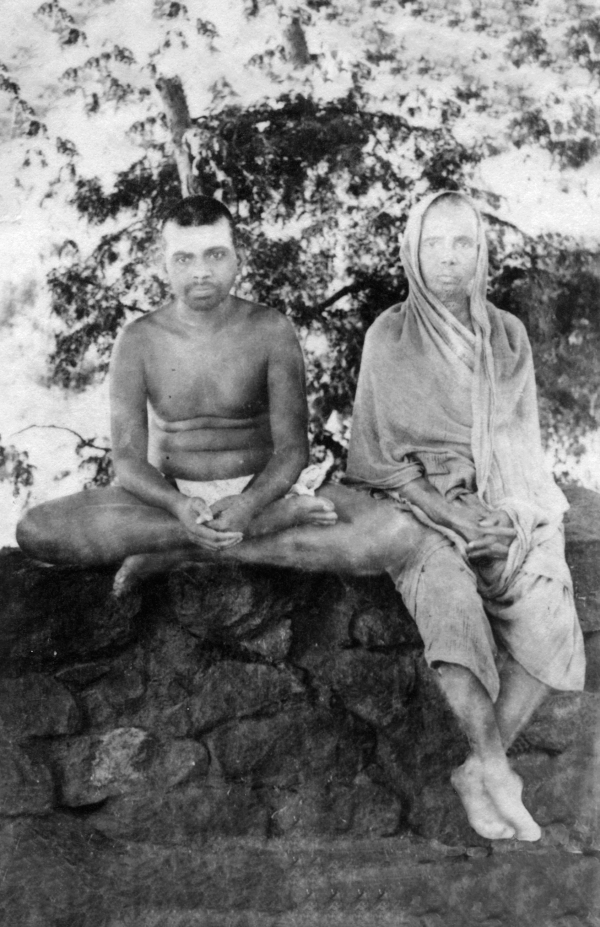
Bhagavan's grace is ever-present for all who seek the path He illuminated -- self-enquiry. He conveys this guidance not only through words but also through profound silence. His verbal instructions, such as "சும்மா இரு" (be still), are direct yet deeply transformative, while at other times, His silent presence serves as the highest teaching. One of the most compelling instances of this instruction is beautifully captured in Talks with Sri Ramana Maharshi. 1
He2 returned with a request the next day. He said, "It is said that one should receive instruction from a Guru. Mere reading of books is not helpful. I have read many books; but there is no practical help derived from such learning. Please tell me what I should do, how I should do it, at what times, in which places, and so on." The Master remained silent. His silence seemed to say, "Here and now, be at peace and tranquil. That is all". But the questioner could not interpret it that way; he wanted something concrete.
The ever-present gift of peace is the greatest blessing Bhagavan bestows upon all who surrender to Him. Muruganar, in his later years, expresses this truth, which he realized all along, in the following verse. 3
உண்மையா மோன வுணர்விலே யூன்றுமன
திண்மையே ஞான திடப்பாடு - நுண்மைசேர்
சுத்தமனத் தூடு சொரூப சமாதிதோய்
மெய்த்தவமே மேவும் விதம்.
Meaning: The mind, firmly abiding in the pure awareness of 'I am I,' embodies the true essence of silence and is the only path to stabilizing jnana, or supreme wisdom. True penance is the unwavering establishment of this wisdom, where the purified mind remains absorbed in the bliss of samadhi.
Capturing this unfolding journey, Muruganar offers a powerful example of how Bhagavan's pregnant silence gradually dissolved his emotional attachments to his mother -- attachments that had unsettled his inner peace and love. Human minds often confuse love and emotional attachments as one and the same without proper clarity of the Self. But true love isn't expressed through emotions; it is realized only in silence, a truth Bhagavan conveys with great eloquence in the above talk.
Muruganar possessed both the clarity of supreme wisdom and the strength to abide in the pure awareness of 'I am I.' Yet, his emotional attachment for his mother, who suffered immensely, became a source of great turmoil, unsettling his inner peace. Paradoxically, the very bond that connected him to her also disturbed his equanimity.
Moving beyond the desire for her physical healing, Muruganar now implores Bhagavan for the ultimate remedy -- a spiritual cure that would free his mother from the suffering of bodily afflictions. In the following verse, 4 Muruganar pleads with Bhagavan to bestow upon his mother the same divine grace that he himself has been blessed to receive.
காதலா லெற்குநீ காட்டினாய் மெய்ஞ்ஞானம்
ஆதலா லென்னருமை யன்னைக்கும் - சூதலா
உண்மை யுணர்ச்சி யுதவிக் குருநாதா
தண்ணளிநீ செய்கை தகும்.
Meaning: With love, You revealed to me the truth of wisdom. In the same way, I beseech You to grant my dear mother that same divine realization. O Gurunatha, through Your infinite grace and help, let her awaken to the pure awareness of 'I am I.'
Overwhelmed by his mother's suffering, Muruganar could feel the intensity of the physical pain his mother felt. In the following verse,5 the reader can gauge his anguish as he listens helplessly to her pleas for relief. Realizing that her final moments are approaching, he fervently implores Bhagavan to bestow His grace before her body is reduced to mere ashes.
என்பெல்லாம் பற்றி யெரிகிறதே யென்றுன்மாட்
டன்பில்லார் போல வலறுவாள் - இன்பமுற
நின்னெரியா லன்னாளை நீறாக்கு முன்பேநின்
பொன்னருண்மா மாரி பொழி.
Meaning: "My bones burn with searing pain, like a fire raging within," she cries out, her voice echoing the anguish of those who have never known Your love. Only through Your infinite grace can she find solace. O Lord, let Your mercy pour down like a rain of divine compassion, bringing her peace and bliss before her body is reduced to mere ash.
The imagery of burning bones likened to fire reflects not just physical torment but also the emotional distress that consumes both the mother and the son. Her cries, described as similar to those who have not yet experienced the divine love of Bhagavan, highlight Muruganar's conclusion that she requires Bhagavan's intervention. He has relinquished any hope that she might attain spiritual clarity through her own devotion and effort, as her overwhelming pain has consumed her attention entirely.
Muruganar's plea is not merely for the alleviation of physical pain but for something far greater -- the descent of Bhagavan's grace to grant his mother spiritual liberation before her mortal body turns to ash. In this verse, Muruganar seems to have transcended personal grief and demonstrates the highest form of love -- seeking ultimate freedom for his mother rather than clinging to her temporary bodily existence. His devotion is evident in his trust that Bhagavan alone can offer her the eternal peace of the Self.
As her mind grows numb from unbearable physical pain and begins to withdraw, while her body still clinging to life, Muruganar is uncertain whether her thoughts rest on him or on Bhagavan. In this moment of uncertainty, he turns to Bhagavan with a heartfelt plea, urging Him to hold her in His grace, as expressed in another moving verse.6
என்னை மறந்தாளோ வென்னன்னை யுள்ளத்தால்
உன்னை நினைந்தாளோ வோதுவாய் - உன்னை
நினையாளே லின்னே நினைப்பித்துக் கொள்வாய்
எனையாள வந்தவிறை யே.
Meaning: Has my mother forgotten me? Has she held You in her heart? O Lord, who has claimed me as Your own, please tell me. Even if she has not turned her thoughts to You, can You not turn Yours to her at once and envelop her in Your grace?
Muruganar's concern is twofold -- first, whether she has retained any awareness of him in her suffering, and more importantly, whether she has turned her mind to Bhagavan for refuge. The emotional weight of the verse is only counterbalanced by Muruganar's surrender to Bhagavan. Even if his mother has not sought Bhagavan in her final moments, Muruganar appeals to the Lord's grace, asking if He might extend His divine mercy regardless of her own effort. In essence, Muruganar entrusts his mother's entire spiritual well-being to Bhagavan, a sentiment he expresses eloquently in the following verse.7
தன்கையிற் பிள்ளையாத் தானென்னைத் தாங்கினளை
உன்கையிற் பிள்ளையா ஒப்புவித்தேன் - என்கையாற்
சேயேநீ யென்றாலுஞ் சீர்வேங் கடவாநீ
தாயேயாத் தாங்கல் கடன்.
Meaning: She once held me in her hands as her child; now, I place her in Yours as Your spiritual child. O Venkata, though she calls me her son, it is You alone who must do the work to protect and save her as her mother.
After his mother's passing, Muruganar cremated his mother and finished all her last rites at Rameswaram. However, Muruganar deeply longed to have confirmation that, in her final moments, his mother held Bhagavan in her thoughts, as expressed in the following verse8 -- believing that such a final remembrance would free her from the cycle of rebirth once and for all.
மரணத் தறுவாய் மதிதடுமா றாமே
அருணைத் தலத்தை அகத்தால் - கருதித்
திருப்பெருக நன்குசேர்ந் தாளோநின் மேனி
அருட்பெருஞ் சோதி யகத்து.
Meaning: In her final moments, did her mind remain steady as she turned inward, contemplating Arunachala and abiding in the heart? By doing so, was she at last liberated -- merging with the radiant grace of Your supreme Self, never to be separated again?
In asking Bhagavan this question, Muruganar surrenders his concern for his mother's final moments at the feet of his Lord. It's a humble yet bold inquiry that combines deep human love for his mother with the loftiest spiritual aspiration, showing the maturity of his devotion and the purity of his understanding.
His heart overflowed with gratitude when, after the cremation was complete, Bhagavan gently inquired about his mother -- a gesture so compassionate and loving that it left a lasting impression, as beautifully noted by Smt. T.R. Kanakammal.9
....Muruganar's mother passed away. He performed the last rites as prescribed. He took his mother's ashes to Dhanushkoti10 and dissolved a major portion of it in the sea there. Then, with the balance of his mother's ashes in an urn, Muruganar came to Tiruvannamalai. He placed the urn at the foot of a tree, had his bath, and went into the hall. When Bhagavan saw Muruganar, he enquired with touching concern, "Were you able to complete the last rites for your mother, without any trouble?" Bhagavan's gentle tone and compassionate words shattered Muruganar's composure, and he broke down completely. Kunju Swami, who was nearby, said to Bhagavan, "Muruganar has brought his mother's ashes in an urn." Bhagavan said, "That is good. The Agni Tirtham is a suitable spot for dissolving the ashes." Muruganar took Bhagavan's advice and dissolved the ashes in the Agni Tirtham.
Deeply touched by Bhagavan's compassion for his mother and convinced that it was only through Bhagavan's grace that he was able to perform her final rites without troubles, Muruganar composed ten verses in Sri Ramana Sannidhi Murai under the title Pettru Padigam.11 In the first of the ten verses, 12 Muruganar expresses his heartfelt gratitude for Bhagavan's grace in a deeply moving and poignant way.
தோன்றாத் துணையே அன்றியெதிர்
தோன்றுந் துணையும் எனக்கானாய்
சான்றா என்னைச் சலனமறச்
சாந்தி நிலைக்கே சமைவித்தாய்
ஈன்றாள் தனக்கிவ் வெளியேனால்
இறுதிக் கடனை இறுப்பித்தாய்
ஆன்றார் தாழக் கடவோயே
அடியேன் பேறார் பெற்றாரே.
Meaning: You are not only the invisible guide but also the visible guide who lights my path. With patient grace, You refined me, dissolving my impurities and immersing me in supreme bliss. O Lord, through this unworthy devotee, You orchestrated even the final rites for my mother. The wise revere You as the Supreme Lord. Who can truly fathom the depth of the grace You have shown me?
Even after his mother's passing, remnants of Muruganar's affection and old emotional tendencies would occasionally resurface. When such feelings stirred within him, he would pour out his anguish in verses -- turning to Bhagavan with tender inquiry, asking how his mother was faring in the afterlife under His care. The following verse13 gives a glimpse of his state of mind.
பந்தமெலா நீங்கிப் பரமபதம் சேரந்தாளோ
அந்தமிலா முத்தி அடைந்தாளோ - புந்தியமை
வுற்றே நிறைந்தாளோ உண்மைஅறி வானந்தம்
நற்றாய் பெற்றாளோ நவில்.
Meaning: Has she surrendered her materialistic attachments and reached the feet of the Lord? Has she attained the boundless state of liberation? Has her mind found tranquility? Is my beloved mother truly experiencing the bliss of the Self? O Lord, I beseech You, please tell me.
All of Muruganar's heartfelt pleas are met with Bhagavan's silence -- a silence of grace, not of indifference -- one which holds profound meaning, compassion, and guidance. Only a heart as attuned as Muruganar's could grasp its full potency. Even amidst the anguish of his mother's suffering and passing, he finds refuge in the ever-present grace of Bhagavan, which remains as his abiding sanctuary. His surrender -- rooted in deep humility -- only intensifies as Bhagavan, with surgical precision, gently peels away the layers of attachment, one by one. In doing so, the Master is steadily grounding him in his fold and loving presence -- the radiance of the Self.
Muruganar once remarked that Bhagavan looked after him with the same loving care that a cow shows her newborn calf. Smt. T.R. Kanakammal records a beautiful incident that showcased Bhagavan's deep concern for Muruganar's spiritual well-being. A segment of this incident14 is presented below.
Muruganar used to perform the ritualistic ceremonies prescribed for the death anniversaries of his parents. Once, on the day of his mother's anniversary, he came to the Ashram kitchen very early in the morning. He washed his dhoti and hung it up to dry. Then, with a wet towel around his waist, he set about getting the vegetables ready. Having understood the purpose of Muruganar being in the kitchen so early, Bhagavan, who happened to be in the kitchen, said to Muruganar, "It is your mother's annual ceremony today, who are the Brahmins?"
Sri Ramana, who did not consider these rituals important, added after tapping himself on the chest, "I could be one of the Brahmins." Hearing this, Muruganar felt so moved that he could hardly keep himself from breaking down completely. He felt that at the very instant when Bhagavan tapped his chest and said, "I shall be one the Brahmins for the ceremony," not only his parents but also several generations of his ancestors would have attained liberation. Muruganar never again felt it necessary to perform the annual ceremony of his parents.
However, on the next death ceremony of his mother, he brought a large jackfruit to the Ashram with the intention of distributing it among the devotees in her memory. Bhagavan saw Muruganar with the jackfruit and said, "It is your mother's anniversary, is it not? I see you have not yet managed to get rid of these sentimental attachments!" Hearing this, Muruganar exclaimed, "I will never do such a thing again." Even belief in rituals can bind one, and Bhagavan was very particular about breaking every one of the ties binding his disciples.
With all attachments gently dissolved, Muruganar's conclusion is very poignant. He recognizes that his highest duty toward his departed mother is not sorrow or clinging, but the sacred act of entrusting her entirely to the grace of Bhagavan. He expresses this sublime offering with wondrous beauty in the following verse.15
அன்னையே ஆவாட்கு அடியேன் செய்யத்தக்கது
உன்னையே தான்வேண்டி உய்வித்தல் - ஒன்றையலால்
வானென்ன நாடாது வான்கருணை செய்தாளுக்கு
யானென்ன செய்வேன் இனி.
Meaning: The only duty I, as a devoted son, can fulfill for my mother is to surrender her well-being entirely to You. O Lord, beyond this singular act of surrender, what can I possibly offer in return for the great compassion she bestowed upon me? Her love for me is like the sky's unbidden rain, falling out of pure, selfless compassion.
His love for his mother remained sincere, yet the intense, blinding affection that once bound him to her -- along with the heavy emotional weight and sorrow that accompanied it -- began to dissolve as Bhagavan's grace descended upon him. This divine grace, which enveloped him with its calming presence, gently eased the anguish that had taken root in his heart. Through the light of Bhagavan's wisdom, Muruganar was able to transcend the depths of his emotional attachment, recognizing that his mother's soul, too, was embraced in the infinite grace of the Supreme. As his surrender strengthened, his heart found solace, and the overwhelming sorrow that had once clouded his vision gave way to a serene acceptance of the divine will.
In 1933, when the first edition of Sri Ramana Sannidhi Murai was finally published, Muruganar dedicated the book to his mother, with love, as a tribute to the motherly care she had bestowed upon him throughout his life.
கற்றார் பரவும் கனவேங் கடரமணன்
பொற்றாட் கெனைப்புகலாப் பூட்டியதால் - நற்றாய்ப்
பரிவாலே யென்னைப் பயந்தபரைக் கிந்நூல்
உரிமையாச் செய்தே னுவந்து.
Meaning: Wise sages and seekers alike are drawn to Lord Venkataraman. It is through my mother's love and grace that I was raised to surrender at His sacred feet. I dedicate this book to her boundless love.
The very love Muruganar recognized in his mother now radiates silently from his samadhi, located in the northern part of Sri Ramanasramam. Its quiet yet powerful presence can be felt by every sincere seeker of Bhagavan. Muruganar's transformation stands as a great spiritual lesson, offering inspiration and guidance to all who struggle with emotional attachments. His journey shows that even the most powerful human bonds can become pathways to devotion, surrender, and ultimate liberation, when transcended through the immense wisdom radiated by Bhagavan's silent grace.
(To be continued)
Pratyabhijñā and the Teachings of Ramana Maharshi
B. Ganeshan
B. Ganeshan is well-versed in the teachings of Bhagavan Ramana and is the secretary of Ramana Kendra at New Delhi.
Pratyabhijñā darshana is a school of Kashmir Shaiva philosophy that emphasises recognizing one's true Self. Pratyabhijñā is a transformative journey of Self-discovery, which aligns closely with the teachings of Bhagavan Sri Ramana Maharshi. This article is a modest attempt to unpack the interconnectedness between the two.
Kashmir has produced several saints, yogis and scholars who have made significant contributions to the development and propagation of the Kashmir Shaiva philosophy. Notable among them are Somananda, Utpaladeva, Abhinavagupta and Kshemaraja, who have played a pivotal role in the evolution of Kashmir Shaivism. The ancient tradition derives its teachings from the sixty-four non-dualistic monistic Tantras called Bhairava Agamas. Adi Shankaracharya's visit to Kashmir greatly influenced the system and its thought. The philosophy is called "Kashmir Shaivism" because the Shiva Sutras on which it is based were revealed in the valley of Kashmir.
In Advaita Vedanta, Brahman is the absolute reality (sat-chit-ananda)1, but the world is considered as unreal, illusory. 2 As exemplified in the Upanishads and the Brahma Sutras, Brahman is pure consciousness devoid of attributes. The underlying reality for everything is Brahman, in which various names, forms, objects, appear and disappear. Maya veils the true nature of reality and prevents individuals from realizing their true nature as Brahman (Self).
In Kashmir Shaivism, Shiva (or Parama Shiva) is the ultimate reality, the One from which everything emerges. The universe is not mithya (unreal) but shiva-rupa and real. Brahman in Vedanta is prakasha3 alone, i.e., light sans activity. But, Shiva in Kashmir Shaivism is not only light (prakasha) but also reflection (vimarsha), i.e., light and activity. Prakasha is the chit shakti, the power by virtue of which awareness is aware of objects. But, interestingly Shiva is not only aware of objects but also self-aware, which is his vimarsha shakti. Thus, Shiva and Shakti are not separate in Kashmir Shaivism, but seen as two sides of the same coin or mirror images (prakasha-vimarsha).
There has been a persistent debate among Indian philosophers whether this world is real or an illusion. These schools of philosophy have interpreted the nature of maya variously. In Kashmir Shaivism, maya is described as Shiva's power (consciousness) to manifest the world of diverse objects through his swatantra shakti, his independent free will. Shiva voluntarily veils Himself by tirodhana shakti (power of concealment) and becomes a jiva (individual soul). Ergo, Shiva forgets himself as he becomes a jiva. The essential conundrum for the jiva is to rediscover the Self as Shiva. So, Self-forgetfulness (svatma vismarana) and Self-remembrance (svatma pratyabhijna) are twin acts in the divine play (lila) of Shiva.4
Bhagavan Sri Ramana Maharshi succinctly expounded the premise of both the Maya of Vedanta and the Svatantrya of Pratyabhijñā (Recognition) as such --
"The Vedantins say that Maya is the sakti of illusion premised in Siva. Maya has no independent existence. Having brought out the illusion of the world as real, she continues to play upon the ignorance of the victims. When the reality of her not being is found, she disappears." 'Recognition' (Pratyabhijñā) says that Sakti (power) is coeval with Siva. The one does not exist without the other. Siva is unmanifest, whereas Sakti is manifest on account of her independent will, Svatantrya. Her manifestation is the display of the cosmos on pure consciousness, like images in a mirror. The images cannot remain in the absence of a mirror. So also, the world cannot have an independent existence. Svatantrya eventually becomes an attribute of the Supreme. Sri Sankara says that the Absolute is without attributes and that Maya is not and has no real being. What is the difference between the two? Both agree that the display is not real. The images of the mirror cannot in any way be real. The world does not exist in reality (vastutah). Both schools mean the same thing. Their ultimate aim is to realize the Absolute Consciousness. The unreality of the cosmos is implied in Recognition (Pratyabhijñā), whereas it is explicit in Vedanta. If the world is taken as chit (consciousness), it is always real. Vedanta says that there is no nana (diversity), meaning that it is all the same Reality. There is agreement on all points except in words and the method of expression."5
It is apparent then that Bhagavan did not find substantive differences between the philosophies of Kashmir Shaivism and Advaita Vedanta. The underlying principle that binds all these philosophies — Advaita Vedanta, Kashmir Shaivism and Bhagavan's teachings — is to know the true nature of Self i.e. to realize 'I' as pure consciousness. In Advaita Vedanta, perceiving objects constituting the world appearance as real is attributed to avidya (ignorance or false knowledge) while in Kashmir Shaiva philosophy of Pratyabhijñā, the unreality of the cosmos is implied.
Responding to a devotee's query, Bhagavan further clarified, "In the words of Sankara - Brahman is real, the universe is a myth and Brahman is the universe. Therefore, the Self is the reality. The phenomena are real as the Self and are myths apart from the Self. The tantriks say that the phenomena are real because they are part of the Reality in which they appear. Are not these two statements the same? That is what I meant by reality and falsehood (myth) being one and the same."6
The word mithya means something which does not have an independent existence. It is loosely referred to as false or unreal for want of appropriate terminology. Adi Shankara, in his commentary on the Brahma Sutras, explains the multiplicity of Brahman as mere names and forms (nama-rupa) which are illusory in nature (mithya) owing to maya-shakti. So, in Advaita Vedanta, the 'world is mithya' is deployed as an instrument of viveka (discrimination) or, as a process of inquiry, to discover the reality. The true interpretation of Vedantic teachings is that consciousness pervades everything and everything that manifests exists, albeit emanating from and integral to consciousness. This aligns beautifully with the principles of Kashmir Shaivism. Ergo, the apparent difference in the two traditions relates to the understanding of the concept of maya, but in essence, both mean the same.
The fundamental teaching of Pratyabhijñā philosophy is that the individual Self (jiva) is not separate from universal consciousness (Shiva). The ultimate goal is to realize one's true Self as pure consciousness or pure awareness. This awakening is not mere intellectual knowledge but profound experiential understanding. As Abhinavagupta, the tenth century Śaivācārya of Kashmir puts it in his encyclopedic work, Tantraloka 7,
mokṣo hi nāma naivānyaḥ svarūpaprathanaṃ hi sa|
svarūpaṃ cātmanaḥ saṃvinnānyattatra tu yāḥ punaḥ||
Moksha or liberation is nothing but the awareness of one's true nature, the pure 'I' consciousness. When an individual attains awareness of his true Self, the entire universe appears as "I" or the embodiment of Shiva. The individual experiences all objects of perception as part of his own Self.
We see a similar undercurrent in Bhagavan's assertion, "There is no being who is not conscious and therefore not Siva. Not only is he Siva, but all else of which he is aware or not aware is also Siva. In ignorance, he thinks he sees a world of diverse forms but if he 'sees' his Self, he is not aware of any separateness from the world. The sense of his separateness and that of all else vanishes, although they persist in all their forms. Siva is the Being assuming these forms as well as the Consciousness that sees them. But the ordinary person sees only the objects (forms) and not Siva (the reality) in these forms. Siva is the background underlying both the subject and the object, and again Siva in Repose and Siva in Action, or Siva and Sakti, or the Lord and the Universe...... Uma has Siva always with Her. Both together form Ardhanariswara."8
Bhagavan states that the Self as pure awareness alone is jnana (real knowledge). The knowledge of multiplicity (objects & phenomena) that we see in the universe is ajnana (ignorance) and that even such ignorance which is unreal cannot exist apart from the Self.9 Thus, in both Pratyabhijñā and Bhagavan's teachings, the bondage and worldly sufferings are due to avidya (absence of real knowledge), and hence, the only way to realize one's own self as the Supreme Self is by acquiring true knowledge. In other words, Self-recognition through annihilation of ignorance is the way to liberation (mukti) in both the teachings.
There are parallels in the methods for liberation espoused by the two philosophies as well. Pratyabhijñā proclaims three divine means or upayas for realization of one's true nature as pure awareness. These are - Anavopaya (path of devotion), Shaktopaya (path of knowledge) and Shambhavopaya (the direct path). Shambhavopaya is the thoughtlessness state, the state of just being without any mental or bodily activity. In verse 23 of Malinīvijayottara Tantra, the foundational text of Kashmir Shaiva school, Shambhavopaya is described as the consciousness of the individual who is free from all thoughts. 10 There is another path in Kashmir Shaivism which is called Anupaya (an-upaya), which is the no-path means. We may also call it the pathless path. This is the state of complete merger of individual self (jiva) with the universal consciousness.
In Upadesa Saram, Bhagavan gives us a hierarchy of spiritual practices or means by which we can attain true knowledge of the Self. These include the path of devotion, path of action and path of knowledge, which bear stark similarities with the upayas or means suggested in the Kashmir Shaiva tradition. Bhagavan gave the technique of atma vichara (Self-investigation) to reach the state of thoughtlessness i.e. complete annihilation of mind (manonasa) which is the direct path corresponding to Shambhavopaya in Pratyabhijñā. According to Bhagavan, atma vichara is the true path of knowledge, while the practice of Self-surrender is the true path of devotion. Therefore, Self-investigation and Self-surrender are not two separate paths but two aspects of the same path by which we can experience the absolute reality. 11
Bhagavan Sri Ramana Maharshi is a perfect embodiment of the Kashmir Shaiva philosophy of recognition (Pratyabhijñā). Its tenets were validated by Bhagavan's direct experience and recognition of his identity with the self as pure consciousness when he was just 16 years of age. Bhagavan's death experience propelled him to dive deep within, resulting in a sudden flash of the knowledge of Self. Bhagavan repeatedly exhorts us to find out the real source of our being. It is consciousness that illuminates the mind and therefore, we cannot know our true Self except by turning our mind back within and dissolving our ego.12
It is befitting to conclude with Sutra 20 of Pratyabhijñā Hridayam written by Sage Kshemaraja, which ends with the words, "all this is the nature of Siva" - the immortal words of wisdom which undergird Kashmir Shaivism.
तदाप्रकाशानन्दसारमहामन्त्रवीर्यात्मकपूर्णाहन्तावेशात्सदा
सर्वसर्गसंहारकारिनिजसंविद्देवताचक्रेश्वरताप्राप्तिर्भवतीति शिवम् ॥२०॥
tadā prakāśānandasāramahāmantravīryātmakapūrṇāhantāv eśātsadā
sarvasargasaṁhārakārinijasaṁviddevatācakreśvaratāprāptirbhav atīti śivam ||20||
Then (tadā), as a result of entering (veśāt) in the Perfect (pūrṇa) I-consciousness (ahantā), which is essentially (sāra) Light (prakāśa) (and) Bliss (ānanda), (and whose) nature (ātmaka) (consists of) the great (mahā) power (vīrya) of the Mantra (mantra), there is (bhavati) always (sadā) acquisition or obtainment (prāptiḥ) of sovereignty or supremacy (īśvaratā) over the group (cakra) of deities (devatā) of one's own (nija) Consciousness (saṁvid), which brings about (kāri) all (sarva) manifestations (sarga) (and) dissolutions (saṁhāra) (of the universe). Thus, all is of the nature of Śiva (iti śivam)
Bhagavan echoed the same sentiments when he stated, "What exists in truth is Self alone. The world, the individual soul, and God are appearances in it like silver in mother-of-pearl. These three appear together and disappear together. The Self is that where there is absolutely no 'I' thought. That is 'Silence.' The Self itself is the world; the Self itself is the individual 'I'; the Self itself is God; all are Siva, the Self." 13
We see a harmonious resonance between the tenets of Kashmir Shaivism, Advaita Vedanta, and the teachings of Bhagavan Sri Ramana Maharshi. Kashmir Shaivism celebrates the dynamic expression of Consciousness as Śiva-Śakti, while Advaita Vedanta emphasizes the changeless, formless Brahman. Ramana Maharshi bridges these with the luminous simplicity of Self-inquiry, pointing inward to the source of all appearance. All three traditions ultimately guide the seeker beyond mental constructs to the direct realization of the Self—pure Awareness, unconditioned and ever-present. In their essence, they dissolve difference and reveal the One in all.
Om Sri Ramanarpanamastu!
The Divine Grace
V.S. Krishnan
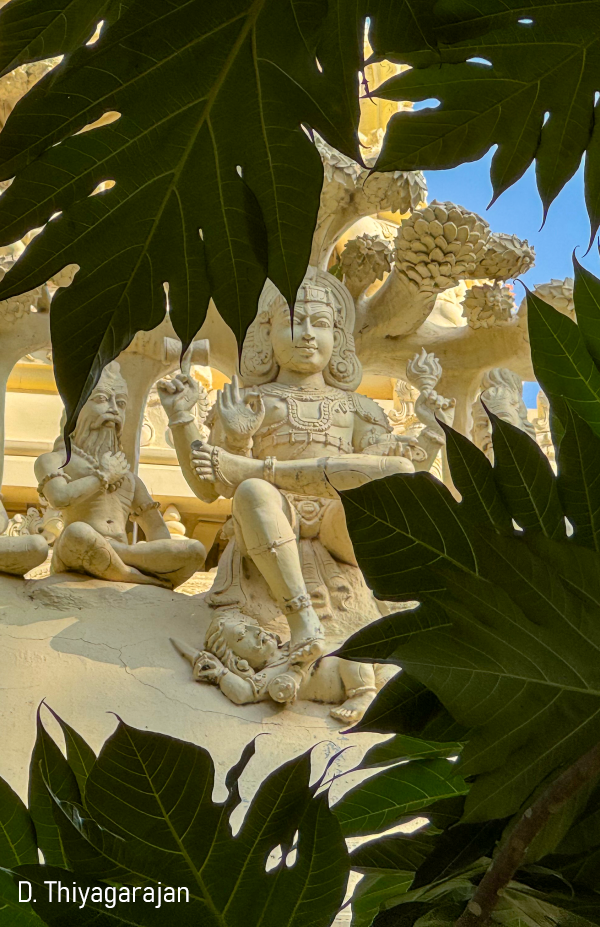
Every spiritual aspirant moves towards one ultimate aim: God-realization or Self-realization. He takes the right step, makes earnest efforts and yet he encounters obstacles, both external and internal. He soon realizes that apart from his own efforts, he needs an additional support and makes a sincere prayer for this. This support or power, which comes that is beyond him and gives him a gentle push towards his goal, is called grace.
Human effort can only take a seeker halfway; complete success is achieved when human effort is complimented by divine power. As Swami Sivananda of Divine Life Society said, human endeavor and divine grace are inter-connected. Grace, being ineffable, can only be felt through profound experience. It manifests when devotion springs sincerely from the heart, paving the way for an intimate connection with the Divine. The love a devotee expresses toward God is devotion, and the love God reciprocates in return is grace.
When grace begins to flow, the darkness dissipates, the path becomes smooth, and the goal draws near. This concept was beautifully illustrated by Sri Ramana Maharshi in his answer to the question of a Sub-Judge from Cuddalore: "Can an aspiring individual attain his spiritual goal through strenuous efforts alone, or does divine grace play a crucial role?" Maharshi responded, "Divine Grace is essential for realization. However, such grace is granted only to a true devotee who has worked diligently towards the path of freedom."1
When a disciple reaches the pinnacle of devotion and comes before the Guru, the mere glance of the Guru dispels his ignorance. This is the essence of grace. Such instances frequently occurred with Sri Ramana Maharshi, who was a true embodiment of grace. Bhagavan often remarked that the Guru's grace (Kripa) flows toward the disciple in proportion to the disciple's merit and explained that, "If the vessel is small, the Kripa received will also be small; if the vessel is large, the Kripa will be correspondingly greater."2
Suri Nagamma reflected on this transformative power of grace, "Bhagavan's grace began to flow towards me steadily, like water seeping through a parched field and making it blossom. The darkness that shrouded my mind was dispelled."
When devotion blooms in the heart, grace is naturally experienced. Devotion, however, cannot be acquired through mere learning or practice. It must pulsate eternally within the heart, with an ever-increasing quest for higher knowledge. Saint Narada, the divine messenger, described devotion as a state of constant awareness of one's connection with God. Even while performing worldly duties and enjoying their outcomes, a devoted individual remains deeply united with God. When such devotion matures into complete surrender, divine grace flows, elevating the individual to greater wisdom. As the Saivite saint Manickavachakar eloquently stated, "It is by God's grace that you think of God ( avan arulaal avan thaal vanangi)."
Prayer has increasingly been used as a means to fulfill material desires. Yet, true prayer seeks only unity with God. A saint once advised, "Make no requests to God, for the all-knowing, omnipotent God already understands His devotee's needs." When Lord Krishna asked Kunti Devi, the mother of the Pandavas, what she desired, her profound response was, "Oh Krishna, grant me devotion to You, which alone is sufficient for my upliftment. Give me more sufferings so that I will constantly remember You."
Many who pray for material fulfillment unknowingly ask for far less than what God is prepared to bestow. True prayer should seek grace, which brings self-sufficiency and the invaluable gift of Self-knowledge. A poignant illustration of this is the story of a king who, impressed by his attendant's service, offered him anything he desired. Recalling his wife's concern over their shortage of rice that morning, the attendant humbly requested two bags of rice. Though the king had envisioned granting the man an opulent house, he granted the modest request since the attendant had asked for no more. Similarly, prayers that aim too low fail to tap into the boundless grace that God is ready to pour upon His devotees.
Most of the visitors who came to Bhagavan came with just one prayer; his grace, as they knew he was an ocean of grace (kripa sagaram). They knew that his few words, just his side glance, his smile, the symbols of his grace, were enough to lift them to the higher experience of bliss and jnana.
Bhagavan often compared the journey toward realization to the search for a pair spectacles that one is already wearing. Realization is not something to be attained; it is ever-present. The Self, shining within, is closer and more intimate than anything external, yet ignorance prevents the individual from recognizing it. This ignorance stems from the mistaken identification with the mind and body.
The divine supreme, who is inherently free and whose true nature is infinite bliss, becomes trapped in a non-existent, imaginary cell created by the mind. It is to liberate the individual from this illusion that the Guru manifests. Contrary to common belief, the Guru does not directly impart knowledge; instead, the Guru's grace serves as a guiding hand, offering assistance to the seeker, either by lifting him out of the swirling waters of confusion or clearing the path toward dispelling ignorance. As Bhagavan emphasized, the Guru's grace is integral to easing the seeker's journey toward realization.3
The grace flowing from the Guru removes ignorance, illuminating the path to realizing one's true identity. The Guru ignites the flame of devotion, nurtures the quality of dispassion (vairagya), and inspires the quest for jnana. Bhagavan often quoted a stanza from Kaivalya Navaneetham: "Oh Guru, you have always been with me, ordaining my course and guiding me until I attained liberation." For many of Bhagavan's disciples, this realization unfolded due to the profound experience of grace emanating from his mere presence. Arthur Osborne described Bhagavan as Divine Grace personified, while Bhagavan himself asserted that grace is already within and is, in fact, shining as the Self. Grace manifests when an individual surrenders with wholehearted eagerness (shraddha).
Sage Vishwamitra persuaded King Dasaratha to send Rama and Lakshmana with him to the forest to assist in his Vedic rituals. While emphasizing the importance of the Guru, Vishwamitra advised Rama and Lakshmana to pray for the grace of Lord Viswanatha, the Jagadguru. Rama obeyed, worshipped Shiva, and prayed for His grace. This grace from Shiva empowered Rama to lift the mighty Indra Dhanush. Although Vishwamitra imparted this advice to the Avatara Purusha, Lord Rama and Sri Lakshmana, he was extending it to all devotees through them.
In one instance, a devotee posed a query to Bhagavan: "Many foreign visitors claim to experience your grace simply by being in your presence, yet as a local resident, I have not felt this. Why?" Bhagavan said, "It is as good as saying that one, neck deep in water, feels thirsty or that a fish in water feels thirsty. Grace is always there."
Similarly, Devaraja Mudaliar asked Bhagavan whether the Guru discriminates between devotees based on their faith. Bhagavan clarified that the Guru never differentiates. The grace flows abundantly like the ocean; each devotee draws from it according to their capacity. Bhagavan illustrated this idea, saying, "How can one who brings only a tumbler complain that he receives less than another who brought a jar?"
In reply to another question, Bhagavan said: "All that the devotees should do to experience the grace is to surrender before the Guru."4 Surrender involves complete trust in God, relinquishing all responsibility to Him, and accepting His Divine Will. Bhagavan elaborated, "The devotee approaches God, prays for union with Him, and surrenders entirely. The false 'I,' which has been leading him, dissolves into God, eradicating the sense of 'mine' and 'yours,' along with all dualities. Then dispassion and detachment arise." While Bhagavan acknowledged the difficulty of achieving complete surrender, he emphasized that partial surrender is attainable and can eventually lead to total surrender.
In the book, Divine Grace Through Total Self-Surrender, Bhagavan read Paul Brunton's words: "Divine Grace is the manifestation of cosmic free will in operation. It can mysteriously alter events through laws that transcend natural ones, interacting to modify them. It is the universe's most potent force, descending only when invoked through complete self-surrender. Grace acts from within, for God resides in the heart of all beings. Its whisper is audible only to a mind purified by Self-surrender and prayer. It emerges from cosmic silence, embodying cosmic will capable of performing miracles."
The mind, with its outward tendencies, seldom rests in stillness and silence. Thoughts rooted in the 'I' come and go, preventing the individual from experiencing his true nature. Silence has the extraordinary ability to quiet the mind. Sri Dakshinamurthy, the Silent Guru, imparted his wisdom through silence. Swamy Madhavatirtha, a devoted follower of Sri Aurobindo, once joined the devotees at Bhagavan's Ashram and sought guidance: "How can I prepare myself to receive grace?" Maharshi advised him, "You will receive spiritual help here if you keep yourself still. When the mind becomes still, the Self's power is felt. Its waves permeate everywhere. When the mind is at peace, they are experienced." 5
The individual, aware of the need for purification of mind (Chitta suddhi), seeks the Guru's grace. The mind often seeks an external Guru, accepting a physical form. The Guru manifests externally to nudge the mind inward, while the internal Guru draws it toward the Self.
Saint Arunagirinathar, the visionary author of Thiruppugazh, demonstrated through devotion how to attain spiritual fulfillment and liberation. Nearly all his 60,000 compositions conclude with an appeal for grace: Arulvaye. In his Konganagiri composition (Ainkaranai Yothamanam), every line ends with Arulvaye. He prays, "Oh Lord, grace me with a mind as pure as Ganesa, the Lord with five hands, a mind that controls the senses and turns toward You with love. Grace me to abide forever in bliss, beyond waking and sleeping, day and night. Grace me to sing Your praises with a loving heart. Grant me the peace of mind and the atma jnana that liberates."
In his song Sivanar Manam Kulira, Arunagirinathar seeks the grace of jnana (arul jnana inbamathu purivaye). Visitors to Ramanasramam frequently asked for the same grace, saying, "How can one obtain the grace that performs such wonders?" With devotion driving them, individuals long for grace, then, the Guru manifests, offering his grace, and dispelling ignorance. Some devotees experienced this bliss of grace simply by being in Bhagavan's presence, where the mind became still and silent. Typically, the Guru imparts teachings (upadesa) through silence, which speaks louder and more emphatically than all scriptures combined. When absolute silence prevails, the radiating grace of Sri Dakshinamurthi is felt. In Kandhar Anubuti, Arunagirinathar prays to Muruga: "Oh Lord, come as my Guru and grant me grace (guruvai varuvaai arulvaai guhane)." Arunagirinathar experienced God appearing before him as the Guru, gracing him and revealing the truth of the Self.
When freed from the illusions of Maya, the seeker is drawn to the path of devotion. Pure devotion purifies the mind, setting the stage for the quest for knowledge. When Bhakti, which is another form of vichara (Self-enquiry), deepens, divine grace begins to manifest. Bhagavan stated that God assumes the form of the Guru, appearing externally to bestow grace. Silence and stillness prevail, dispelling the darkness enveloping the devotee. The Guru, manifest in human form, declares, "That which is ever-present, the truth that is pure and free, is the Self. There is no existence without atman, which pervades all."
The enlightening grace of the Guru's teachings removes duality, leading the devotee to realize the Self, which has been shining within all along. Bhagavan often remarked that the Self is objectified as God. He frequently cited Sri Dakshinamurthi stotram: "Salutations to Lord Dakshinamurthi, who is all-pervading like space, yet appears divided as God, Guru, and Self."6
MAHA BHAKTA VIJAYAM
The Blessed Life of Sant Bhanudasa
Bhanudas: The Merchant Who Became a Saint
Nabaji Siddha
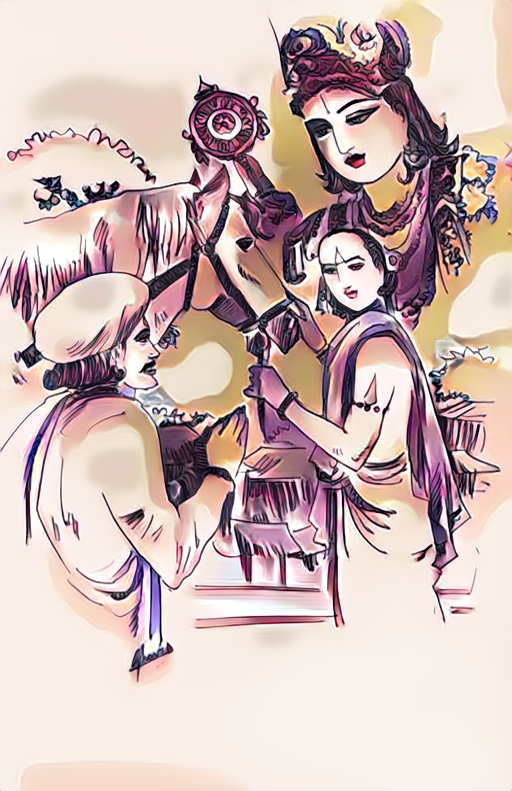
A Test of Faith
In a small town bustling with trade and commerce, Bhanudas, a merchant by profession, was known for his honesty and kindness. Though he earned his livelihood selling fine cloth, his heart was always elsewhere --- longing for the divine
presence of Lord Panduranga.
Unlike other merchants, who spent their days worrying about profit and loss, Bhanudas found his true joy in singing the Lord's praises. Every evening, after completing his work, he would join the kirtan gatherings, where saints
and devotees sang the glories of Rama and Krishna.
One day, he heard of a grand kirtan being held in a nearby town, where great saints and Haridas would gather to chant the Lord's name. His heart leaped with excitement, and he immediately decided to go.
But as he prepared for his journey, his fellow merchants mocked him.
"There are thieves in this area," one of them warned. "If you leave your goods unattended, they will surely be stolen."
"What do you gain from these kirtans anyway?" another sneered. "Will they bring you wealth? Will your Lord Panduranga come and protect your goods?"
Bhanudas simply smiled. "Let my goods remain here or be stolen --- I care not," he said. "My heart is fixed on Panduranga. I will never desert Him."
With that, he left everything behind and set off toward the kirtan, unaware of the mischief that awaited him.
A Gathering of Saints
The journey was long, but Bhanudas hardly noticed. The thought of singing before the Lord filled him with joy. As he reached the sacred site, he was greeted by the sounds of cymbals, drums, and divine melodies.
Saints and devotees sat in a large circle, their faces glowing with devotion. In the center stood the revered Haridas, leading the kirtan.
Bhanudas bowed deeply before him. "Happy is this occasion," he said, "for today is Ekadashi, the sacred day of devotion. My heart rejoices to be in such company."
He embraced the saints warmly, and as the kirtan began, his soul soared. The Vaishnavas sang tales of Rama's valor, Krishna's divine lilas, and the boundless mercy of the Lord.
As Bhanudas clapped his hands and sang, he forgot everything---his business, his possessions, and even himself.
Meanwhile, back in the marketplace, his fellow merchants plotted against him.
The Evil Plot
Seeing that Bhanudas had left for the kirtan, a group of envious merchants gathered.
"This is our chance," one whispered. "He has left his wares unattended. Let's play a trick on him."
"Let his packhorse loose," another suggested. "And throw his bundle of cloth into a ditch. When he returns, we'll act innocent and say thieves took it."
Laughing cruelly, they untied his horse and tossed his goods into a deep pit. "Now let's see if his Lord Panduranga comes to save him!" they jeered.
But what they did not know was that the Lord Himself was watching.
The Lord's Intervention
In the divine abode of Vaikuntha, Lord Panduranga smiled. "My devotee Bhanudas sits lost in my name, while wicked men conspire against him. How can I allow this injustice?"
Taking the form of a humble person, the Lord descended to the marketplace. He found Bhanudas' horse wandering aimlessly and gently held its reins. The Supreme Lord---the One who reclines on the cosmic serpent Shesha, the One beyond the
reach of even the greatest Yogis---now sat in the middle of a dusty market, guarding the humble possessions of His devotee.
The Merchants Face Justice
As the merchants laughed at their mischief, they did not notice the shadows moving around them.
Suddenly, a gang of real thieves appeared. Before the wicked merchants could react, the thieves surrounded them, snatching their goods and untying their horses.
"Spare us!" they cried. "We have lost everything!"
But it was too late. They had set a trap for Bhanudas, yet they themselves had fallen into one.
Sitting in the dust, bruised and broken, the merchants wept.
"We wronged Bhanudas, and now we have been punished," one admitted.
Another sighed. "Truly, fortune favors the pure-hearted. We acted out of jealousy, and we have suffered for it."
Meanwhile, Bhanudas, unaware of all this, was still lost in the kirtan.
A Divine Encounter
As dawn broke, Bhanudas finally returned to the marketplace. But as he approached, he saw a sight that filled his heart with wonder.
His horse stood calmly, and beside it sat a radiant Brahmin, smiling kindly. Something about him felt divine. Bhanudas fell to his knees. "Who are you, O noble one, who has taken care of my horse?"
The Brahmin only smiled and, in an instant, vanished into thin air.
Tears welled in Bhanudas' eyes. "It was Him! The Lord Himself sat here, holding my horse!"
His heart overflowed with devotion. What had he done to deserve such grace?
Compassion Over Revenge
Just then, he heard sobbing. Turning, he saw the merchants, bruised and weeping.
They fell at his feet. "We have wronged you," they confessed. "We threw your wares into a pit, but real thieves came and stole all we had. Justice has been served."
Bhanudas looked at them with pity. "Do not grieve," he said gently. "The ways of the world are fleeting. True wealth is devotion to the Lord."
He led them to the pit and retrieved his cloth. Then, in an act of pure compassion, he distributed it among them.
"You have suffered enough," he said. "Take these, and let go of hatred."
Stunned by his kindness, the merchants wept. "We see now that true wealth is not in gold, but in devotion."
Bhanudas' Final Renunciation
That night, Bhanudas sat in deep thought. The Lord Himself had come to protect his horse. Was there anything left for him in the world of business?
"No longer will I be bound by trade," he decided. "My only wealth is the name of Panduranga."
The next morning, he renounced his business and dedicated himself completely to Haribhakti.
A Life of Devotion
Twice a year, during the sacred months of Ashadh and Kartik, Bhanudas led thousands of pilgrims to Pandharpur, the abode of Panduranga.
Walking barefoot on the hot sands, singing kirtans with cymbals in hand, he became a beacon of divine love.
His kirtans were no ordinary songs. They carried the power to melt even the hardest of hearts.
One day, as he sang, an atheist approached, sneering, "You waste your breath singing to an idol."
Bhanudas only smiled. "Look into your heart," he said gently. "Even in doubt, there is devotion."
The man, hearing his words, felt something stir within him. That night, he dreamt of Panduranga and woke up in tears.
Bhanudas' kirtans had the power to change lives.
The Lord Dances with His Devotees
One evening, as Bhanudas sang with overwhelming love, something miraculous happened.
A divine glow filled the air. The sound of anklets echoed in the wind. And before the astonished crowd, Panduranga Himself appeared---His golden form shining, His yellow silk robes fluttering.
Smiling, the Lord danced to Bhanudas' kirtan, moving gracefully among the devotees.
Tears streamed down Bhanudas' face. "O Lord, You have come!" he whispered.
The crowd wept with joy. Even the wicked, the faithless, and the doubters fell to their knees.
And so, as long as Bhanudas lived, his kirtans continued to draw souls closer to Panduranga.
When he finally left this world, his name was not remembered as a merchant, but as a saint---one who had seen the Lord, spoken with Him, and sung His praises until the very end.
The Eternal Message
Bhanudas' story teaches us that true wealth is not in gold, but in faith and devotion. Even when betrayed, he chose compassion over revenge. And in return, the Lord Himself became his protector.
To this day, his kirtans echo in the hearts of devotees, reminding us that in the end, only love for the Lord remains.
Jai Panduranga!
KEYWORD
Hṛdaya: The True State
Part Two
Ramesh Iyer
The vast range of light of the sun pervading the whole sky looks like a little twinkling streak when it passes through a small aperture of the screen on the window of our house. The cosmic space, which is endless in its expanse, looks
like a tiny spot when it is seen inside a little pot or tube. Likewise, the all-pervasive Brahman appears like a little speck of radiance within the hṛdaya of all beings. This hṛdaya is the spiritual heart located on
the right, distinct from the biological heart and is the true state of all beings as elucidated in the first part of this series on hṛdaya.
Being different orders of reality, the objects quoted above as analogies are no comparison to hṛdaya, as "in hṛdaya all this world abides. It is the mirror in which all things are seen. It is the source of all wealth"
1 and "The whole cosmos is contained in one pinhole in the Heart."2 While the objects belong to
vyāvahārika satyam (empirical reality), hṛdaya is of pāramārthika satyam (absolute reality).
Bhagavān's Three Mantras on Hṛdaya -- Muktakatrayam
Bhagavān gave the humanity at large three significant revelations: the practice of Self-enquiry, the knowledge that the sacred Aruṇācala mountain is the very embodiment of Lord Śiva, and the spiritual heart centre (hṛdaya) on
the right side of the chest.
On the most amazing one of the three, viz., hṛdaya, Bhagavān has composed three mantras extempore, on different occasions and later collected together called muktaka-trayam. As they came spontaneously from Bhagavān and
are very precise exuding a crisp fragrance of truth and anubhava, guiding seekers to the final state of perfection, they are more mantras albeit ślokās. By calling them mantras it is to be understood that merely chanting them
will produce the result of liberation whether or not the meaning is understood.
Devotees start with the muktaka-traya mantras while chanting Saṃskṛta works of Bhagavān every Sunday morning after the pūjā at the shrine of Bhagavān.
We will in the following sections dwell more on these mantras.
Bhagavān's Mantra - "Ekam Akṣaram"
The first of these, Ekam Akṣaram, was written when a devotee, Somasundaraswami, went to Bhagavān with a new notebook and requested him to write one letter (akṣaram) in it. Bhagavān replied with the punning Thamiżh verse, which
he later translated into saṃskṛtam3:
ekam akṣaram hṛdi nirantaram |
bhāsate svayaṁ likhyate katham ||
The non-dual imperishable itself shines continually in the Heart. How is it to be written?
The word akṣaram has two popular meanings, among several others. One is, alphabet / letter / syllable and the other imperishable / indestructible. As the akṣara, the imperishable Self shines in the
hṛdaya (spiritual heart) of all beings, how can it be written?
In Bhagavad Gītā, Lord Kṛṣṇa defines: akṣaraṃ brahma paramaṃ meaning "The Supreme Indestructible Entity is called Brahman."4 Further,
Bṛhadāraṇyaka Upaniṣad states, etadvai tadakṣaraḥ which means, "That which is indestructible is the Self."5
Bhagavān reveals from this mantra that the imperishable Self that shines itself as hṛdaya can't be known through speech, thought, writing or intellect and one can only be the Self as "It is". Bhagavān's most profound and
exalted teaching is6:
எழுத்தறிந்த தாம்-பிறந்தது எங்கேயென்று எண்ணி
எழுத்தைத் தொலைக்க எணாதோர் — எழுத்தறிந்தென்
சத்தம்-கொள் எந்திரத்தின் சால்புற்றார் சோணகிரி
வித்தகனே வேறார் விளம்பு.
eżhuth-thaṟindha thām-piṟan-dhadhu eṅġē-yeṉḍṟu eṇṇi
eżhuth-thai tholai-kka eṇā-dhōr --- eżhuth-thaṟin-dheṉ
chath-tham-koḷ endhira-ththiṉ sāl-puṭṟṭṟār śōṇa-giri
vith-thagaṉē vēṟār vi-ḷambu.
Of what use is the learning of letters to those who do not seek to wipe out their writ of fate by enquiring whence they were born but instead pride themselves on their knowledge? Who else are these, Oh! Lord Śonagiri, they are only
instruments that record and play sounds?
The burdensome knowledge acquired through mastery of letters, comparable to "Smart Hearables" that repeat the sounds recorded on it earlier, is not at all useful for the destruction of ego. One's own true state of
hṛdaya can only be realized through vicāra. "A tiny hole in the Heart remains always closed and is opened by vicāra. The result is 'I-I' consciousness, the same as samādhi."
7
Bhagavān's Mantra - "hṛdaya kuhara"
While the first part of this series introduced Bhagavān's famous saṃskṛta mantra starting "hṛdaya kuhara" inscribed in the New Hall of the āśram, we will now in this part dwell more on its meaning and significance in detail.
As we will see below, Bhagavān's teaching is captured in just four lines combining both the definition of hṛdaya as well as how an earnest seeker can establish in hṛdaya. Being the quintessence of the entire teaching
of Bhagavān, Śrī Vāsiṣṭha Gaṇapati Muni incorporated it as the second śloka of the second chapter of Śrī Ramaṇagītā. The next śloka states that
"One who understands this afore-said mantra 'hṛdaya kuhara', the essence of Vedānta, as sprung from the mouth of Bhagavān Śrī Ramaṇa Maharṣi, no doubt will arise at any time whatsoever."
8 The espousal and clarity of this path towards the highest truth is not only authentic but also provides the seeker with direct experience of the Self as it emanates from
Bhagavān who is ever poised firmly as That.
This saṃskṛta mantra when the compound words are broken into its constituent morphemes namely sandhi-vigraha (सन्धि-विग्रह) would be:
हृदय-कुहर मध्ये केवलं ब्रह्म मात्रं
हि अहम् अहम् इति साक्षात् आत्म रूपेण भाति ।
हृदि विश मनसा स्वं चिन्वता मज्जता वा
पवन चलन रोधात् आत्म निष्ठो भव त्वम् ॥
hṛdaya-kuhara madhye kevalaṃ brahma mātraṃ
hi aham aham iti sākṣāt ātma rūpeṇa bhāti |
hṛdi viśa manasā svaṃ cinvatā majjatā vā
pavana calana rodhāt ātma niṣṭho bhava tvam ||
In the center of Heart's cavity, Brahman alone as an ever-persisting 'I - I' shines directly in the form of Self. Enter into the heart, with the mind seeking (investigating itself), or with the mind immersing itself or with control of
the movement of the breath and abide in the Self.
It is really a wonder that though Brahman is aflame all the time as "I - I" within the hṛdaya for all beings, only the wise recognize that.
Hṛdaya - The true state of the throb of "I"
Let us look at the meaning of the words of this mantra for understanding its significance. First the compound word "hṛdaya-kuhara" is special compound word of the type of "sambhāvanā karmadhāraya samāsaḥ" where the
noun specified by the first word is of the type mentioned by the second word. This means that hṛdaya is of the type of kuhara. Kuhara means a space, hole or deep cave. Hṛdaya is the spiritual heart as
we saw in the first part of the series. Thus, "hṛdaya-kuhara" means Heart-space.
Now the next word "madhye" means middle. Heart-space is subtle and its middle denotes a point which is subtler. The next word "kevalaṃ" means One or the absolute and is adjective to the next word of "brahma."
"Mātraṃ" indicates that Brahman itself is in that Heart-space. What shines? "sākṣāt ātma rūpeṇa bhāti" -- shines directly in the form of the Self. How does it shine? "aham aham" -- as the "I - I," as the throb
of "I" without any hiatus. Bhagavān's assurance is indicated by the word "hi" which means indeed, assuredly, surely, of course, certainly.
Summarizing, it is said in the first two lines that the Brahman itself, the absolute and non-dual One, in the heart-space of all beings, shines certainly as the direct form of the Self, as throb of "I" continuously at all times. The
direct anubhava (experience) of the Self, shining as the "I - I," is thus available at hand for every being in this world without any reference to the scriptures.
Bhagavān reveals that this true form as throb of "I" is not the ego9:
nāṉ-oṉḍṟu sṯhāṉa-ththu nāṉ-nāṉ-eṉḍṟu oṉḍṟadhu
thāṉāga thōṉḍṟumē undhīpaṟa
thāṉ-adhu pūṉḍṟamām undhīpaṟa.
Where this 'I' notion fades, there appears the 'I-I' by itself, the One, the very Self, The Infinite.
In the later half of the mantra of "hṛdaya kuhara," Bhagavān imparts the teaching for the practice of the seeker by three different ways. Bhagavān says, "hṛdi viśa svaṃ" meaning "enter yourself into the heart."
The First Direct Path of Seeking
The first means of entering into the heart taught by Bhagavān is "manasā cinvatā": by a mind seeking.
When the mind seeks its source with the enquiry "Who am I" reaches the Heart, the ego gets annihilated. It will be worthwhile here referring to this śloka10:
gaveṣaṇāt-prāpya hṛdantaraṁ tat
pateda-hantā pari-bhugna-śīrṣā |
athāham-anyat-sphurati prakṛṣṭaṁ
nāhaṅkṛtis-tatparameva pūrṇam ||
Get at the Heart by the mind seeking. The ego bows its head and falls. Then "I-I" appears of its own accord, unceasingly and effortlessly, this is not the ego "I" but the Self, Supreme, Perfect.
This vicāra marga is direct and subtle, like catching the thief red-handed. Other ways like meditation as well as śravaṇa, manana, and nididhyāsana prescribed by Vedāntic texts are mere mental practices and
can silence the mind only for brief periods of time. Enquiry with steadfast resolution to reach the source alone can annihilate the mind.
The Second Direct Path of Immersion
The second means of entering into the heart specified in the mantra is "manasā majjatā vā" -- alternatively by the mind immersing or plunging.
Just as a person by frequent immersion in water is rid of the dirt of his body, similarly the mind, by its frequent immersion in the Heart in a thought-free state, sheds all its accretions and vāsanās acquired in several
births. Bhagavān states,
"Again, there is happiness at agreeable sights, etc. It is the happiness inherent in the Self. That happiness is not alien and after. You are diving into the Pure Self on occasions which you consider pleasurable. That diving reveals
the Self-existent Bliss. But the association of ideas is responsible for foisting this bliss on to other things or happenings. In fact, it is within you. On these occasions you are plunging into the Self, though unconsciously. If
you do so consciously you call it Realisation. I want you to dive consciously into the Self, i.e., into the Heart."
11
Similar lines of thoughts on plunging were expressed by Śrī Ramakṛṣṇa to none other than Narendra:
"Suppose there were a cup of syrup and you were a fly. Where would you sit to drink the syrup?' Narendra said, 'I would sit on the edge of the cup and stretch out my neck to drink it.' 'Why?' I asked. 'What's the harm of plunging
into the middle of the cup and drinking the syrup?' Narendra answered, 'Then I should stick in the syrup and die.' 'My child,' I said to him, 'that isn't the nature of the Nectar of Satchidananda. It is the Nectar of Immortality.
Man does not die from diving into It. On the contrary he becomes immortal'."
12
This path of devotion and surrender is expounded by Bhagavān13:
akhila upāḏhi ahaṉḍṟa aṟi-vēdhu
aham-aś-śivam eṉḍṟ-aniśam --- aha-ththē
ahalā ḏhyāṉam adhaṉāl ahath-thiṉ
akhila āsakthi aha-ṭṟṭṟu.
When the mind constantly merges in the heart as 'that Śiva am I', the self-effulgent awareness unconditioned by the upādhi of body-mind complex, no affinity for the world remains.
In her commentary to this śloka, Kanakammal insightfully explains,
"As the sail spreads wide aloft a ship is blown in all directions by the wind and weather, an extroverted mind is made to wander by the various upādhis. But if the mind, like the humble anchor sunk in the depths of the vast ocean,
plunges in the heart of wisdom, all vāsanās perish. Hence Bhagavān exhorts the seekers to sink the mind through dhyāna into the Heart."
14
The Third Indirect Path of Prāṇāyāma
Turning our own attention to the third means of entering into the heart, Bhagavān mentions, "vā pavana calana rodhāt" -- another method is control of the movement of breath.
An impure and weak mind is a slave of life which is full of desire for enjoyment of sensual objects. The discipline of breath-control (prāṇāyāma) gives a certain purity to life in the body and thereby helps the mind to have
control over itself by getting clear of the advances of life upon it. Further, prāṇāyāma can be practiced in order to train the mind to be alone, kaivalya (thought-free) for the pursuit of one path as stipulated by
Bhagavān15:
oḍukka vaḷiyai oḍuṅġum uḷaththai
viḍukkavē ōr-vażhi undhīpaṟa
vīyum adhaṉ-uru undhīpaṟa.
The mind stilled by regulating the breath with the help of prāṇāyāma is fit for the pursuit of one path with required focus and gets annihilated.
Thus path of prāṇāyāma is an indirect means and an aid to the other two means of seeking and immersion. To quote Bhagavān,
"In the absence of enquiry and devotion, the natural sedative prāṇāyāma (breath regulation) may be tried. This is known as Yoga Marga."16
Further, Sat-darśanaṁ illuminates17:
kūpe yathā gāḍhajale tathāntaḥ
nimajjya buddhyā śitayā nitāntam |
prāṇaṁ ca vācaṁ ca niyamya cinvan
vindenni-jāhaṅkṛti-mūla-rūpam ||
"As one would dive deep into water holding breath and speech, to recover an article fallen into water, one with speech, mind and breath restrained, should dive deep with a sharp mind into the Heart, and discover the real source of ego."
The practice of prāṇāyāma is thus suggested for a mind to take deep plunge into the deeper truth of oneself with a vigilant and discerning eye.
Finally, the mantra of "hṛdaya kuhara" concludes with "ātma niṣṭho bhava tvam" -- abide in the Self. Thus, the paths to get at the true state of hṛdaya are three and they are the direct means of seeking &
immersion and the indirect means of prāṇāyāma.
(To be continued)
The Paramount Importance of Self-Attention
Part Fifty-Four
Sadhu Om As Recorded by Michael James
Michael James assisted Sri Sadhu Om in translating Bhagavan’s Tamil
writings and Guru Vācaka Kōvai. Many of his writings and translations
have been published, and some of them are also available on his website,
sriramanateachings.org.
27th April 1979
Sadhu Om: Bhagavan has given us many pointers to help us investigate and know what we actually are, and each of these pointers is a precious clue for us to follow. By experimenting with each of these clues, by trying to
apply each one in practice, we will gradually develop the skill to hold on to self-attentiveness in all circumstances and to restore it whenever we lose our hold on it. Which of these clues we will find most helpful will vary according
to the circumstances, so if at any time we find that one clue is not helping us, we can try to apply another one. For example, when we sit calmly to practise being self-attentive, we may find the clue 'Turn back within to face yourself
alone' to be helpful, and if after some time we find that we have been distracted by other thoughts, the clue 'Investigate to whom these thoughts appear' may be helpful. However, whenever we are very agitated or overwhelmed with
troubles or miseries, we may not find either of these clues to be sufficient, so at such times we can try 'sifting' by thinking as follows:
These troubles and miseries come to this person I seem to be, but am I this person? Was I aware 'I am this person' in sleep? No, but though I was not aware 'I am this person' then, was I not nevertheless present in sleep, and was I not
aware of my being then? In other words, was I not aware 'I am' even when I was not aware 'I am this person'? What then is this awareness 'I' that existed and shone alone in sleep, but which now seems to be mixed up with this person and
hence with all these troubles and miseries that have come to this person?
By thinking like this, carefully considering what this 'I' is, we may be able to sift it out and separate it from everything else with which it now seems to be mixed, thereby enabling us to focus our attention on it alone. If we want to
sift a diamond from a heap of pebbles, we need to look at the pebbles carefully to see where amongst them the diamond is lying, and in doing so our attention will sooner or later be caught by it. Likewise, if we want to sift 'I' from
among all the other thoughts that constitute the mind, we need to survey the inner space in which all thoughts appear and disappear to see where this 'I' is, and in doing so our attention will sooner or later be caught by it. However,
unlike the diamond, which will be found as one thing among many other things, 'I' will be found to be the space of awareness in which all other things appear and disappear, like a cinema screen on which pictures appear and disappear.
We must then try to keep our attention fixed firmly, steadily and calmly on this space of awareness until we see it as it actually is, namely as the infinite and eternal space in which there is neither coming nor going, neither
appearing nor disappearing. When we see it thus, we will see that it alone is what is, so there is no such thing as 'mind' at all, as Bhagavan points out in verse 17 of Upadēśa Undiyār:
When one investigates the form of the mind [the space of awareness] without forgetting, there is not anything called 'mind'. This is the direct path for everyone whomsoever.
3rd May 1979
Sadhu Om: In Bhagavan's days devotees who lived elsewhere would write letters to tell him about their difficulties or to pray for his help and guidance, and though he read all such letters, he did not reply to any of
them, so Mauni, who worked in the Ashram office, would reply on his behalf. Even after he left his body, some devotees continued to write to the Ashram in the same way, believing that they were thereby placing their difficulties at his
feet.
One day in 1956, Prof. N.R. Krishnamurthy Aiyer, who had first come to Bhagavan in 1914, wrote to the Ashram saying that though he had often heard Bhagavan talking about the need for self-enquiry and self-surrender, he was not able to
do either, but he was at least able to recite Śrī Aruṇācala Stuti Pañcakam [Bhagavan's five hymns to Arunachala] daily. The Ashram president passed his letter on as usual to T.K. Sundaresa Iyer, who in those days replied to
such letters on behalf of the Ashram, but since he was unsure what to reply, Sundaresa Iyer told me what had been written without saying who had written it and asked me to draft a reply, so I immediately composed
Śrī Aruṇācala Stuti Pañcaka Māṇbu (the greatness of Śrī Aruṇācala Stuti Pañcakam):
ஒருநான்கெனு மறைநூன்முடி வுணராய்குறை விலையாம்
உலகோர்புகழ் சதுர்யோகமு முணராய்குறை விலையாம்
திருமால்சிவ பெருமான்பணிந் திலையோகுறை விலையாம்
சிவையைங்கரன் குமரன்றுதித் திலையோகுறை விலையாம்
கருணாகர முனிநாயக னருணாசல ரமணன்
கனிவோடருட் டிருவாய்மலர் கதிநாயக வமுதாம்
அருணாசல ஸ்துதிபஞ்சக மனனஞ்செய வறியின்
அதுபோதுமின் றதுபோதுநீ யதுவாமறி வுறவே.
You have not [studied and] known the final import of the peerless four Vedas? That is no loss. You have not [practised and] known the four yōgas, which people of the world praise? That is no loss. You have not worshipped
Tirumal [Lord Vishnu] or Siva Peruman [Lord Siva]? That is no loss. You have not praised Sivai [the Divine Mother], Ainkaran [the five-armed Ganapati] or Kumaran [Lord Subramanya]? That is no loss. If you know to do
manana [thinking deeply about the meaning and implication] of Aruṇācala Stuti Pañcakam, which Arunachalaramana, the abundant giver of grace (karuṇākara), the Lord of Sages (muni-nāyaka), graciously
sang with [heart-melting] love, and which is the foremost of paths [of upāsanā or worship] and amṛta [ambrosia, the nectar of immortality], that is sufficient, that is now sufficient to attain the awareness that you
are that (nī adu ām) [tat tvam asi].
Sundaresa Iyer sent this verse to Krishnamurthy Aiyer, and as soon as he received it he came to the Ashram to see who had composed it. When Sundaresa Iyer told him that I had composed it, he thanked me profusely and said he considered
it to be a gift from Bhagavan and an answer to his prayers, but I told him that it had indeed come from Bhagavan, so all thanks were due only to him.
[MJ's note: For the next thirty years or so this verse, which Sadhu Om composed on 2nd June 1956, was printed as an introductory verse at the beginning of each Tamil edition of Śrī Aruṇācala Stuti Pañcakam, but at some point in
the 1980s it was somehow omitted from further editions.]
13th May 1979
Sadhu Om: In Śrī Ramaṇa Dēva Mālai [published in 1939] Muruganar sang a verse that means: 'Because the ever-unborn has taken birth [in the form of Bhagavan Ramana], countless of the never-dyings [namely egos]
have died'.
23rd June 1979
Sadhu Om: If a donkey comes in front of a mirror, it will see a donkey, and if a monkey comes in front of the same mirror, it will see a monkey. Such is the outward form of the jñāni. Because that outward form
is devoid of ego, it is like a clear mirror. What each person sees in the jñāni is therefore a reflection not only of their real nature but also of their intervening mind. This is why each person sees and understands Bhagavan
in their own way. No two people see the same Bhagavan, because each of them sees him through the coloured glasses of their own mind.
In order to see him as he actually is, we need to see ourself as we actually are, and when we see ourself as we actually are, we will cease to exist as ego, so we will thereby lose ourself completely in him, as him. Therefore no one
other than Bhagavan can know him as he actually is. So long as we see ourself as anything other than him, we cannot see him as he sees himself. An impure mind will see a very distorted image of him, whereas a purer mind will see a less
distorted image of him, but only when he devours us entirely will we see him as he sees himself.
3rd August 1979
Sadhu Om: In verse 66 of Śrī Aruṇācala Akṣaramaṇamālai 'nēr' can mean either 'attain' or 'resemble', so 'uṉai nēr pittaṉ ākkiṉai' can mean either 'you made [me] one who is mad [with love] to
attain you' or 'you made [me] one who is mad like you'. Sundaramurti praised Lord Siva as a madman because he is mad with love to save his devotees, no matter how unworthy they are, so this second meaning implies: 'Just as you are mad
with love to save me, you made me mad like you, mad with love to be wholly possessed by you'.
In verse 68 'pul-l-aṟivu' (base, low or mean awareness or knowledge) implies either 'ignorance' or 'impure mind', whereas 'nal-l-aṟivu' (good awareness or knowledge) implies 'true knowledge', 'real awareness' or 'pure
mind'. The meaning of this verse can therefore be interpreted in either of two ways, namely:
Arunachala, say, what is base awareness [false awareness or ignorance]? Say, what is good awareness [real awareness or true knowledge]? Be gracious, [enabling me] to embrace [cling to or attain] [only real awareness].
or
Arunachala, when [your] grace embraces [me], say, what is a base [impure] mind, [and] say, what is a good [pure] mind?
This second meaning implies: 'What does it matter whether my mind is impure or pure? However it is, it will be eradicated when your grace embraces me'. When the Ganga floods Kasi, it will flow in all the streets, so both the pure Ganga
water and the impure gutter water will be carried away by it to the ocean. The grace of Arunachala is such a flood, as Bhagavan describes it beautifully in the last line of the first verse of Śrī Aruṇācala Padigam, 'O Love
called the great Aruna Hill, from which grace surges as a spring, gushing forth abundantly there', so whether our mind is pure or impure, if we are caught in the flood of his grace, it will certainly carry us back to the ocean of bliss.
31st October 1979
Sadhu Om [in reply to someone who remarked that Bhagavan did not like anyone to take him as their guru]: That is not correct. Bhagavan never objected to anyone taking him as guru. What he said was that
so long as we are aware of ourself as 'I am this body', guru is necessary, and guru will usually appear in the form of another human body. However, in the view of the real guru there are no others and there is
no such thing as ignorance (ajñāna), so he will never think 'I am the guru and these are my disciples'. Therefore the guru is guru only in the view of the disciples.
Since Bhagavan does not see us as other than himself, he loves us as himself, so his love is infinite and all-embracing. His infinite love for us is therefore what we experience as his grace, and his grace is what shines not only
through his outward form giving us his teachings, but also eternally in our heart as our own being, where he is silently working to purify our mind and enkindle in us the love to turn within to investigate what we actually are and
thereby to surrender ourself entirely to him.
All this he does without actually doing anything, but just by being as he is, because his very being is love, and love is the infinite power of being. The role of guru is therefore extremely subtle, indispensable and
ever-unfailing, as he indicates in the twelfth paragraph of Nāṉ Ār?:
God and guru are in truth not different. Just as what has been caught in the jaws of a tiger will not return, so those who have been caught in the look [or glance] of guru's grace will never be forsaken but will surely
be saved by him; nevertheless, it is necessary to walk unfailingly in accordance with the path that guru has shown.
(Concluded)
Bhagavan: His Teachings Are His Presence
D. Thiyagarajan
Bhagavan's 75th Aradhana festival was celebrated wonderfully on April 25, 2025. Thousands of devotees from around the world took part in the celebrations, both in person and through live broadcasts. People of all ages---descendants of
those who had seen Bhagavan in person to the youngest children---joined together in satsanghs, transcending the boundaries of religion, race, nation, and language.
In April 1950, countless hearts were heavy with sorrow, fearing that Bhagavan was about to leave his physical body. Yet, Bhagavan had always taught that the body is merely a burden, and to lay it down is true liberation---a cause for
joy, not grief. Still, only a few were inwardly prepared to recognize this as the liberation he had pointed to. "Where can I go? I am here," he assured. The body may perish, but the Self---the soul---is eternal. This is the essence of
Bhagavan's teaching, and through inner experience, we come to realize its truth. Time and space cannot contain or limit his presence; he continues to guide us from within.
As long as we identify with the body, there will be illness and suffering. But for Bhagavan, who had transcended all identification, what meaning could comings and goings hold? Bhagavan Ramana Maharshi, the embodiment of pure grace,
reminds us that grace is ever-present. It is his infinite compassion that continues to lift us from the darkness of ignorance into the light of awareness.
When he incarnated in Tiruchuzhi, a blind old woman saw a radiant vision---a sign of the light he brought into the world. Through Arunachala, he became the very light of wisdom. And finally, he merged back into that light, inseparably
one with Arunachala.
As the Arunachala Mahatmya reminds us, when Brahma and Vishnu were lost in ego, Lord Shiva appeared as a column of light, shattering their ignorance. Ego is darkness---clarity is light. Similarly, Bhagavan Ramana Maharshi appeared as
the light of wisdom, removing the ignorance of humankind, giving us a direct path to attain knowledge, and guiding us. Self-knowledge is like light. That light is reflected in the words of the enlightened.
This is what the Tirumantiram says:
"தெளிவு குருவின் திருவார்த்தை கேட்டல்
தெளிவு குருவின் திருஉரு சிந்தித்தல்தானே"
"Clarity is hearing the guru's sacred words,
Clarity is contemplating the guru's sacred form."
Bharatiyar also mentions this in his song,
"உள்ளத்தில் உண்மை ஒளி உண்டாயின்
வாக்கினிலே ஒளி உண்டாகும்"
"If there is true light in the heart,
There will be light in the words."
Even after centuries, even when a sage is no longer in physical form, the flame of wisdom---what we call clarity---continues to kindle hearts. It reaches anyone who deeply contemplates the sage or immerses themselves in his teachings.
Once, while conversing with his disciples, Gautama Buddha was asked by Ananda, "How will future generations ever have the blessing of sitting before you, hearing your words?" Buddha replied, "No matter how many centuries pass, I will
speak directly to those who read my teachings with sincerity. They will perceive me."
Across the expanse of time, certain expressions---music, poetry, art---endure and remain vibrant. Whether it is the devotional outpourings of Thyagaraja, the timeless compositions of Beethoven, or a simple lullaby sung by an unknown
grandmother, when we truly listen, we feel a deep, unspoken bond with the one who created it. We connect with their spirit---be it a saint, a composer, or our own ancestors---though we may never have seen them in person.
In the same way, when we read a verse by Kalidasa, a couplet from Tiruvalluvar, or admire a painting born of inner vision, we enter into communion with the master behind it. Their creations, touched by something eternal, transcend the
limits of time and reach us across the centuries.
Similarly, when we listen to or read the golden words of a guru, the essence within those words shines forth like a light. This light does not illuminate objects in the distance; it illuminates our very being. It touches the core of our
consciousness, stirring wisdom and clarity. This is the light of presence---the silent radiance we feel when in the company of a great soul. It is not bound by space or time. It is the light that awakens us.
Bhagavan Ramana Maharshi extols the glory of his spiritual father, Arunachala, in this way:
"உருத்தெரி யெல்லை யுற்றுகண் ணுற்றாற்
கருத்தினாற் றூரக் கருதினா லும்மே
வருத்த முறாது வராதவே தாந்த
வருத்தவிஞ் ஞான மார்க்குமுண் டாமே."
"Whether one sees Arunachala from its boundaries with the physical eye, or contemplates it from afar with the mind, everyone can attain the rare true knowledge (svaroopa jnana) that cannot be realized without practicing the
four means of realization and striving with effort."
Ramana Maharshi, who emphasized to his devotees to abandon the egoistic notion that the body is oneself, not only assured them that he was always present but also conveyed that after leaving his body, he merged with Arunachala as a
light, and as a flame of wisdom, he pervades everyone. Even though 75 years have passed since he left his body, any devotee of this generation or in the future can directly see and experience Ramana Bhagavan by following his truthful
words from any part of the world.
When a devotee asked Bhagavan why he did not travel from town to town to preach the truth to people, he replied:
"How do you know that I do not do that? Is preaching to people from a platform the only form of teaching? Teaching is imparting knowledge. It can truly be done through silence. What do you think of a person who listens to a one-hour
sermon and is not determined to change their life? Compare them with another who, in a few moments in a holy presence, has had their entire life's purpose transformed. Which of these is better? To preach loudly without effect? Or to
silently sit and spread spiritual power everywhere?"
Bhagavan also taught the power of silence as he said, "Thought came from silence. From thought came ego, and from ego came speech. Therefore, if speech has so much power, how much power must its source have?"
There is a saying that one attains liberation by being born in Tiruvarur, by dying in Kasi, and merely by thinking of Arunachala. The last phrase refers to silent initiation. Grace is bestowed upon the devotee silently. He does not need
to be in Arunachala. The only way to destroy desires is to reject all requests. Thus, we should have devotion towards Annamalai, who destroys desires. This is the meaning of attaining liberation by thinking of Annamalai.
When a devotee asked Bhagavan what silence is, he replied:
"Silence is the state beyond mind and speech; it is meditation that happens without the action of the mind. Controlling the mind is meditation. Deep meditation is constant speech. Silence means always talking. It is the uninterrupted
flow of speech. It is hindered by words. Words obstruct this language of silence.
"Then how can we communicate our thoughts to each other?" the devotee asked again.
The Maharshi firmly clarified to the devotee, "That is necessary only if there is duality!"
Bhagavan's main teaching is silence. That silent teaching is luminous; it is like the rays of the sun. It transcends words and can spread everywhere. Words and language are confined to a limited circle. Only those who know that language
or can read or hear it can understand it. But light has no such limitations. That is why Bhagavan, after leaving his body, merged with Arunachala as light and pervades everyone as light.
The sage is one who is simple, who has equanimity in honor and dishonor, who is alike to both friends and foes, and who is devoid of all efforts and has transcended all qualities.
Kambar sings about Rama's equanimity:
'மெய்த்திருப்பதம் மேவு' என்ற போதினும்,
'இத் திருத்துறந்து ஏகு' என்ற போதினும்,
சித்திரத்தின் அலர்ந்த செந்தாமரை
ஒத்திருக்கும் முகத்தினை உன்னுவாள்.
"Whether (the king) said, 'Attain the true royal state,'
Or (Kaikeyi) said, 'Leave this royal state and go to the forest,'
His face was like the painted lotus,
That always remains unfaded."
Ganapati Muni praises Bhagavan in the Ramana Chatvarimshat:
बहुमानवशादयता सुखिता-
मवमानततेरविदूनवता ॥
"He who is not delighted by honor,
Nor withered by dishonor."
As Arthur Osborne beautifully observed, Bhagavan Ramana lived the truth he taught. His life was his message---each word he spoke was affirmed by his actions. He preached simplicity, and he embodied it effortlessly. People did not revere
him because of any title or power, but because his naturalness and humility were beyond compare. In his presence, a deep devotion naturally arose---akin to the reverence one feels before a living deity.
Bhagavan's presence was familiar and unassuming, like an elder in one's own home. For nearly 54 years, he lived quietly and simply in Arunachala, reminding the world that a sage is not some ethereal being from another realm, but someone
fully grounded, fully human, and yet divinely rooted. He possessed nothing, sustained himself through alms, and lived with the utmost simplicity.
He held no official position, nor did he carry the authority of a monastery head. Yet his words, often laced with gentle humor, carried a rare power. His laughter was infectious, and his wisdom was always practical---never abstract. He
emphasized living the truth, not merely contemplating it. His daily life was ordered and precise. Books were returned to their place, sofa covers neatly folded, handwriting clear and elegant. Under his quiet care, the rhythm of ashram
life moved in seamless harmony.
Bhagavan was always approachable---kind, patient, and loving to all who came. His core teaching was simple and profound: "Self-inquiry is the only flawless path, the only direct path. It alone reveals that you are the whole, the
unconditioned Self."
He demonstrated that even ordinary people could attain the self-realization he had realized. He never distanced himself from human experience. He bore pain and illness with equanimity, silently showing that such conditions do not touch
one who abides in the Self. His life was a living statement that realization does not demand escape from the world but freedom within it.
In his Annamalai form, Bhagavan once again illuminated the direct, royal path of Self-inquiry---a path once thought remote and reserved for the few. The treasure of highest wisdom, hidden like a gem in the mountain, descended to the
foothills --- in the form of Ramana. That presence continues even now at his samadhi. True to his words --- "I am here" --- his presence remains palpable. As Arunachala Ramana, he lives in the hearts of his devotees, guiding them
silently from within.
Do not think that only those who physically saw Bhagavan were blessed, and others are somehow less fortunate. Whoever approaches his teachings with sincerity---at any time, in any place---comes into his living presence. There is no
separation. There is no lesser grace.
Bhagavan's teachings are Bhagavan. To read them deeply is to sit at his feet. To practice them is to walk beside him. His presence, his grace, and his light remain ever available --- unchanged, undiminished, and eternally near.
Association with Sages
B. K. Croissant
B.K. Croissant was caught in the jaws of the tiger in 1993. Since then her quest has been unceasing inner worship.
For many of us, these are dark times indeed. The moral compass appears lost, allowing the ego's dominance, unfettered, to flourish on the national and world stage. What greater motivation to give sincere seekers even greater resolve to
deepen their spiritual practice towards the attainment of true peace and to cling, with increased devotion, to Bhagavan Sri Ramana Maharshi as their sole refuge?
This is the second article of a series dedicated to various verses from Ramana Maharshi's *Uḷḷadu Nāṟpadu Anubandham* or Supplement to *Uḷḷadu Nāṟpadu*, his forty verses on Reality. In each instance, they will be studied by comparing
the original Sanskrit verses to his Tamil translations. Differences between the two are highlighted in bold.1
The first five verses of *Anubandham* extol the greatness of *satsaṅga*. *Sat* means being, Reality or one who unceasingly abides in Reality, and *saṅga* means association. So *satsaṅga* is sitting in the presence of a *jñāni* and, when
attuned to his greatness, is the highest boon for those who are yearning to transcend sorrow and the recurring cycle of birth and death. The *jñāni* or *jīvanmukta* however, is not his body. So even more important than physical presence
is mental association with the embodiment of the Self or pure consciousness.
Consider this verse from Muruganar:
888 [Though] perceived by the senses as having form, to those who truly see, they [the feet of the Lord] are the formless expanse of the supreme. Though they stood before us in the noble form of the guru, in truth they ruled us
[inwardly] through the radiance of being-consciousness-bliss.
2
According to Sadhu Om, "Gaining association with a *sadhu* does not only mean living in His physical presence. Since the *sadhu* is one who abides as Self, the Reality (*sat*), His bodily presence is not necessary. If one has true love
for a *sadhu* and sincere faith in Him, then one has truly gained His association, whether or not one has ever lived in His physical presence. Refer to where Sri Bhagavan explains
3 that mental contact or association with a *jnani* is best, and that, since the Guru is not the physical form, the opportunity of gaining contact or association with Him
remains even after the passing away of His physical form."4
Now onto the verses. Here is verse 1, both the Sanskrit original,
which is verse 9 of Adi Sankara’s Bhaja Govindam, and then
Bhagavan’s adaptation of it.
सत्सङ्गत्वे निस्सङ्गत्वं निस्सङ्गत्वे निर्मोहत्वम् ।
निर्मोहत्वे निश्चलतत्त्वं निश्चलतत्त्वे जीवन्मुक्तिः ॥
sat-saṅgatve nissaṅgatvaṁ nissaṅgatve nirmohatvam |
nirmohatve niścala-tattvaṁ niścala-tattve jīvan-muktiḥ ||
In association with Sages there is detachment from the world; in detachment from the world there is freedom from delusion; in freedom from delusion there is the state of unchanging Reality; in the state of unchanging Reality there
is liberation while living.
5
Tamil Translation:
By association with being, attachment will leave; when attachment leaves, attachment of the mind will perish; those in whom mental attachment has ceased have ceased in that which is not moving; they have attained jīvanmukti. Cherish
their association.
6
Bhagavan specifically and explicitly identifies the mind as the problem. The mind is without form and attaches itself to form in order to exist. When confronted by investigation, it disappears, along with all of its tendencies or
*vāsanās*, the seeds of action. Subdued by the victorious Self that rises up, it sinks into its source, which is eternally unmoving and unchanging. That is liberation.
'Perish' and 'ceased' are significant since they emphatically expound that the Self is totally devoid of any mental modifications whatsoever. That stillness recalls verse 1 of Bhagavan's *Navamanimalai* in which Siva dances in order to
stop the mind or *māyā*, and Arunachala majestically rises as that which is motionless.
Though he [Lord Siva] is actually acalaṉ, motionless, in that assembly hall [of Chidambaram] he dances [in the form of Nataraja] opposite [the divine] Mother, who is acalā [his consort]. Know that when that śakti subsides back in
[his] motionless form [here in Tiruvannamalai], Arunachalam rises high [in his natural state as pure being].
7
Why cherish association with Sages? Because they make revelation of who we really are easier, even automatic, in their presence. How do we regain that revelation once the ego becomes dominant again? By practicing *ātma vicāra* not just
once, but constantly. This is what the Sages tell us.
Verse 2 is from Yoga Vāsiṣṭham (5.12.17).
न तद्गुरोर्न शास्त्रार्थान्न पुण्यात्प्राप्यते पदम् ।
यत्साधुसङ्गाभ्युदितात्विचारविशदाधृतः ॥
na tad guror na śāstrārthān na puṇyāt prāpyate padam |
yat sādhu-saṅgābhyuditād vicāra-viśadād hṛtaḥ ||
What state one achieves from clear investigation arising from the company of Sages, that state cannot be attained through a teacher, the meaning of texts or virtuous actions.
Tamil Translation:
What exalted state one achieves here by clear investigation, which arises in the heart when one takes refuge in sādhu-association, that, which is extolled, is not possible to achieve by a teacher, by the meaning of texts, by
virtuous actions, or moreover by any means.
Bhagavan translated it a second time as verse 11 of *Upadēśa Taṉippākkaḷ* and ends it with the strong injunction to turn within.
The state that is reached in the inward-looking means, which clearly arises within by sādhu-association, is not by teachers, texts or good deeds. Go [back within].8
Pure consciousness or Brahman is the exalted state extolled by the Vedas, which is achieved by self-inquiry arising in the heart in the presence of a Sage. Bhagavan makes the point that delivery or liberation
can be attained here while living in the body, and at the end of the verse states emphatically that self-inquiry is the only means that will destroy the ego because other means, such as listening to teachers, studying
scriptures or performing virtuous acts, while aids to purifying the mind, involve the mind. By turning inwards and attending to the Self alone, the ego disappears with the grace of the *sadguru*.
When Mrs. Piggot asked Bhagavan in 1935 if a master was necessary for realization, the answer given was "The realisation is the result of the Master's grace more than teachings, lectures, meditation, etc. They are only secondary aids,
whereas the former is the primary and essential cause."9
Verse 3 is from Yoga Vāsiṣṭham
सज्जनसङ्गे संप्राप्ते समस्तनियमैरलम् ।
तालवृन्तेन किं कार्यं लब्धे मलयमारुते ॥
saj-janasaṅge saṁprāpte samasta-niyamair alam |
tālavṛntena kiṁ kāryaṁ labdhe malayamārute ||
While in the company of the wise, enough with all these rules! What should be done with a hand fan while a cool breeze is blowing?
Tamil Translation:
If one adheres to living with those who are sādhus, for what are all these restrictions? When the air of the excellent cool southern breeze is blowing, you say, what is the purpose of having a fan?
Other than 'excellent' and 'you say', there is little difference between the original Sanskrit verse and Bhagavan's translation. What is of primary importance, however, is continued emphasis on company of the wise, which facilitates
direct knowledge of pure consciousness through self-attention, a theme abundantly stated in *Devikālottaram,* a text from the Agamas that was translated by Bhagavan. In that text, Lord Siva exhorts devotees to drop traditional spiritual
practices that are unnecessary once an aspirant reaches an appropriate level of maturity. Here are a few verses that address *niyamas* or rules and restrictions.
16. Those who seek for the everlasting liberation need not endeavour to practise repetition and countless diverse mantras (repeating potent scriptural words or texts to gain various ends) and methods of yoga such as breath-control
(prānāyāma), breath retention (kumbhaka), and concentration.
17. There is no room for performing puja (worship of deities), namaskāram (paying homage like prostration), japa (incantation), dhyāna (contemplation) and so on. Hear from me that the highest truth acclaimed in the vedas, can be
known only through jñāna; hence, there is absolutely no need to know anything outside of oneself.
62. O Queen among women, know that bathing in holy waters, repeating holy names or words (mantras), performing daily homa (sacred offering in specially prepared fire), worship, other oblations in lustrous fire, or any other means
(sādhana) to be followed after great study, are never required for him (the earnest aspirant seeking liberation).
63. Niyamas (strict rules of conduct such as what to eat, when to eat, how to eat, what to wear, where to sit and so on), worship of deities in sacred places, nāmārchanas (worship of deities by reciting sacred names), pitru-karmas
(oblations etc., carried out for the sake of forefathers to help them reach a high state), pilgrimage to holy places which have come forth on earth, and observance of great vows, are all not for him (the earnest aspirant), if
considered deeply.
10
Verse 4 is a verse found in Garga-saṁhitā (10.62.9),
गङ्गापापं शशितापं दैन्यं कल्पतरुस्तथा ।
पापं तापं च दैन्यं च हन्ति सज्जनदर्शनम् ॥
gaṅgā-pāpaṁ śaśi-tāpaṁ dainyaṁ kalpatarus tathā |
pāpaṁ tāpaṁ ca dainyaṁ ca hanti saj-jana-darśanam ||
Just as the wish-fulfilling tree destroys poverty, sin is destroyed by the Ganges and heat by the moon. Viewing of the wise one destroys all three.
Tamil Translation:
Heat will be destroyed by the cool moon, poverty by the good wish-fulfilling tree, and sin itself by the gaṅgā. All these three, beginning with heat, will depart just by the great sight of peerless sādhus.
In this verse, the wise are exalted by being compared to the good wish-fulfilling tree, the Ganges and the cool moon, all of which are traditional means for relieving heat (beginning with it and including the
heat of mental anguish), poverty (especially defects of the mind), and sin (the ego). Not only do peerless Sages remove all three, but they do so just by darśanam, or the great sight of them.
Verse 5 is Bhagavan’s adaptation of a verse from Śrīmad
Bhāgavatam(10.48.31).
न ह्यम्मयानि तीर्थानि न देवा मृच्छिलामया: ।
ते पुनन्त्युरुकालेन दर्शनादेव साधव: ॥
na hy ammayāni tīrthāni na devā mṛc-chilāmayāḥ |
te punanty uru-kālena darśanād eva sādhavaḥ ||
The sages purify merely by being seen. Not so with holy places composed of water and deities made of clay or stone, which purify after a long time.
Tamil Translation:
Tīrthas, which are composed of water, and deities, which are stone or earth, are not at all equal to those mahātmas. Ah! Those give rise to purity by countless days; sādhus as soon as they see by eye, see.
In this verse *jñānis* are compared to holy places and deities, which are not at all equal to those mahatmas. Why? Because of their superior power, which is transmitted through the eyes. That aspect of a *jīvanmukta* is given
special emphasis in Bhagavan's adaptation by the addition of 'by eyes' (*kaṇṇināl*), 'as soon as (they) see' (*kaṇḍiḍavē*) and 'know this' (*kān*). Michael James explains the importance of being seen by the *jñāni* as opposed to merely
seeing him.
"Whereas the previous verse said that heat, poverty and sin will be removed by our seeing peerless *sādhus*, this verse says that purity will arise in us as soon as they see us. This distinction is significant, because heat, poverty and
sin are results of actions we have previously done under the sway of our *viṣaya-vāsanās* (inclination to seek happiness in objects of phenomena), which are the impurities in our mind, so this implies that being seen by *jñānis* is far
more efficacious than seeing them, since the former will remove our impurities whereas the latter will remove just the effects of our impurities."11
The power of the gaze, glance or look of the *sadguru* cannot be overestimated and is a major subject for devotees of Ramana Maharshi. Muruganar expounds upon it effusively in his verses. Here are a few examples:
372. As far as I am concerned I did not do anything as a means for gaining the indivisible Sivam. Simply through the gaze of my Father did I attain within my heart the experience of jnana, the goodly supreme Self.
627. By a mere glance which breached my heart with its force and entered inside, he conveyed to me the secret knowledge which no words could ever describe. Praise to those holy feet that embody the infinite compassion of my Guru,
the most excellent Sri Ramana!
923. Cutting away the discriminating awareness of a mind tainted by desire, they at once severed the powerful fetters of my worldly bondage with the bright sword of their fair gaze, the feet of my Lord.
924. Hurling the spear of his gracious gaze, the feet of my Lord entered my heart and remained there, so that the effects of my deeds lost their grip and fell from it.
12
So, in conclusion, the *jñāni* is no other than the Self, and in his gaze we see the Self in us. Praise to the *sadguru*, glory to the all-pervading Self within the hearts of all! Here Muruganar gives us hope that we too can transcend
the ego.
489. Even weak devotees of little attainment will be able to attain the holy condition of jnana if they constantly seek out the company of those eminent sages and supreme masters of spiritual discipline, who dwell in the egoless
condition of mauna.
Here he tells us the path to Ramana is self-investigation.
302. He [Sri Ramana] is neither easy of access nor extremely difficult. He is the gracious benefactor, the virtuous one, the true one who exists as the vast expanse of grace. Yet although his very form is the light [of
consciousness], unless one investigates and clearly knows the truth of oneself within the heart, he cannot be known at all.
Finally, being the Lord is knowing the Lord.
392. It should be known and clearly understood that the only true and perfect puja to my Lord, who accepted the offering of my wicked and deceitful mind with its skittish thoughts, and came to dwell in the temple of my heart, is to
dwell free of thought in that inner awareness which is the yoga of Lord Siva.
13
Om śāntiḥ, śāntiḥ, śāntiḥ
Question & Answer
Question: In Sat Darshana Bhashya and Talks with Sri Ramana Maharshi (1932), it is said as follows: "Realisation of jnana is always a vritti. There is a distinction between
jnana (mental modifications, knowledge) or Realisation and swaroopa (essence), the real. Swaroopa is jnana itself; it is consciousness. Swaroopa is sat chit, which is infinite. It is
always there, self-attained. When you realise it, the Realisation is called truly jnana. It is only with reference to your Existence that you talk of Realisation or jnana. Therefore, when we talk of jnana, we
always mean vritti jnana and not the swaroopa jnana (knowledge of the essence), for swaroopa itself is jnana---consciousness always." What is the explanation?
Answer: In the conversation with Kapali Sastry,1 Sri Bhagavan says, "In Vedantic parlance, this Aham Sphurthi is called vritti jnanam."
This is an important clue. Aham Sphurthi is the same as Aham Sphurana ("flashes of I-Consciousness," as mentioned by Kapali Sastry). Bhagavan says,
2 "Sphurana is the foretaste of Realisation." And so, vritti jnanam is the stage prior to, or the process leading up to, the effort-free state of
Realisation.
Bhagavan says3 that for ignorance to be destroyed, vritti jnanam (an extremely subtle state of mind) is necessary. "Fixing attention on the Pure I after the
subsidence of all thoughts and not losing hold of it" is what this extremely subtle thought does. He gives the analogy of a lens focusing sunlight on cotton to make it catch fire: even though sunlight is always available, cotton does
not catch fire unless the light is focused. Similarly, even though awareness (which is inimical to ignorance) is available in all three avasthas, avidya (i.e., ignorance) is not destroyed. An action like
focusing attention on the pure I is needed. Bhagavan refers to verses 360 and 380 of Viveka Chudamani to make the point that paramatma tatvam is extremely subtle and cannot be obtained by the gross, outgoing
mind --- samadhi, an extremely subtle vritti, is needed.
Bhagavan also points out that the vritti in vritti jnanam is not like ordinary vrittis of the mind, which are of a "form-taking" type---modes of objective consciousness.
He4 further emphasises that vritti jnana alone can destroy ignorance and it is not vishaya vritti but atma vritti or subjective vritti. He
also speaks about the need for abhyasa---consistent practice---that should replace vishaya vrittis with atma vritti.
Nagamma5 has titled this as vritti janya jnanam, with the addition of the word janya. T. K. Sundaresa Iyer asks a question: "What is
mano vritti jnanam?"
Bhagavan's reply is interesting: "It means that atma cannot be realised at all unless there is mental action or mano vritti... When the mind becomes antharmukham, vritti janya jnanam appears. That
means, you will know the source of vritti. That source is called aham sphurana or the Self. However, it is only by the mind that it is to be known. That is why it is called mano vritti jnanam."
Bhagavan refers to Kaivalyam,6 in addition to Viveka Chudamani, in Talk 624. vritti jnanam is discussed in a few chapters there, but in one
instance, there is an interesting question by the sishya:
Q: Will vritti jnana survive in the ultimate state of akhanda anubhavam (brahma svarupam)?
A: For the purification of water in a jug, we add a powder (kataka renu in Sanskrit, tetram podi in Tamil) that precipitates all the impurities to the bottom of the jug, and the powder also sinks along
with the impurities, leaving clear water on top. Similarly, vritti jnanam destroys all other vrittis and destroys itself too. It paves the way for jnanam but does not survive in the akhanda anubhavam.
It is much like the Piṇam Sudu Thadi referred to by Bhagavan in Who Am I? where the stick used to stoke the funeral pyre is ultimately discarded into the pyre itself.
It is interesting to note that in Talk 624, Bhagavan refers to Kataka Renuvat7 while quoting Vivekachudamani. Thus vritti jnana is a stage prior to
svarupa jnana (the ultimate state of Realisation). It is attained by repeated efforts to turn the mind inward. The resultant state of samadhi may often be lost due to remnants of past tendencies or vasanas.
Repeated practice and efforts will finally eliminate all the vasanas, and the sadhana becomes successful. The mumukshu is stabilised in the Supreme State, never to slip back into bondage.
When the mind withdraws completely from interest in the external world and effortlessly abides in its original, primordial state of pure being, it is known as vritti jnanam---the turning of the mind inward. One can be said to
have attained vritti jnanam only when the mind remains in this state not due to any motive or objective, but simply because it no longer knows anything else. Previously enmeshed in a complex web of vrittis (mental
tendencies), the mind now dissolves into pure awareness, free from effort or intent. In this condition, stillness is not something to be maintained through exertion---it is the mind's natural state. This is
mano nivritti (freedom from mental structures) or vritti jnanam. Here, nothing exists to divert attention from pure subjective awareness. The mind remains anchored at its source, and the luminous presence of "I-I" is
distinctly felt---an experience known as Aham Sphurana. Since this state arises not through mental effort but through the dissolution of the mind itself, some texts describe it as transcendental. When even this subtle mind is
completely dissolved in the Beyond, what remains is the sahaja stithi---the effortless, natural state of full Self-knowledge (jnana).
Introducing Nondi’s Corner
Hello young adults and children!
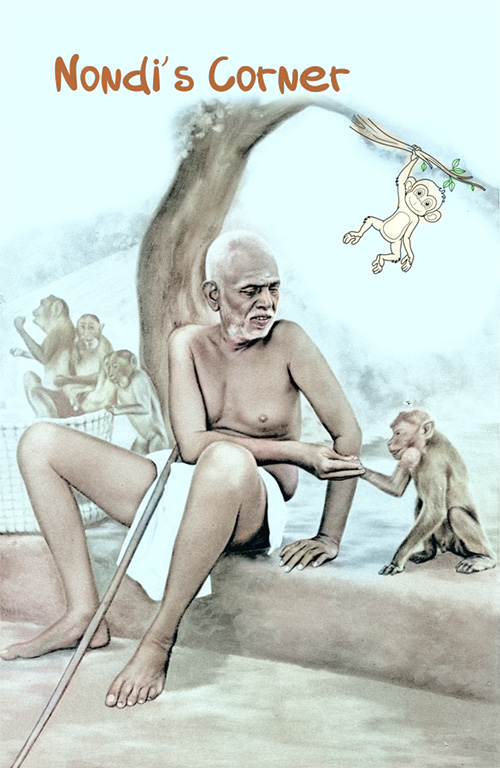 Hello young adults and children!
This is Nondi, a monkey devotee of Bhagavan. Welcome to the July 2025 edition of the Children/youth corner.
In this section, I will share stories, anecdotes, puzzles
and interesting facts that offer you spiritual nourishment
every quarter.
The aim is to inspire you and help you blossom into kind,
brave and decisive adults.
I look forward to engaging with all of you, all over the
world, in the years to come. Please share your queries,
feedback and articles with me at mountainpath@gururamana.org
Sincerely,
Your friend,
“Nondi”
Turning inwards to stay out of trouble
Here’s a beautiful incident narrated by Rangaswami, one of Bhagavan’s sincere and hardworking attendants who served him for many years. This incident highlights the sagacity of avoiding trouble by turning the mind away from the external world and repeatedly directing it inward until it realizes that all happiness lies within—in the Heart.
Suri Nagamma’s reference to Rangaswami in one of her letters highlights his deep dedication to Bhagavan: “After Veda Parayana, Bhagavan had his bath and breakfast and started for Skandasramam accompanied by Rangaswami, who is like Nandi to Lord Siva.”
There was once a Guru who had eight disciples. One day, he asked them all to make a copy of his teachings from a notebook he had kept. One disciple, who had lived an easy-going life before renouncing the world, could not make a copy for himself. He, therefore, paid a couple of rupees to a fellow disciple and asked him to make a copy on his behalf.

This incident is as follows:
A nest of squirrels was above Sri Bhagavan’s couch. A cat had eaten the mother of the young squirrels and the responsibility for their care was taken over by Sri Bhagavan. He remarked: “These little ones do not know that wisdom lies in remaining in their nest. They keep attempting to come out. All trouble lies outside but they cannot remain within. Similarly if the mind is not externalized, but remains sunk in the Heart, then there would only be happiness. But the mind keeps moving out”.
I asked Sri Bhagavan: “What is the path for keeping the mind inward?” Sri Bhagavan said: “It is exactly the same as what I am doing now. Each time a young squirrel comes out, I keep putting it back into the nest. When I go on doing it, it learns the happiness of staying in the nest.”
Youth Corner
Here's a personal account from our young friend Shruti Narayanan about how she came to Bhagavan and what Bhagavan means to her. Shruti grew up in the San Francisco Bay Area and is currently a freshman at the University of California in Los Angeles.
My name is Shruti Narayanan. I recently graduated from high school and will be attending UCLA for college. I am happy to share my experiences as a young devotee of Bhagavan as I begin this new chapter of my life.
My family and I have been attending the Bay Area satsang since 2008, when I was just two years old. Many satsang members remember me as the little girl who would fall asleep during prayers---only to wake up just in time to play with the other kids and enjoy dinner. I can now admit that I was often just pretending to sleep!
Looking back, those Saturday evenings hold some of my fondest childhood memories, and I always looked forward to satsang days. I am forever grateful for that time in my life---for the blessing of growing up listening to Akshara Mana Malai, Upadesa Saram, Arunachala Pancharatnam, and other sacred chants every week.
The three annual functions---Bhagavan's Jayanthi, Aradhana, and Advent---also carry wonderful memories, from performing Bharatanatyam dances and Kummi Pattu to spending time with fellow devotees.
I am also equally grateful for the opportunity to have visited Ramanasramam in Tiruvannamalai multiple times since 2008. Whether it was sitting in the samadhi hall, enjoying the sattvic food, seeing cows and peacocks around the ashram, or listening to the evening parayanams, I will always cherish these incredible, and peaceful experiences.
Just this summer, my family and I did Girivalam on Pournami, the full moon day. The deep sense of connection and belonging I felt walking with the large crowd of devotees around Arunachala was truly a once-in-a-lifetime experience. I look forward to my visits to India, primarily for the chance to return to the ashram, and I hope we will continue this tradition.
The impact of Bhagavan's presence and teachings has been evident throughout my life, becoming even more profound as I grow older. I have a tendency to feel anxious and stressed over the smallest things, but the moment I think of Bhagavan and chant Arunachala Siva three times, I can feel my worries begin to fade away.
Nothing else in the world provides me with as much reassurance as Bhagavan does. Having grown up hearing that he always has a plan for us and that things will ultimately work out, I feel incredibly fortunate to carry this deep sense of trust. It is a blessing to know that, no matter what, an invisible safety net is always behind me---ensuring that I am protected by Bhagavan's grace.
This was especially true over the past few months during my college decision process. I initially didn't get into many of the colleges I had hoped for, and I was waitlisted at several others. The ensuing months were stressful, confusing, and frustrating, with little to do but wait. Throughout this period, my devotion to Bhagavan remained unwavering. My family and I always trusted that he had a greater plan, would act in my best interest, and would guide me to the right place. In due course, on the very day after school ended, I was taken off the waitlist at my top choice college and will be attending there this fall.
The sense of belonging, support, and comfort that Bhagavan has provided me throughout my life is beyond what words can express. I feel his presence with me constantly, in both trying times and moments of joy. I am grateful for the supportive satsang family I have been blessed to grow up with. I am thankful for my parents, sister, and grandfather for bringing me to satsangs. Above all, I am eternally grateful for Bhagavan's grace in my life, guiding me toward the right mindset and the right actions.
Om Namo Bhagavate Sri Ramanaya!
Connect with Sri Ramanasramam:
Live Streams and ‘In Focus’ Videos
Sri Ramanasramam offers live streaming of the Sri Chakra Puja on the first and last Friday of each month. Daily live streaming (Monday to Saturday) from 8:00 to 9:30 am and 5:00 to 6:45 p.m. IST continues, and includes the Vedaparayana, puja, and Tamil Parayana. (There is no streaming on Sundays.) To access the videos, please visit:
https://youtube.com/@SriRamanasramam/videos
Sri Ramanasramam publishes a monthly “In Focus” video on its YouTube channel showcasing the Ashram’s activities. To watch and subscribe, please visit:
https://www.youtube.com/@SriRamanasramam/playlists
Here’s this issue’s Fun Corner
Crossword Puzzle
Find spiritual leaders who saw Bhagavan when he was in the body
ACROSS
5. Mystic woman saint of Bengal (10, 2)
6. Author of Autobiography of a Yogi (16)
7. Founder of Divine Life Society (9)
8. First to teach the Bhagavad Gita in English (13)
9. Set up his Ashram in Kanhangad, Kerala (6)
DOWN
1. Appointed President of Divine Life Society in 1963 (10)
2. Guru of Swami Chinmayananda (7, 7)
3. Head of Ramakrishna Mission in Paris (15)
4. Disciple of Swami Nityananda of Ganeshpuri (10)
Solve the anagrams for western devotees of Bhagavan

Shloka: Sri Ramana Ashtottaram
Let’s continue to memorize this wonderful composition by Sri Viswanatha Swami. These are 108 names of
Bhagavan used to worship him. As each name is uttered by way of invocation, a flower is offered in worship.
Let’s memorize one name at a time and understand its meaning.
Here’s Name 7:
ओं जगद्धितावताराय नमः।
Oṁ jagaddhitāvatārāya namaḥ
Meaning: One whose advent is for the well-being of the world
He was born to help people attain liberation (moksha-siddhi) and for the welfare of the world (jagat-hitam).
Solutions to April 2025 crossword puzzle and word scramble puzzle
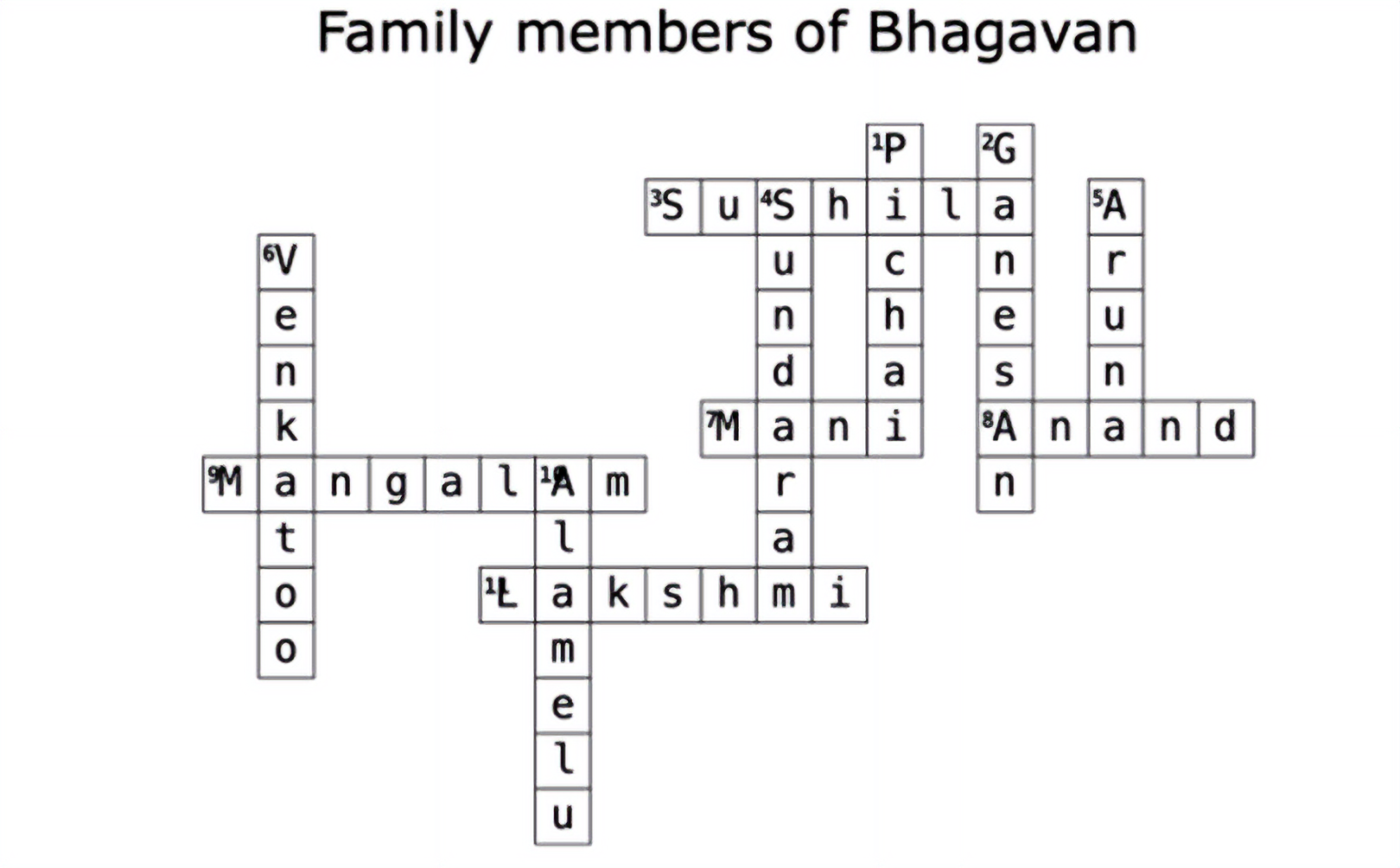
ACROSS
3. Mother of the current Ashram President (7)
7. Bhagavan’s youngest grand nephew (4)
8. Current President of the Ashram (5)
9. One of Bhagavan’s grand nieces (8)
11. One of Bhagavan’s grand nieces (7)
DOWN
1. Bhagavan’s brother-in-law (6)
2. Editor of the The Mountain Path (5)
4. Former President of the Ashram (8)
5. Sister of the current Ashram President (5)
6. Bhagavan’s nephew (8)
10. Bhagavan’s sister (6)

BOOK REVIEW

ENLIGHTENMENT MADE SIMPLE: An Introduction to Advaita Vedanta by Rory B. Mackay.
https://www.amazon.in/Enlightenment-Made-Simple-Introduction-Advaita-ebook/dp/B0D1M1C4JT
Enlightenment Made Simple: An Introduction to Advaita Vedanta by Rory B. Mackay serves as a comprehensive and accessible guide to the principles of Advaita Vedanta. This 460-page work aims to demystify enlightenment by
exploring topics such as identity, desire, suffering, the nature of the Self, Consciousness, God, and the universe. It also addresses concepts like karma, meditation, and devotion, providing readers with tools to attain freedom through
understanding and disciplining the mind.
Mackay's writing style is simple and conversational, making complex philosophical ideas approachable for readers new to the subject. One of the book's strengths is its balance between theoretical discussion and practical application.
Beyond simply explaining Advaita Vedanta's core principles, Mackay provides readers with actionable insights on how to integrate these teachings into daily life. He explores essential spiritual concepts such as karma, meditation, and
devotion, offering guidance on how these can be used to cultivate inner freedom and mental clarity. By emphasizing the discipline of the mind, the book encourages readers to go beyond intellectual understanding and engage in a
transformative journey of self-inquiry and self-realization.
A Practical Guide to Non-Dual Wisdom
Overall, Enlightenment Made Simple serves as a thorough and practical introduction to Advaita Vedanta. Whether you are entirely new to the philosophy or looking for a fresh perspective on its teachings, this book provides a
well-rounded and engaging exploration of non-duality. With its blend of theoretical depth and practical guidance, it is an excellent starting point for anyone seeking to understand and experience the path to enlightenment.
― M. Giridhar
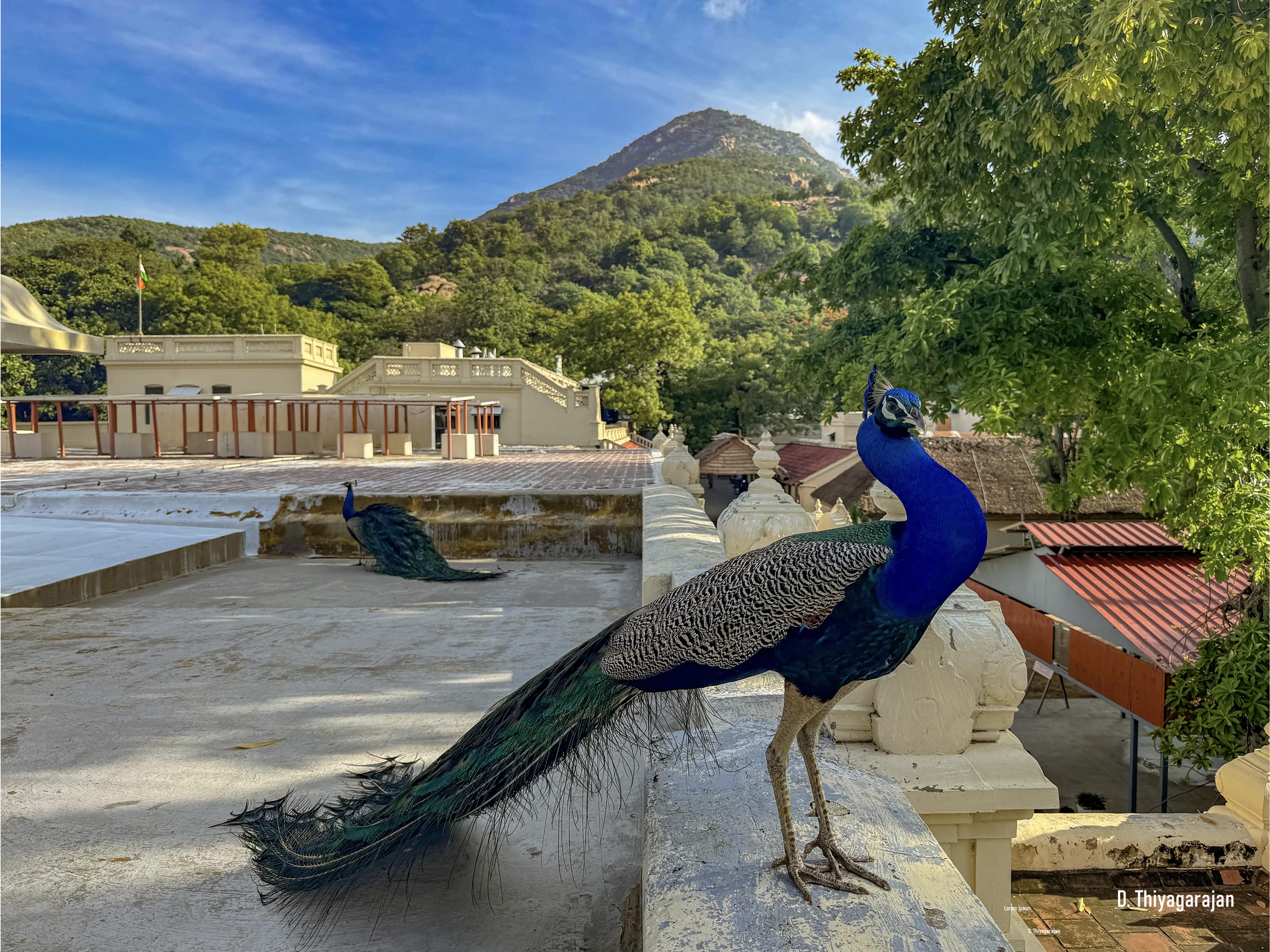
ASHRAM BULLETIN
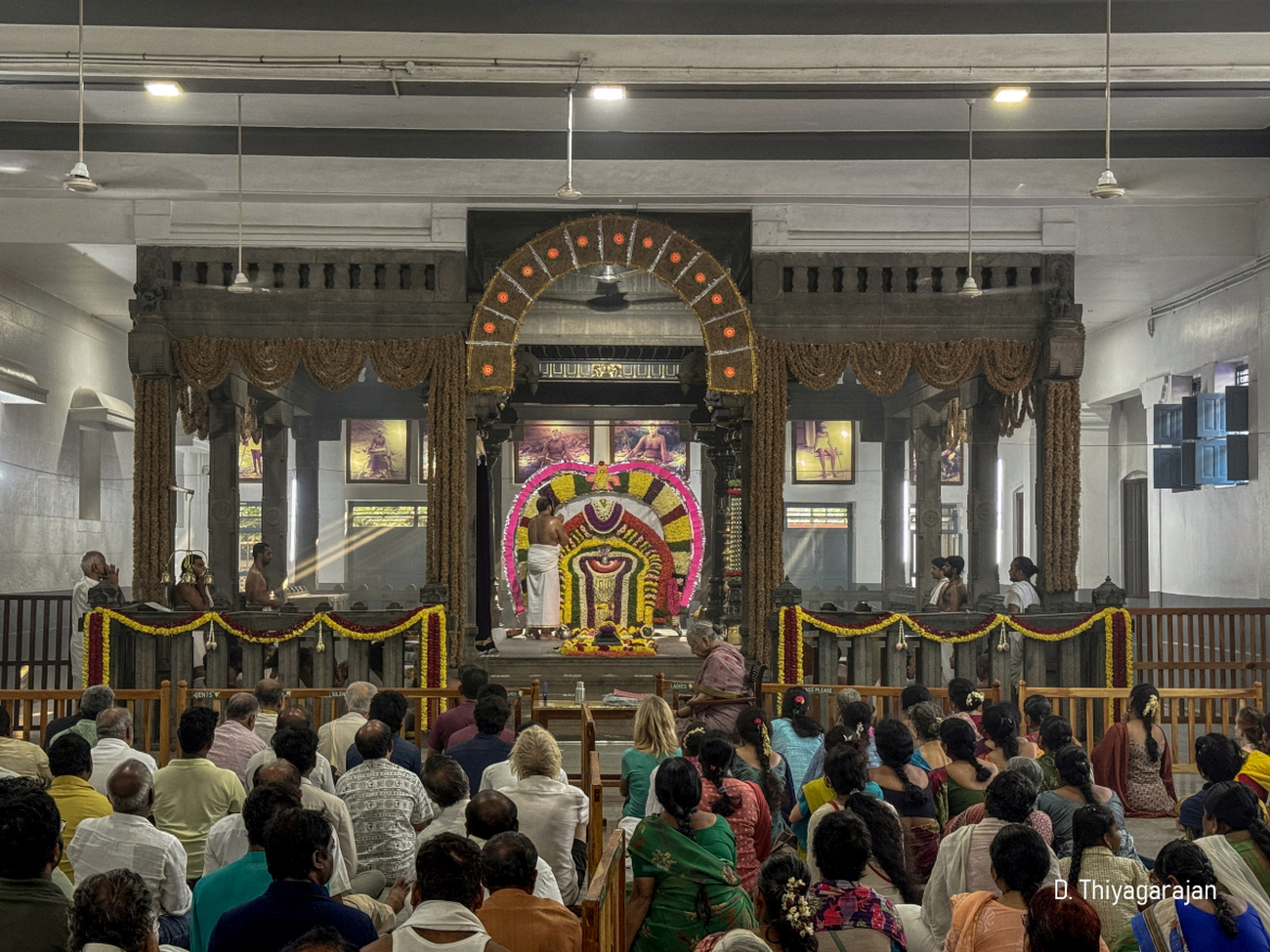
Sri Vidya Havan
Sri Vidya Homa is held every year at Sri Ramanasramam. This year, the homam was held on 21st March 2025 in the customary grand manner. Around two thousand devotees attended the function. The pūjās started early in the morning
at around 7 a.m. After performing Navāvarṇa Pūjā, Homam, Sumaṅgali Pūjā, Kanya Pūjā, Pūrṇāhuti and Dīpārādhana, the tīrthas were taken in urns and anointings were done on the Sri Chakra Meru.
Dīpārādhanas were performed at the temples of Bhagavan (Ramaṇeśvara) and his Mother (Mātṛbhuteśvara) at around 3 p.m.
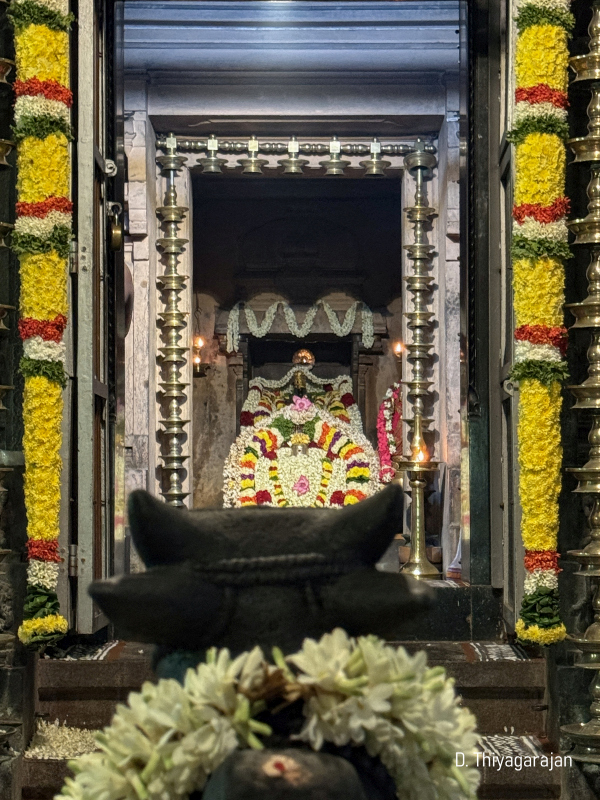
Tamil New Year
Bhagavan's Mahānirvāṇa coincides with the Tamil New Year on 14 April 2024. A special morning pūjā was held on the occasion of the Tamil New Year in Bhagavan's Shrine. Devaraja Mudaliar wrote, "Today is Tamil New Year
Day. The pañcāṅgam for the New Year was read out by our Sastriar in Bhagavan's presence in the afternoon." This tradition has continued over the years and the pañcāṅgam was read out before devotees at Bhagavan's
shrine. Devotees recited Akṣaramaṇamālai at 8 p.m. in front of the Ramana Maharshi's Mahānirvāṇa room.
Bhagavan Sri Ramana Maharshi's 75th Aradhana
The 75th Ārādhana of Bhagavan Sri Ramana Maharshi was conducted on the 25th April 2025. Early in the morning at 4 am, there was maṅgala music followed by a special decoration of the Ramaṇeśvara Mahāliṅgam in
the samādhi shrine with multi-coloured flowers. This was followed by Mahanyāsa Rudra Japam, pārāyaṇa of Bhagavan's works and then anointing ceremonies. Finally, devotional songs were sung and
dīpārādhana was held at around 11 a.m., followed by a festive feast offered to all devotees. The event was telecast live on the Ashram YouTube channel and was attended physically by over five thousand devotees.
Mahā Pūja
The samādhi day of Ramana Maharshi's mother Alagammal is observed as Mahā Pūja every year at Sri Ramanasramam. This year, the event took place on 21 May 2025 at the Mātṛbhuteśvara temple located in the Ashram. The
shrine was decorated with multi-colored flowers and special abhishekas and pūjās were held. The final aarthi concluded in a grand manner around 11 a.m.
Obituary
 Sri T.S. Vaidyanathan passed away at 11:30 a.m. on 14th May 2025. Born on 18th December 1948, Sri Thinnium Subramanian Vaidyanathan graduated from the Indian Institute of Technology (IIT), Kharagpur, and later moved to the United
States, where he served in various professional roles for over two decades. Following his retirement in 2012, he served as the Head of the Publication Department, contributing with sincere dedication and unwavering commitment.
Sri Vaidyanathan played a vital role in initiating and expanding the Ashram's digital presence, including the YouTube channel, Facebook outreach, and the Online Bookstore. His most notable contribution was the compilation and
publication of the seven-volume English series, Arunachala Ramana Eternal Ocean of Grace, released on 1st September 2018. He served the Ashram until 1st September 2021. He will be fondly remembered and deeply missed by the
extended Ramana family.
Kumbhabhishekam
A special three-day Kumbhabhishekam will be held at the ashram from August 18-20, 2025, celebrating the completion of major renovation work on the Mātṛbhūteśvara and Sri Ramaṇeśvara Mahalingams. Repairs to the gopurams and vimanams were carried out in accordance with sastras, addressing age and weather damage. This Kumbhabhishekam continues a rich tradition.
The first was conducted in 1949 by Vaidyanatha Sthapathi, followed by ceremonies in 1995 and 2004 led by his son, Ramachandra Sthapathi. The Kumbhabhishekam in 2023 was conducted by Selvanatha Sthapathi, who will again lead the 2025 ceremony, carrying forward the ashram's legacy.
Now Available

Bhagavananchya Sangatit Dainandini (Marathi)
A translation of 'Day by Day with Bhagavan' by A. Devaraja Mudaliar in English translated into Marathi by Vilas Kale.
This book offers intimate ashram insights and Ramana Maharshi's timeless teachings through heartfelt diary entries. This invaluable translation brings spiritual guidance closer to Marathi devotees and readers, inspiring deeper understanding and uplifting their spiritual journeys.
pp. viii+306; Rs. 250/.; ISBN: 978-81-8288-340-6

Upadesa Sara (Gujarati)
Upadesa Saram and selected teachings of Bhagavan Sri Ramana Maharshi, now accessible in Gujarati, illuminate the path to Self-realization through Self-enquiry. This dedicated translation by Rajesh Rapor serves as a guiding light for Gujarati-speaking aspirants seeking the silent heart of the Maharshi. May his grace bless all.
pp. xii+136; Rs. 110/.; ISBN: 978-81-8288-344-4

Sri Ramana Bani (Bengali)
This is a translation of 'Maharshi's Gospel' Vol.1 and Vol.2, by Dr. Pumima Sarkar and edited by Sharmistha Chatterjee.
This book compiles Bhagavan's insightful, clear answers to years of spiritual queries. Rooted in self-realization and Advaita Vedanta, it guides inward practice towards realizing the ever-present Self, the Heart. May it inspire seekers globally, leading them to inner peace through his grace.
pp: viii+70; Rs. 70/.; 978-81-8288-342-0

When there are thoughts, it is distraction;
When there are no thoughts, it is meditation.
— Talks with Sri Ramana Maharshi, Talk No. 68
Follow us Online

Get connected - visit a satsang near you or start one!
https://www.gururamana.org/Satsangh/satsangh-centres

https://www.facebook.com/sriramanamaharshi
to visit Ashram’s Official Facebook page (also available in nine other languages)

https://www.youtube.com/sriramanasramam to visit Ashram’s Official YouTube Channel

to visit Ashram’s Official Instagram page
www.instagram.com/sriramanasramam

to subscribe to Ashram’s Official WhatsApp Channel
https://whatsapp.com/channel/0029VaByrGSC1FuLjCG2fW2P

to buy books, audio/video & photos online
https://bookstore.sriramanamaharshi.org

to listen “Voice of Arunachala” 24x7 radio station also available as Android & Iphone App for free download
https://www.gururamana.org/Resources/radio-station

Mountain Path App - Iphone
https://apps.apple.com/in/app/mountain-path/id1630751732

Mountain Path App - Android
https://play.google.com/store/apps/details?id=com.ramana.mountainpath&hl=en_IN&gl=US
to download Ashram’s Tamil Parayana App – Iphone
https://apps.apple.com/us/app/ramanasramam-parayana/id1644920339
to download Ashram’s Tamil Parayana App – Android
https://play.google.com/store/apps/details?id=org.ramana.interactive_tamil_parayana
to access past issues of ‘The Mountain Path
https://www.gururamana.org/Resources/mountain-path
to access past issues of ‘Saranagati’ e-magazine and subscribe
https://www.gururamana.org/Resources/saranagati-enewsletter
Published by Dr. Venkat S. Ramanan, President, Sri Ramanasramam on behalf of Sri Ramanasramam
from its office at Tiruvannamalai 606603 and printed by Sri. N. Subramanian at
Sudarsan Graphics Private Limited, 4/641, 3rd Street, 12th Link Street, Kottivakkam, Chennai 600 041.
Editor: Dr. Venkat S. Ramanan
Endnotes
-
1 Bhagavan rendered this text as prose in Tamil.
-
2 Don't roam the world disconsolate / Heed the word unique, unspoken / Taught by the Sadguru who teaches / The truth of Being-Awareness-Bliss.
-
3 Put the appalam in the ghee of Brahman / Held in the pan of infinite silence / And fry it over the fire of knowledge. Now as I transmuted into That, / Eat and taste the Self as Self, / Abiding as the Self alone.
-
4 Mix it with pirandai-juice, / Which is holy company. / Add mind-control, the cumin-seed, / The pepper of self-restraint. / The salt of non-attachment, / And asafoetida, the aroma of virtuous inclination.
-
5 Unless there is the experience, however subtle it is, one cannot say "I slept happily" — Talk 204, Talks with Sri Ramana Maharshi.
-
6 Talk 29, Talks with Sri Ramana Maharshi.
-
7 My Life and Quest, Arthur Osborne.
-
8 Talk 318, Talks with Sri Ramana Maharshi.
-
9 The mind, by her unsteadiness, prevents my seeking Thee and finding peace; grant me the vision of Thy beauty, O Arunachala!
-
10 Talk 219, Talks with Sri Ramana Maharshi.
- 1 Moments Remembered.
- 2 Ramana Leela, p. 215.
- 3 Keerthi Thiru Ahaval, line 305.
- 4 Ramana Vijayam, page 12. முற்றிலும் சோதிப் பிழம்பு - muṯṯṟilum jyotip pizhambu.
- 5 Ibid, p. 12.
- 6 Balarama Reddy, My Reminiscences, p. 25.
- 7 Moments Remembered, p. 117.
- 8 Ramana Smriti, p. 40.
- 9 Keerthi Thiru Ahaval, line 151.
- 10 Muruganar, Annamalai Theertham.
- 11 Pandaya Vedam, v. 8.
- 12 Rig Veda -- 1-1-2.
- 13 Kunju Swami, My Reminiscences.
- 14 Ramana Smrti, p. 345.
- 15 Fragrant Petals, p. 292.
- 16 Muruganar, Uyirunni, v. 2.
- 17 Bhagavad Gita, chap. 13, v. 17.
- 18 T.K. Sundaresa Iyer, Mountain Path, April 1964.
- 19 Subrahmanya Bharati in one of his songs.
- 20 Sadhu OM, Ramana Malai.
- 21 Swami Abhedananda, Fragrant Petals.
- 22 Rig Veda, VII 9-7.
- 23 Suddhananda Bharati, Golden Jubilee Souvenir.
- 1 Taittiriya Upanishad (II-vii-1).
- 2 Talks with Sri Ramana Maharshi, Talk 349.
- 3 Brihadaranyaka Upanishad, v. 2-4-5.
- 4 Talks with Sri Ramana Maharshi, Talk 3.
- 5 Who Am I? -- Question No. 21.
- 6 Muruganar's Ramana Padamalai, Verse 2387.
- 7 Arunachala Pancha Ratnam, Verse 3.
- 8 Muruganar's Ramana Padamalai, Verse 2302.
- 9 Arunachala Akshara Manamalai, Verse 44.
- 10 Maha Yoga, Introduction by Paul Brunton.
- 11 Muruganar's Ramana Sannidhi Murai, Verse 1463.
- 12 Maha Yoga, Lakshmana Sarma, Chapter 8.
- 13 Mundakopanishad, II-ii-8.
- 14 Talks with Sri Ramana Maharshi, Talk 41.
- 15 Talks with Sri Ramana Maharshi, Talk 608.
- 16 Face to face with Sri Ramana Maharshi, Chapter on Paul Brunton.
- 1 Ulladu Narpadu, v.2.
- 2 T.M.P. Mahadevan, Ramana Maharshi and his Philosophy of Existence, p. 33.
- 3 Guru Vachaka Kovai, v. 125, Translated by Prof. K.Swaminathan.
- 4 Vivekachudamani, v. 58.
- 5 Ibid., v.59.
- 6 Ibid., v.60.
- 7 Talks with Sri Ramana Maharshi, Talk 502.
- 8 Guru Vachaka Kovai, v. 144, Translated by Prof K.Swaminathan.
- 9 Mundaka Upanishad, v. I.i.8
- 10 Ulladu Narpadu, v. 1.
- 11 Ramana Jnana Bodham, Padamalai 2614
- 12 David Godman, The Power of the Presence, Part 2, pages 91,93.
- 13 Ibid., page 159.
- 14 Guruvachaka Kovai, v. 991, Translated by Prof.K.Swaminathan.
- 15 David Godman, The Power of the Presence, Part 1, page 271.
- 16 Talks with Sri Ramana Maharshi, Talk 619.
- 17 Taittiriya Upanishad Bhriguvalli
- 18 Talks with Sri Ramana Maharshi, Talk 3.
- 19 Talks with Sri Ramana Maharshi, Talk 251.
- 20 Ibid., Talk 624.
- 21 Ibid., Talk 617.
-
1 Talk 102 in Talks with Sri Ramana Maharshi.
-
2 This person is identified as "a gentleman from Ambala" in Talk 101.
-
3 Verse 211 in Sri Ramana Jnana Bodham, Volume 7.
-
4 Verse 29 in Sri Ramana Deva Malai.
-
5 Verse 30 in Sri Ramana Deva Malai.
-
6 Verse 31 in Sri Ramana Deva Malai.
-
7 Verse 33 in Sri Ramana Deva Malai.
-
8 Verse 41 in Sri Ramana Deva Malai.
-
9 Page 126 in Cherished Memories.
-
10 A town near Rameswaram.
-
11 Chapter 119.
-
12 Verse 1793 in Sri Ramana Sannidhi Murai.
-
13 Verse 35 in Sri Ramana Deva Malai.
-
14 As recorded in Face to Face with Sri Ramana Maharshi, page number 158.
-
15 Verse 43 in Sri Ramana Deva Malai.
- 1 satyam jnanam anantam brahman.
- 2 brahma satyam jagan mithya.
- 3 Prakasa here is not in the sense of physical light but all-pervading light of consciousness.
- 4 Singh, J.(1985). Vedanta and Advaita Saivagama of Kashmir: A comparative study.
- 5 Talks with Sri Ramana Maharshi, Talk 288.
- 6 Talks with Sri Ramana Maharshi, Talk 315.
- 7 Tantraloka, Verse 1.156.
- 8 Talks with Sri Ramana Maharshi, Talk 450.
- 9 Verse 13, Ulladu Narpadu.
- 10 akiñciccintakasyaiva guruṇā pratibodhataḥ |
jāyate yaḥ samāveśaḥ śāmbhavo›sāvudīritaḥ ||
- 11 Michael James, Happiness and The Art of Being.
- 12 Excerpts from Verse 22, Uḷḷadu Naṟpadu.
- 13 Ramana Maharshi, Who Am I?, Ans.16
- 1 Talks with Sri Ramana Maharshi, Talk 29.
- 2 Face to face with Maharshi, Page 324.
- 3 Talks with Sri Ramana Maharshi, Talk 298.
- 4 Talks with Sri Ramana Maharshi, Talks 317, 319.
- 5 Face to Face with Sri Ramana Maharshi, p. 147-148.
- 6 isvaro gururatmeti moorthibedha vibhagine,
vyomavad vyaptadehaya dakshinamurtaye namah.
- 1 Yoga vāsiṣṭhaḥ 5.78.36 & 37 -
- 2 Talks with Sri Ramana Maharshi, Talk 263 -
- 3 Suri Nagamma, Letters from Sri Ramanasramam, 18th August 1946 -
- 4 Bhagavad Gītā, Śloka 8.3 -
- 5 Bṛhadāraṇyaka Upaniṣad, Śloka 3.8.8 -
- 6 Uḷḷadhu nārpadhu Anubandham, Śloka 35 -
- 7 Conscious Immortality, 4th ed., p 36 -
- 8 Śrī Ramaṇagītā, Śloka 2.3 -
- 9 Upadēśa Undiyār, Śloka 20 -
- 10 Sat-darśanaṁ, Śloka 32 -
- 11 Talks with Sri Ramana Maharshi, Talk 254 -
- 12 The Gospel of Sri Ramakrishna, Page 755 -
- 13 Uḷḷadu nārpadhu anubandham, Śloka 25 -
- 14 T.R. Kanakammal, Commentary on Sri Arunachala Stuti Panchakam and Upadesa Nunmalai, Śri Ramanaśramam, Tiruvannamalai, 2009, p.613 -
- 15 Upadēśa Undiyār, Śloka 14 -
- 16 Talks with Sri Ramana Maharshi, Talk 27 -
- 17 Sat-darśanaṁ, Śloka 30 -
- 1 The first article appeared in the April-June 2025 issue of Mountain Path.
- 2 Sri Guru Ramana Prasadam translated and published by Robert Butler, 2008.
- 3 Day by Day with Bhagavan, 9-3-1946.
- 4 Sri Ramanopadesa Noonmalai, translation by Michael James and meaning by Sri Sadhu Om, Sri Ramana Kshetra, Tiruvannamalai, India, 2008, p.93.
- 5 Translations of the original Sanskrit verses are by the author.
- 6 All English translations of Bhagavan's verses in Tamil are by Michael James. See sriramanateachings.org. I am sincerely grateful to him for his extremely detailed treatment of Bhagavan's verses and his generous responses to questions from devotees.
- 7 Adaptation by the author of Michael James' translation and paraphrase of this verse with his approval.
- 8 See sriramanateachings.org
- 9 Talks with Sri Ramana Maharshi, Talk 13.
- 10 Sri Devikālottara Jñānāchāra Vichāra Patalaḥ, Sri Ramanasramam, Tiruvannamalai, 1998.
- 11 See sriramanateachings.org
- 12 All the verses by Muruganar are from Robert Butler's translation of Sri Guru Ramana Prasadam.
- 13 Ibid.
- 1 The Talks part of Sat Darsana Bhashya, Section on Realisation and bodily Experience.
- 2 Talks with Sri Ramana Maharshi, Talk 62.
- 3 Talks with Sri Ramana Maharshi, Talk 624.
- 4 Talks with Sri Ramana Maharshi, Talk 629.
- 5 Letters from Ramanasramam, Suri Nagamma, Letter dated 13th Jan, 1948.
- 6 Kaivalyam, volume 2, Verse 87.
- 7 Kataka renuvat refers to the fine powder derived from the Kataka tree (strychnos potatorum), also known as the Clearing Nut. This herb has traditionally been used to purify muddy water: when its powder is added, it draws down the impurities, settling at the bottom and leaving the water clear. Sri Shankaracharya, in texts such as Vivekachudamani and Atma Bodha, uses this as a profound metaphor for the role of knowledge in spiritual practice. Just as Kataka powder purifies water and then itself settles down, true knowledge (jnana) removes the impurity of ignorance from the individual self (jivatman) and then dissolves, revealing the pure, non-dual Self. The analogy illustrates that both ignorance and the knowledge that removes it are ultimately transcended. What remains is the eternal, undivided awareness --- the Absolute Self (Atman), pure and Self-luminous.
Bhanudas: The Merchant Who Became a Saint
Nabaji Siddha
A Test of Faith
In a small town bustling with trade and commerce, Bhanudas, a merchant by profession, was known for his honesty and kindness. Though he earned his livelihood selling fine cloth, his heart was always elsewhere --- longing for the divine
presence of Lord Panduranga.
Unlike other merchants, who spent their days worrying about profit and loss, Bhanudas found his true joy in singing the Lord's praises. Every evening, after completing his work, he would join the kirtan gatherings, where saints
and devotees sang the glories of Rama and Krishna.
One day, he heard of a grand kirtan being held in a nearby town, where great saints and Haridas would gather to chant the Lord's name. His heart leaped with excitement, and he immediately decided to go.
But as he prepared for his journey, his fellow merchants mocked him.
"There are thieves in this area," one of them warned. "If you leave your goods unattended, they will surely be stolen."
"What do you gain from these kirtans anyway?" another sneered. "Will they bring you wealth? Will your Lord Panduranga come and protect your goods?"
Bhanudas simply smiled. "Let my goods remain here or be stolen --- I care not," he said. "My heart is fixed on Panduranga. I will never desert Him."
With that, he left everything behind and set off toward the kirtan, unaware of the mischief that awaited him.
A Gathering of Saints
The journey was long, but Bhanudas hardly noticed. The thought of singing before the Lord filled him with joy. As he reached the sacred site, he was greeted by the sounds of cymbals, drums, and divine melodies.
Saints and devotees sat in a large circle, their faces glowing with devotion. In the center stood the revered Haridas, leading the kirtan.
Bhanudas bowed deeply before him. "Happy is this occasion," he said, "for today is Ekadashi, the sacred day of devotion. My heart rejoices to be in such company."
He embraced the saints warmly, and as the kirtan began, his soul soared. The Vaishnavas sang tales of Rama's valor, Krishna's divine lilas, and the boundless mercy of the Lord.
As Bhanudas clapped his hands and sang, he forgot everything---his business, his possessions, and even himself.
Meanwhile, back in the marketplace, his fellow merchants plotted against him.
The Evil Plot
Seeing that Bhanudas had left for the kirtan, a group of envious merchants gathered.
"This is our chance," one whispered. "He has left his wares unattended. Let's play a trick on him."
"Let his packhorse loose," another suggested. "And throw his bundle of cloth into a ditch. When he returns, we'll act innocent and say thieves took it."
Laughing cruelly, they untied his horse and tossed his goods into a deep pit. "Now let's see if his Lord Panduranga comes to save him!" they jeered.
But what they did not know was that the Lord Himself was watching.
The Lord's Intervention
In the divine abode of Vaikuntha, Lord Panduranga smiled. "My devotee Bhanudas sits lost in my name, while wicked men conspire against him. How can I allow this injustice?"
Taking the form of a humble person, the Lord descended to the marketplace. He found Bhanudas' horse wandering aimlessly and gently held its reins. The Supreme Lord---the One who reclines on the cosmic serpent Shesha, the One beyond the
reach of even the greatest Yogis---now sat in the middle of a dusty market, guarding the humble possessions of His devotee.
The Merchants Face Justice
As the merchants laughed at their mischief, they did not notice the shadows moving around them.
Suddenly, a gang of real thieves appeared. Before the wicked merchants could react, the thieves surrounded them, snatching their goods and untying their horses.
"Spare us!" they cried. "We have lost everything!"
But it was too late. They had set a trap for Bhanudas, yet they themselves had fallen into one.
Sitting in the dust, bruised and broken, the merchants wept.
"We wronged Bhanudas, and now we have been punished," one admitted.
Another sighed. "Truly, fortune favors the pure-hearted. We acted out of jealousy, and we have suffered for it."
Meanwhile, Bhanudas, unaware of all this, was still lost in the kirtan.
A Divine Encounter
As dawn broke, Bhanudas finally returned to the marketplace. But as he approached, he saw a sight that filled his heart with wonder.
His horse stood calmly, and beside it sat a radiant Brahmin, smiling kindly. Something about him felt divine. Bhanudas fell to his knees. "Who are you, O noble one, who has taken care of my horse?"
The Brahmin only smiled and, in an instant, vanished into thin air.
Tears welled in Bhanudas' eyes. "It was Him! The Lord Himself sat here, holding my horse!"
His heart overflowed with devotion. What had he done to deserve such grace?
Compassion Over Revenge
Just then, he heard sobbing. Turning, he saw the merchants, bruised and weeping.
They fell at his feet. "We have wronged you," they confessed. "We threw your wares into a pit, but real thieves came and stole all we had. Justice has been served."
Bhanudas looked at them with pity. "Do not grieve," he said gently. "The ways of the world are fleeting. True wealth is devotion to the Lord."
He led them to the pit and retrieved his cloth. Then, in an act of pure compassion, he distributed it among them.
"You have suffered enough," he said. "Take these, and let go of hatred."
Stunned by his kindness, the merchants wept. "We see now that true wealth is not in gold, but in devotion."
Bhanudas' Final Renunciation
That night, Bhanudas sat in deep thought. The Lord Himself had come to protect his horse. Was there anything left for him in the world of business?
"No longer will I be bound by trade," he decided. "My only wealth is the name of Panduranga."
The next morning, he renounced his business and dedicated himself completely to Haribhakti.
A Life of Devotion
Twice a year, during the sacred months of Ashadh and Kartik, Bhanudas led thousands of pilgrims to Pandharpur, the abode of Panduranga.
Walking barefoot on the hot sands, singing kirtans with cymbals in hand, he became a beacon of divine love.
His kirtans were no ordinary songs. They carried the power to melt even the hardest of hearts.
One day, as he sang, an atheist approached, sneering, "You waste your breath singing to an idol."
Bhanudas only smiled. "Look into your heart," he said gently. "Even in doubt, there is devotion."
The man, hearing his words, felt something stir within him. That night, he dreamt of Panduranga and woke up in tears.
Bhanudas' kirtans had the power to change lives.
The Lord Dances with His Devotees
One evening, as Bhanudas sang with overwhelming love, something miraculous happened.
A divine glow filled the air. The sound of anklets echoed in the wind. And before the astonished crowd, Panduranga Himself appeared---His golden form shining, His yellow silk robes fluttering.
Smiling, the Lord danced to Bhanudas' kirtan, moving gracefully among the devotees.
Tears streamed down Bhanudas' face. "O Lord, You have come!" he whispered.
The crowd wept with joy. Even the wicked, the faithless, and the doubters fell to their knees.
And so, as long as Bhanudas lived, his kirtans continued to draw souls closer to Panduranga.
When he finally left this world, his name was not remembered as a merchant, but as a saint---one who had seen the Lord, spoken with Him, and sung His praises until the very end.
The Eternal Message
Bhanudas' story teaches us that true wealth is not in gold, but in faith and devotion. Even when betrayed, he chose compassion over revenge. And in return, the Lord Himself became his protector.
To this day, his kirtans echo in the hearts of devotees, reminding us that in the end, only love for the Lord remains.
Jai Panduranga!
Nabaji Siddha
A Test of Faith
In a small town bustling with trade and commerce, Bhanudas, a merchant by profession, was known for his honesty and kindness. Though he earned his livelihood selling fine cloth, his heart was always elsewhere --- longing for the divine presence of Lord Panduranga.
Unlike other merchants, who spent their days worrying about profit and loss, Bhanudas found his true joy in singing the Lord's praises. Every evening, after completing his work, he would join the kirtan gatherings, where saints and devotees sang the glories of Rama and Krishna.
One day, he heard of a grand kirtan being held in a nearby town, where great saints and Haridas would gather to chant the Lord's name. His heart leaped with excitement, and he immediately decided to go.
But as he prepared for his journey, his fellow merchants mocked him.
"There are thieves in this area," one of them warned. "If you leave your goods unattended, they will surely be stolen."
"What do you gain from these kirtans anyway?" another sneered. "Will they bring you wealth? Will your Lord Panduranga come and protect your goods?"
Bhanudas simply smiled. "Let my goods remain here or be stolen --- I care not," he said. "My heart is fixed on Panduranga. I will never desert Him."
With that, he left everything behind and set off toward the kirtan, unaware of the mischief that awaited him.
A Gathering of Saints
The journey was long, but Bhanudas hardly noticed. The thought of singing before the Lord filled him with joy. As he reached the sacred site, he was greeted by the sounds of cymbals, drums, and divine melodies.
Saints and devotees sat in a large circle, their faces glowing with devotion. In the center stood the revered Haridas, leading the kirtan.
Bhanudas bowed deeply before him. "Happy is this occasion," he said, "for today is Ekadashi, the sacred day of devotion. My heart rejoices to be in such company."
He embraced the saints warmly, and as the kirtan began, his soul soared. The Vaishnavas sang tales of Rama's valor, Krishna's divine lilas, and the boundless mercy of the Lord.
As Bhanudas clapped his hands and sang, he forgot everything---his business, his possessions, and even himself.
Meanwhile, back in the marketplace, his fellow merchants plotted against him.
The Evil Plot
Seeing that Bhanudas had left for the kirtan, a group of envious merchants gathered.
"This is our chance," one whispered. "He has left his wares unattended. Let's play a trick on him."
"Let his packhorse loose," another suggested. "And throw his bundle of cloth into a ditch. When he returns, we'll act innocent and say thieves took it."
Laughing cruelly, they untied his horse and tossed his goods into a deep pit. "Now let's see if his Lord Panduranga comes to save him!" they jeered.
But what they did not know was that the Lord Himself was watching.
The Lord's Intervention
In the divine abode of Vaikuntha, Lord Panduranga smiled. "My devotee Bhanudas sits lost in my name, while wicked men conspire against him. How can I allow this injustice?"
Taking the form of a humble person, the Lord descended to the marketplace. He found Bhanudas' horse wandering aimlessly and gently held its reins. The Supreme Lord---the One who reclines on the cosmic serpent Shesha, the One beyond the reach of even the greatest Yogis---now sat in the middle of a dusty market, guarding the humble possessions of His devotee.
The Merchants Face Justice
As the merchants laughed at their mischief, they did not notice the shadows moving around them.
Suddenly, a gang of real thieves appeared. Before the wicked merchants could react, the thieves surrounded them, snatching their goods and untying their horses.
"Spare us!" they cried. "We have lost everything!"
But it was too late. They had set a trap for Bhanudas, yet they themselves had fallen into one.
Sitting in the dust, bruised and broken, the merchants wept.
"We wronged Bhanudas, and now we have been punished," one admitted.
Another sighed. "Truly, fortune favors the pure-hearted. We acted out of jealousy, and we have suffered for it."
Meanwhile, Bhanudas, unaware of all this, was still lost in the kirtan.
A Divine Encounter
As dawn broke, Bhanudas finally returned to the marketplace. But as he approached, he saw a sight that filled his heart with wonder.
His horse stood calmly, and beside it sat a radiant Brahmin, smiling kindly. Something about him felt divine. Bhanudas fell to his knees. "Who are you, O noble one, who has taken care of my horse?"
The Brahmin only smiled and, in an instant, vanished into thin air.
Tears welled in Bhanudas' eyes. "It was Him! The Lord Himself sat here, holding my horse!"
His heart overflowed with devotion. What had he done to deserve such grace?
Compassion Over Revenge
Just then, he heard sobbing. Turning, he saw the merchants, bruised and weeping.
They fell at his feet. "We have wronged you," they confessed. "We threw your wares into a pit, but real thieves came and stole all we had. Justice has been served."
Bhanudas looked at them with pity. "Do not grieve," he said gently. "The ways of the world are fleeting. True wealth is devotion to the Lord."
He led them to the pit and retrieved his cloth. Then, in an act of pure compassion, he distributed it among them.
"You have suffered enough," he said. "Take these, and let go of hatred."
Stunned by his kindness, the merchants wept. "We see now that true wealth is not in gold, but in devotion."
Bhanudas' Final Renunciation
That night, Bhanudas sat in deep thought. The Lord Himself had come to protect his horse. Was there anything left for him in the world of business?
"No longer will I be bound by trade," he decided. "My only wealth is the name of Panduranga."
The next morning, he renounced his business and dedicated himself completely to Haribhakti.
A Life of Devotion
Twice a year, during the sacred months of Ashadh and Kartik, Bhanudas led thousands of pilgrims to Pandharpur, the abode of Panduranga.
Walking barefoot on the hot sands, singing kirtans with cymbals in hand, he became a beacon of divine love.
His kirtans were no ordinary songs. They carried the power to melt even the hardest of hearts.
One day, as he sang, an atheist approached, sneering, "You waste your breath singing to an idol."
Bhanudas only smiled. "Look into your heart," he said gently. "Even in doubt, there is devotion."
The man, hearing his words, felt something stir within him. That night, he dreamt of Panduranga and woke up in tears.
Bhanudas' kirtans had the power to change lives.
The Lord Dances with His Devotees
One evening, as Bhanudas sang with overwhelming love, something miraculous happened.
A divine glow filled the air. The sound of anklets echoed in the wind. And before the astonished crowd, Panduranga Himself appeared---His golden form shining, His yellow silk robes fluttering.
Smiling, the Lord danced to Bhanudas' kirtan, moving gracefully among the devotees.
Tears streamed down Bhanudas' face. "O Lord, You have come!" he whispered.
The crowd wept with joy. Even the wicked, the faithless, and the doubters fell to their knees.
And so, as long as Bhanudas lived, his kirtans continued to draw souls closer to Panduranga.
When he finally left this world, his name was not remembered as a merchant, but as a saint---one who had seen the Lord, spoken with Him, and sung His praises until the very end.
The Eternal Message
Bhanudas' story teaches us that true wealth is not in gold, but in faith and devotion. Even when betrayed, he chose compassion over revenge. And in return, the Lord Himself became his protector.
To this day, his kirtans echo in the hearts of devotees, reminding us that in the end, only love for the Lord remains.
Jai Panduranga!
KEYWORD
Hṛdaya: The True State
Part Two
Ramesh Iyer
The vast range of light of the sun pervading the whole sky looks like a little twinkling streak when it passes through a small aperture of the screen on the window of our house. The cosmic space, which is endless in its expanse, looks like a tiny spot when it is seen inside a little pot or tube. Likewise, the all-pervasive Brahman appears like a little speck of radiance within the hṛdaya of all beings. This hṛdaya is the spiritual heart located on the right, distinct from the biological heart and is the true state of all beings as elucidated in the first part of this series on hṛdaya.
Being different orders of reality, the objects quoted above as analogies are no comparison to hṛdaya, as "in hṛdaya all this world abides. It is the mirror in which all things are seen. It is the source of all wealth" 1 and "The whole cosmos is contained in one pinhole in the Heart."2 While the objects belong to vyāvahārika satyam (empirical reality), hṛdaya is of pāramārthika satyam (absolute reality).
Bhagavān's Three Mantras on Hṛdaya -- Muktakatrayam
Bhagavān gave the humanity at large three significant revelations: the practice of Self-enquiry, the knowledge that the sacred Aruṇācala mountain is the very embodiment of Lord Śiva, and the spiritual heart centre (hṛdaya) on the right side of the chest.
On the most amazing one of the three, viz., hṛdaya, Bhagavān has composed three mantras extempore, on different occasions and later collected together called muktaka-trayam. As they came spontaneously from Bhagavān and are very precise exuding a crisp fragrance of truth and anubhava, guiding seekers to the final state of perfection, they are more mantras albeit ślokās. By calling them mantras it is to be understood that merely chanting them will produce the result of liberation whether or not the meaning is understood.
Devotees start with the muktaka-traya mantras while chanting Saṃskṛta works of Bhagavān every Sunday morning after the pūjā at the shrine of Bhagavān.
We will in the following sections dwell more on these mantras.
Bhagavān's Mantra - "Ekam Akṣaram"
The first of these, Ekam Akṣaram, was written when a devotee, Somasundaraswami, went to Bhagavān with a new notebook and requested him to write one letter (akṣaram) in it. Bhagavān replied with the punning Thamiżh verse, which he later translated into saṃskṛtam3:
ekam akṣaram hṛdi nirantaram |
bhāsate svayaṁ likhyate katham ||
The non-dual imperishable itself shines continually in the Heart. How is it to be written?
The word akṣaram has two popular meanings, among several others. One is, alphabet / letter / syllable and the other imperishable / indestructible. As the akṣara, the imperishable Self shines in the hṛdaya (spiritual heart) of all beings, how can it be written?
In Bhagavad Gītā, Lord Kṛṣṇa defines: akṣaraṃ brahma paramaṃ meaning "The Supreme Indestructible Entity is called Brahman."4 Further, Bṛhadāraṇyaka Upaniṣad states, etadvai tadakṣaraḥ which means, "That which is indestructible is the Self."5
Bhagavān reveals from this mantra that the imperishable Self that shines itself as hṛdaya can't be known through speech, thought, writing or intellect and one can only be the Self as "It is". Bhagavān's most profound and exalted teaching is6:
எழுத்தறிந்த தாம்-பிறந்தது எங்கேயென்று எண்ணி
எழுத்தைத் தொலைக்க எணாதோர் — எழுத்தறிந்தென்
சத்தம்-கொள் எந்திரத்தின் சால்புற்றார் சோணகிரி
வித்தகனே வேறார் விளம்பு.
eżhuth-thaṟindha thām-piṟan-dhadhu eṅġē-yeṉḍṟu eṇṇi
eżhuth-thai tholai-kka eṇā-dhōr --- eżhuth-thaṟin-dheṉ
chath-tham-koḷ endhira-ththiṉ sāl-puṭṟṭṟār śōṇa-giri
vith-thagaṉē vēṟār vi-ḷambu.
Of what use is the learning of letters to those who do not seek to wipe out their writ of fate by enquiring whence they were born but instead pride themselves on their knowledge? Who else are these, Oh! Lord Śonagiri, they are only
instruments that record and play sounds?
The burdensome knowledge acquired through mastery of letters, comparable to "Smart Hearables" that repeat the sounds recorded on it earlier, is not at all useful for the destruction of ego. One's own true state of hṛdaya can only be realized through vicāra. "A tiny hole in the Heart remains always closed and is opened by vicāra. The result is 'I-I' consciousness, the same as samādhi." 7
Bhagavān's Mantra - "hṛdaya kuhara"
While the first part of this series introduced Bhagavān's famous saṃskṛta mantra starting "hṛdaya kuhara" inscribed in the New Hall of the āśram, we will now in this part dwell more on its meaning and significance in detail.
As we will see below, Bhagavān's teaching is captured in just four lines combining both the definition of hṛdaya as well as how an earnest seeker can establish in hṛdaya. Being the quintessence of the entire teaching of Bhagavān, Śrī Vāsiṣṭha Gaṇapati Muni incorporated it as the second śloka of the second chapter of Śrī Ramaṇagītā. The next śloka states that "One who understands this afore-said mantra 'hṛdaya kuhara', the essence of Vedānta, as sprung from the mouth of Bhagavān Śrī Ramaṇa Maharṣi, no doubt will arise at any time whatsoever." 8 The espousal and clarity of this path towards the highest truth is not only authentic but also provides the seeker with direct experience of the Self as it emanates from Bhagavān who is ever poised firmly as That.
This saṃskṛta mantra when the compound words are broken into its constituent morphemes namely sandhi-vigraha (सन्धि-विग्रह) would be:
हृदय-कुहर मध्ये केवलं ब्रह्म मात्रं
हि अहम् अहम् इति साक्षात् आत्म रूपेण भाति ।
हृदि विश मनसा स्वं चिन्वता मज्जता वा
पवन चलन रोधात् आत्म निष्ठो भव त्वम् ॥
hṛdaya-kuhara madhye kevalaṃ brahma mātraṃ
hi aham aham iti sākṣāt ātma rūpeṇa bhāti |
hṛdi viśa manasā svaṃ cinvatā majjatā vā
pavana calana rodhāt ātma niṣṭho bhava tvam ||
In the center of Heart's cavity, Brahman alone as an ever-persisting 'I - I' shines directly in the form of Self. Enter into the heart, with the mind seeking (investigating itself), or with the mind immersing itself or with control of the movement of the breath and abide in the Self.
It is really a wonder that though Brahman is aflame all the time as "I - I" within the hṛdaya for all beings, only the wise recognize that.
Hṛdaya - The true state of the throb of "I"
Let us look at the meaning of the words of this mantra for understanding its significance. First the compound word "hṛdaya-kuhara" is special compound word of the type of "sambhāvanā karmadhāraya samāsaḥ" where the noun specified by the first word is of the type mentioned by the second word. This means that hṛdaya is of the type of kuhara. Kuhara means a space, hole or deep cave. Hṛdaya is the spiritual heart as we saw in the first part of the series. Thus, "hṛdaya-kuhara" means Heart-space.
Now the next word "madhye" means middle. Heart-space is subtle and its middle denotes a point which is subtler. The next word "kevalaṃ" means One or the absolute and is adjective to the next word of "brahma." "Mātraṃ" indicates that Brahman itself is in that Heart-space. What shines? "sākṣāt ātma rūpeṇa bhāti" -- shines directly in the form of the Self. How does it shine? "aham aham" -- as the "I - I," as the throb of "I" without any hiatus. Bhagavān's assurance is indicated by the word "hi" which means indeed, assuredly, surely, of course, certainly.
Summarizing, it is said in the first two lines that the Brahman itself, the absolute and non-dual One, in the heart-space of all beings, shines certainly as the direct form of the Self, as throb of "I" continuously at all times. The direct anubhava (experience) of the Self, shining as the "I - I," is thus available at hand for every being in this world without any reference to the scriptures.
Bhagavān reveals that this true form as throb of "I" is not the ego9:
nāṉ-oṉḍṟu sṯhāṉa-ththu nāṉ-nāṉ-eṉḍṟu oṉḍṟadhu
thāṉāga thōṉḍṟumē undhīpaṟa
thāṉ-adhu pūṉḍṟamām undhīpaṟa.
Where this 'I' notion fades, there appears the 'I-I' by itself, the One, the very Self, The Infinite.
In the later half of the mantra of "hṛdaya kuhara," Bhagavān imparts the teaching for the practice of the seeker by three different ways. Bhagavān says, "hṛdi viśa svaṃ" meaning "enter yourself into the heart."
The First Direct Path of Seeking
The first means of entering into the heart taught by Bhagavān is "manasā cinvatā": by a mind seeking.
When the mind seeks its source with the enquiry "Who am I" reaches the Heart, the ego gets annihilated. It will be worthwhile here referring to this śloka10:
gaveṣaṇāt-prāpya hṛdantaraṁ tat
pateda-hantā pari-bhugna-śīrṣā |
athāham-anyat-sphurati prakṛṣṭaṁ
nāhaṅkṛtis-tatparameva pūrṇam ||
Get at the Heart by the mind seeking. The ego bows its head and falls. Then "I-I" appears of its own accord, unceasingly and effortlessly, this is not the ego "I" but the Self, Supreme, Perfect.
This vicāra marga is direct and subtle, like catching the thief red-handed. Other ways like meditation as well as śravaṇa, manana, and nididhyāsana prescribed by Vedāntic texts are mere mental practices and can silence the mind only for brief periods of time. Enquiry with steadfast resolution to reach the source alone can annihilate the mind.
The Second Direct Path of Immersion
The second means of entering into the heart specified in the mantra is "manasā majjatā vā" -- alternatively by the mind immersing or plunging.
Just as a person by frequent immersion in water is rid of the dirt of his body, similarly the mind, by its frequent immersion in the Heart in a thought-free state, sheds all its accretions and vāsanās acquired in several births. Bhagavān states, "Again, there is happiness at agreeable sights, etc. It is the happiness inherent in the Self. That happiness is not alien and after. You are diving into the Pure Self on occasions which you consider pleasurable. That diving reveals the Self-existent Bliss. But the association of ideas is responsible for foisting this bliss on to other things or happenings. In fact, it is within you. On these occasions you are plunging into the Self, though unconsciously. If you do so consciously you call it Realisation. I want you to dive consciously into the Self, i.e., into the Heart." 11
Similar lines of thoughts on plunging were expressed by Śrī Ramakṛṣṇa to none other than Narendra: "Suppose there were a cup of syrup and you were a fly. Where would you sit to drink the syrup?' Narendra said, 'I would sit on the edge of the cup and stretch out my neck to drink it.' 'Why?' I asked. 'What's the harm of plunging into the middle of the cup and drinking the syrup?' Narendra answered, 'Then I should stick in the syrup and die.' 'My child,' I said to him, 'that isn't the nature of the Nectar of Satchidananda. It is the Nectar of Immortality. Man does not die from diving into It. On the contrary he becomes immortal'." 12
This path of devotion and surrender is expounded by Bhagavān13:
akhila upāḏhi ahaṉḍṟa aṟi-vēdhu
aham-aś-śivam eṉḍṟ-aniśam --- aha-ththē
ahalā ḏhyāṉam adhaṉāl ahath-thiṉ
akhila āsakthi aha-ṭṟṭṟu.
When the mind constantly merges in the heart as 'that Śiva am I', the self-effulgent awareness unconditioned by the upādhi of body-mind complex, no affinity for the world remains.
In her commentary to this śloka, Kanakammal insightfully explains,
"As the sail spreads wide aloft a ship is blown in all directions by the wind and weather, an extroverted mind is made to wander by the various upādhis. But if the mind, like the humble anchor sunk in the depths of the vast ocean, plunges in the heart of wisdom, all vāsanās perish. Hence Bhagavān exhorts the seekers to sink the mind through dhyāna into the Heart." 14
The Third Indirect Path of Prāṇāyāma
Turning our own attention to the third means of entering into the heart, Bhagavān mentions, "vā pavana calana rodhāt" -- another method is control of the movement of breath.
An impure and weak mind is a slave of life which is full of desire for enjoyment of sensual objects. The discipline of breath-control (prāṇāyāma) gives a certain purity to life in the body and thereby helps the mind to have control over itself by getting clear of the advances of life upon it. Further, prāṇāyāma can be practiced in order to train the mind to be alone, kaivalya (thought-free) for the pursuit of one path as stipulated by Bhagavān15:
oḍukka vaḷiyai oḍuṅġum uḷaththai
viḍukkavē ōr-vażhi undhīpaṟa
vīyum adhaṉ-uru undhīpaṟa.
The mind stilled by regulating the breath with the help of prāṇāyāma is fit for the pursuit of one path with required focus and gets annihilated.
Thus path of prāṇāyāma is an indirect means and an aid to the other two means of seeking and immersion. To quote Bhagavān, "In the absence of enquiry and devotion, the natural sedative prāṇāyāma (breath regulation) may be tried. This is known as Yoga Marga."16
Further, Sat-darśanaṁ illuminates17:
kūpe yathā gāḍhajale tathāntaḥ
nimajjya buddhyā śitayā nitāntam |
prāṇaṁ ca vācaṁ ca niyamya cinvan
vindenni-jāhaṅkṛti-mūla-rūpam ||
"As one would dive deep into water holding breath and speech, to recover an article fallen into water, one with speech, mind and breath restrained, should dive deep with a sharp mind into the Heart, and discover the real source of ego."
The practice of prāṇāyāma is thus suggested for a mind to take deep plunge into the deeper truth of oneself with a vigilant and discerning eye.
Finally, the mantra of "hṛdaya kuhara" concludes with "ātma niṣṭho bhava tvam" -- abide in the Self. Thus, the paths to get at the true state of hṛdaya are three and they are the direct means of seeking & immersion and the indirect means of prāṇāyāma.
(To be continued)
The Paramount Importance of Self-Attention
Part Fifty-Four
Sadhu Om As Recorded by Michael James
Michael James assisted Sri Sadhu Om in translating Bhagavan’s Tamil writings and Guru Vācaka Kōvai. Many of his writings and translations have been published, and some of them are also available on his website, sriramanateachings.org.
27th April 1979 Sadhu Om: Bhagavan has given us many pointers to help us investigate and know what we actually are, and each of these pointers is a precious clue for us to follow. By experimenting with each of these clues, by trying to apply each one in practice, we will gradually develop the skill to hold on to self-attentiveness in all circumstances and to restore it whenever we lose our hold on it. Which of these clues we will find most helpful will vary according to the circumstances, so if at any time we find that one clue is not helping us, we can try to apply another one. For example, when we sit calmly to practise being self-attentive, we may find the clue 'Turn back within to face yourself alone' to be helpful, and if after some time we find that we have been distracted by other thoughts, the clue 'Investigate to whom these thoughts appear' may be helpful. However, whenever we are very agitated or overwhelmed with troubles or miseries, we may not find either of these clues to be sufficient, so at such times we can try 'sifting' by thinking as follows:
These troubles and miseries come to this person I seem to be, but am I this person? Was I aware 'I am this person' in sleep? No, but though I was not aware 'I am this person' then, was I not nevertheless present in sleep, and was I not aware of my being then? In other words, was I not aware 'I am' even when I was not aware 'I am this person'? What then is this awareness 'I' that existed and shone alone in sleep, but which now seems to be mixed up with this person and hence with all these troubles and miseries that have come to this person?
By thinking like this, carefully considering what this 'I' is, we may be able to sift it out and separate it from everything else with which it now seems to be mixed, thereby enabling us to focus our attention on it alone. If we want to sift a diamond from a heap of pebbles, we need to look at the pebbles carefully to see where amongst them the diamond is lying, and in doing so our attention will sooner or later be caught by it. Likewise, if we want to sift 'I' from among all the other thoughts that constitute the mind, we need to survey the inner space in which all thoughts appear and disappear to see where this 'I' is, and in doing so our attention will sooner or later be caught by it. However, unlike the diamond, which will be found as one thing among many other things, 'I' will be found to be the space of awareness in which all other things appear and disappear, like a cinema screen on which pictures appear and disappear.
We must then try to keep our attention fixed firmly, steadily and calmly on this space of awareness until we see it as it actually is, namely as the infinite and eternal space in which there is neither coming nor going, neither appearing nor disappearing. When we see it thus, we will see that it alone is what is, so there is no such thing as 'mind' at all, as Bhagavan points out in verse 17 of Upadēśa Undiyār:
When one investigates the form of the mind [the space of awareness] without forgetting, there is not anything called 'mind'. This is the direct path for everyone whomsoever.
3rd May 1979 Sadhu Om: In Bhagavan's days devotees who lived elsewhere would write letters to tell him about their difficulties or to pray for his help and guidance, and though he read all such letters, he did not reply to any of them, so Mauni, who worked in the Ashram office, would reply on his behalf. Even after he left his body, some devotees continued to write to the Ashram in the same way, believing that they were thereby placing their difficulties at his feet.
One day in 1956, Prof. N.R. Krishnamurthy Aiyer, who had first come to Bhagavan in 1914, wrote to the Ashram saying that though he had often heard Bhagavan talking about the need for self-enquiry and self-surrender, he was not able to do either, but he was at least able to recite Śrī Aruṇācala Stuti Pañcakam [Bhagavan's five hymns to Arunachala] daily. The Ashram president passed his letter on as usual to T.K. Sundaresa Iyer, who in those days replied to such letters on behalf of the Ashram, but since he was unsure what to reply, Sundaresa Iyer told me what had been written without saying who had written it and asked me to draft a reply, so I immediately composed Śrī Aruṇācala Stuti Pañcaka Māṇbu (the greatness of Śrī Aruṇācala Stuti Pañcakam):
ஒருநான்கெனு மறைநூன்முடி வுணராய்குறை விலையாம்
உலகோர்புகழ் சதுர்யோகமு முணராய்குறை விலையாம்
திருமால்சிவ பெருமான்பணிந் திலையோகுறை விலையாம்
சிவையைங்கரன் குமரன்றுதித் திலையோகுறை விலையாம்
கருணாகர முனிநாயக னருணாசல ரமணன்
கனிவோடருட் டிருவாய்மலர் கதிநாயக வமுதாம்
அருணாசல ஸ்துதிபஞ்சக மனனஞ்செய வறியின்
அதுபோதுமின் றதுபோதுநீ யதுவாமறி வுறவே.
You have not [studied and] known the final import of the peerless four Vedas? That is no loss. You have not [practised and] known the four yōgas, which people of the world praise? That is no loss. You have not worshipped Tirumal [Lord Vishnu] or Siva Peruman [Lord Siva]? That is no loss. You have not praised Sivai [the Divine Mother], Ainkaran [the five-armed Ganapati] or Kumaran [Lord Subramanya]? That is no loss. If you know to do manana [thinking deeply about the meaning and implication] of Aruṇācala Stuti Pañcakam, which Arunachalaramana, the abundant giver of grace (karuṇākara), the Lord of Sages (muni-nāyaka), graciously sang with [heart-melting] love, and which is the foremost of paths [of upāsanā or worship] and amṛta [ambrosia, the nectar of immortality], that is sufficient, that is now sufficient to attain the awareness that you are that (nī adu ām) [tat tvam asi].
Sundaresa Iyer sent this verse to Krishnamurthy Aiyer, and as soon as he received it he came to the Ashram to see who had composed it. When Sundaresa Iyer told him that I had composed it, he thanked me profusely and said he considered it to be a gift from Bhagavan and an answer to his prayers, but I told him that it had indeed come from Bhagavan, so all thanks were due only to him.
[MJ's note: For the next thirty years or so this verse, which Sadhu Om composed on 2nd June 1956, was printed as an introductory verse at the beginning of each Tamil edition of Śrī Aruṇācala Stuti Pañcakam, but at some point in the 1980s it was somehow omitted from further editions.]
13th May 1979 Sadhu Om: In Śrī Ramaṇa Dēva Mālai [published in 1939] Muruganar sang a verse that means: 'Because the ever-unborn has taken birth [in the form of Bhagavan Ramana], countless of the never-dyings [namely egos] have died'.
23rd June 1979 Sadhu Om: If a donkey comes in front of a mirror, it will see a donkey, and if a monkey comes in front of the same mirror, it will see a monkey. Such is the outward form of the jñāni. Because that outward form is devoid of ego, it is like a clear mirror. What each person sees in the jñāni is therefore a reflection not only of their real nature but also of their intervening mind. This is why each person sees and understands Bhagavan in their own way. No two people see the same Bhagavan, because each of them sees him through the coloured glasses of their own mind.
In order to see him as he actually is, we need to see ourself as we actually are, and when we see ourself as we actually are, we will cease to exist as ego, so we will thereby lose ourself completely in him, as him. Therefore no one other than Bhagavan can know him as he actually is. So long as we see ourself as anything other than him, we cannot see him as he sees himself. An impure mind will see a very distorted image of him, whereas a purer mind will see a less distorted image of him, but only when he devours us entirely will we see him as he sees himself.
3rd August 1979 Sadhu Om: In verse 66 of Śrī Aruṇācala Akṣaramaṇamālai 'nēr' can mean either 'attain' or 'resemble', so 'uṉai nēr pittaṉ ākkiṉai' can mean either 'you made [me] one who is mad [with love] to attain you' or 'you made [me] one who is mad like you'. Sundaramurti praised Lord Siva as a madman because he is mad with love to save his devotees, no matter how unworthy they are, so this second meaning implies: 'Just as you are mad with love to save me, you made me mad like you, mad with love to be wholly possessed by you'.
In verse 68 'pul-l-aṟivu' (base, low or mean awareness or knowledge) implies either 'ignorance' or 'impure mind', whereas 'nal-l-aṟivu' (good awareness or knowledge) implies 'true knowledge', 'real awareness' or 'pure mind'. The meaning of this verse can therefore be interpreted in either of two ways, namely:
Arunachala, say, what is base awareness [false awareness or ignorance]? Say, what is good awareness [real awareness or true knowledge]? Be gracious, [enabling me] to embrace [cling to or attain] [only real awareness].
or
Arunachala, when [your] grace embraces [me], say, what is a base [impure] mind, [and] say, what is a good [pure] mind?
This second meaning implies: 'What does it matter whether my mind is impure or pure? However it is, it will be eradicated when your grace embraces me'. When the Ganga floods Kasi, it will flow in all the streets, so both the pure Ganga water and the impure gutter water will be carried away by it to the ocean. The grace of Arunachala is such a flood, as Bhagavan describes it beautifully in the last line of the first verse of Śrī Aruṇācala Padigam, 'O Love called the great Aruna Hill, from which grace surges as a spring, gushing forth abundantly there', so whether our mind is pure or impure, if we are caught in the flood of his grace, it will certainly carry us back to the ocean of bliss.
31st October 1979 Sadhu Om [in reply to someone who remarked that Bhagavan did not like anyone to take him as their guru]: That is not correct. Bhagavan never objected to anyone taking him as guru. What he said was that so long as we are aware of ourself as 'I am this body', guru is necessary, and guru will usually appear in the form of another human body. However, in the view of the real guru there are no others and there is no such thing as ignorance (ajñāna), so he will never think 'I am the guru and these are my disciples'. Therefore the guru is guru only in the view of the disciples.
Since Bhagavan does not see us as other than himself, he loves us as himself, so his love is infinite and all-embracing. His infinite love for us is therefore what we experience as his grace, and his grace is what shines not only through his outward form giving us his teachings, but also eternally in our heart as our own being, where he is silently working to purify our mind and enkindle in us the love to turn within to investigate what we actually are and thereby to surrender ourself entirely to him.
All this he does without actually doing anything, but just by being as he is, because his very being is love, and love is the infinite power of being. The role of guru is therefore extremely subtle, indispensable and ever-unfailing, as he indicates in the twelfth paragraph of Nāṉ Ār?:
God and guru are in truth not different. Just as what has been caught in the jaws of a tiger will not return, so those who have been caught in the look [or glance] of guru's grace will never be forsaken but will surely be saved by him; nevertheless, it is necessary to walk unfailingly in accordance with the path that guru has shown.
(Concluded)Bhagavan: His Teachings Are His Presence
D. Thiyagarajan
Bhagavan's 75th Aradhana festival was celebrated wonderfully on April 25, 2025. Thousands of devotees from around the world took part in the celebrations, both in person and through live broadcasts. People of all ages---descendants of those who had seen Bhagavan in person to the youngest children---joined together in satsanghs, transcending the boundaries of religion, race, nation, and language.
In April 1950, countless hearts were heavy with sorrow, fearing that Bhagavan was about to leave his physical body. Yet, Bhagavan had always taught that the body is merely a burden, and to lay it down is true liberation---a cause for joy, not grief. Still, only a few were inwardly prepared to recognize this as the liberation he had pointed to. "Where can I go? I am here," he assured. The body may perish, but the Self---the soul---is eternal. This is the essence of Bhagavan's teaching, and through inner experience, we come to realize its truth. Time and space cannot contain or limit his presence; he continues to guide us from within.
As long as we identify with the body, there will be illness and suffering. But for Bhagavan, who had transcended all identification, what meaning could comings and goings hold? Bhagavan Ramana Maharshi, the embodiment of pure grace, reminds us that grace is ever-present. It is his infinite compassion that continues to lift us from the darkness of ignorance into the light of awareness.
When he incarnated in Tiruchuzhi, a blind old woman saw a radiant vision---a sign of the light he brought into the world. Through Arunachala, he became the very light of wisdom. And finally, he merged back into that light, inseparably one with Arunachala.
As the Arunachala Mahatmya reminds us, when Brahma and Vishnu were lost in ego, Lord Shiva appeared as a column of light, shattering their ignorance. Ego is darkness---clarity is light. Similarly, Bhagavan Ramana Maharshi appeared as the light of wisdom, removing the ignorance of humankind, giving us a direct path to attain knowledge, and guiding us. Self-knowledge is like light. That light is reflected in the words of the enlightened.
This is what the Tirumantiram says:
"தெளிவு குருவின் திருவார்த்தை கேட்டல்
தெளிவு குருவின் திருஉரு சிந்தித்தல்தானே"
"Clarity is hearing the guru's sacred words,
Clarity is contemplating the guru's sacred form."
Bharatiyar also mentions this in his song,
"உள்ளத்தில் உண்மை ஒளி உண்டாயின்
வாக்கினிலே ஒளி உண்டாகும்"
"If there is true light in the heart,
There will be light in the words."
Even after centuries, even when a sage is no longer in physical form, the flame of wisdom---what we call clarity---continues to kindle hearts. It reaches anyone who deeply contemplates the sage or immerses themselves in his teachings. Once, while conversing with his disciples, Gautama Buddha was asked by Ananda, "How will future generations ever have the blessing of sitting before you, hearing your words?" Buddha replied, "No matter how many centuries pass, I will speak directly to those who read my teachings with sincerity. They will perceive me."
Across the expanse of time, certain expressions---music, poetry, art---endure and remain vibrant. Whether it is the devotional outpourings of Thyagaraja, the timeless compositions of Beethoven, or a simple lullaby sung by an unknown grandmother, when we truly listen, we feel a deep, unspoken bond with the one who created it. We connect with their spirit---be it a saint, a composer, or our own ancestors---though we may never have seen them in person.
In the same way, when we read a verse by Kalidasa, a couplet from Tiruvalluvar, or admire a painting born of inner vision, we enter into communion with the master behind it. Their creations, touched by something eternal, transcend the limits of time and reach us across the centuries.
Similarly, when we listen to or read the golden words of a guru, the essence within those words shines forth like a light. This light does not illuminate objects in the distance; it illuminates our very being. It touches the core of our consciousness, stirring wisdom and clarity. This is the light of presence---the silent radiance we feel when in the company of a great soul. It is not bound by space or time. It is the light that awakens us.
Bhagavan Ramana Maharshi extols the glory of his spiritual father, Arunachala, in this way:
"உருத்தெரி யெல்லை யுற்றுகண் ணுற்றாற்
கருத்தினாற் றூரக் கருதினா லும்மே
வருத்த முறாது வராதவே தாந்த
வருத்தவிஞ் ஞான மார்க்குமுண் டாமே."
"Whether one sees Arunachala from its boundaries with the physical eye, or contemplates it from afar with the mind, everyone can attain the rare true knowledge (svaroopa jnana) that cannot be realized without practicing the four means of realization and striving with effort."
Ramana Maharshi, who emphasized to his devotees to abandon the egoistic notion that the body is oneself, not only assured them that he was always present but also conveyed that after leaving his body, he merged with Arunachala as a light, and as a flame of wisdom, he pervades everyone. Even though 75 years have passed since he left his body, any devotee of this generation or in the future can directly see and experience Ramana Bhagavan by following his truthful words from any part of the world.
When a devotee asked Bhagavan why he did not travel from town to town to preach the truth to people, he replied:
"How do you know that I do not do that? Is preaching to people from a platform the only form of teaching? Teaching is imparting knowledge. It can truly be done through silence. What do you think of a person who listens to a one-hour sermon and is not determined to change their life? Compare them with another who, in a few moments in a holy presence, has had their entire life's purpose transformed. Which of these is better? To preach loudly without effect? Or to silently sit and spread spiritual power everywhere?"
Bhagavan also taught the power of silence as he said, "Thought came from silence. From thought came ego, and from ego came speech. Therefore, if speech has so much power, how much power must its source have?"
There is a saying that one attains liberation by being born in Tiruvarur, by dying in Kasi, and merely by thinking of Arunachala. The last phrase refers to silent initiation. Grace is bestowed upon the devotee silently. He does not need to be in Arunachala. The only way to destroy desires is to reject all requests. Thus, we should have devotion towards Annamalai, who destroys desires. This is the meaning of attaining liberation by thinking of Annamalai.
When a devotee asked Bhagavan what silence is, he replied:
"Silence is the state beyond mind and speech; it is meditation that happens without the action of the mind. Controlling the mind is meditation. Deep meditation is constant speech. Silence means always talking. It is the uninterrupted flow of speech. It is hindered by words. Words obstruct this language of silence.
"Then how can we communicate our thoughts to each other?" the devotee asked again.
The Maharshi firmly clarified to the devotee, "That is necessary only if there is duality!"
Bhagavan's main teaching is silence. That silent teaching is luminous; it is like the rays of the sun. It transcends words and can spread everywhere. Words and language are confined to a limited circle. Only those who know that language or can read or hear it can understand it. But light has no such limitations. That is why Bhagavan, after leaving his body, merged with Arunachala as light and pervades everyone as light.
The sage is one who is simple, who has equanimity in honor and dishonor, who is alike to both friends and foes, and who is devoid of all efforts and has transcended all qualities.
Kambar sings about Rama's equanimity:
'மெய்த்திருப்பதம் மேவு' என்ற போதினும்,
'இத் திருத்துறந்து ஏகு' என்ற போதினும்,
சித்திரத்தின் அலர்ந்த செந்தாமரை
ஒத்திருக்கும் முகத்தினை உன்னுவாள்.
"Whether (the king) said, 'Attain the true royal state,'
Or (Kaikeyi) said, 'Leave this royal state and go to the forest,'
His face was like the painted lotus,
That always remains unfaded."
Ganapati Muni praises Bhagavan in the Ramana Chatvarimshat:
बहुमानवशादयता सुखिता-
मवमानततेरविदूनवता ॥
"He who is not delighted by honor,
Nor withered by dishonor."
As Arthur Osborne beautifully observed, Bhagavan Ramana lived the truth he taught. His life was his message---each word he spoke was affirmed by his actions. He preached simplicity, and he embodied it effortlessly. People did not revere him because of any title or power, but because his naturalness and humility were beyond compare. In his presence, a deep devotion naturally arose---akin to the reverence one feels before a living deity.
Bhagavan's presence was familiar and unassuming, like an elder in one's own home. For nearly 54 years, he lived quietly and simply in Arunachala, reminding the world that a sage is not some ethereal being from another realm, but someone fully grounded, fully human, and yet divinely rooted. He possessed nothing, sustained himself through alms, and lived with the utmost simplicity.
He held no official position, nor did he carry the authority of a monastery head. Yet his words, often laced with gentle humor, carried a rare power. His laughter was infectious, and his wisdom was always practical---never abstract. He emphasized living the truth, not merely contemplating it. His daily life was ordered and precise. Books were returned to their place, sofa covers neatly folded, handwriting clear and elegant. Under his quiet care, the rhythm of ashram life moved in seamless harmony.
Bhagavan was always approachable---kind, patient, and loving to all who came. His core teaching was simple and profound: "Self-inquiry is the only flawless path, the only direct path. It alone reveals that you are the whole, the unconditioned Self."
He demonstrated that even ordinary people could attain the self-realization he had realized. He never distanced himself from human experience. He bore pain and illness with equanimity, silently showing that such conditions do not touch one who abides in the Self. His life was a living statement that realization does not demand escape from the world but freedom within it.
In his Annamalai form, Bhagavan once again illuminated the direct, royal path of Self-inquiry---a path once thought remote and reserved for the few. The treasure of highest wisdom, hidden like a gem in the mountain, descended to the foothills --- in the form of Ramana. That presence continues even now at his samadhi. True to his words --- "I am here" --- his presence remains palpable. As Arunachala Ramana, he lives in the hearts of his devotees, guiding them silently from within.
Do not think that only those who physically saw Bhagavan were blessed, and others are somehow less fortunate. Whoever approaches his teachings with sincerity---at any time, in any place---comes into his living presence. There is no separation. There is no lesser grace.
Bhagavan's teachings are Bhagavan. To read them deeply is to sit at his feet. To practice them is to walk beside him. His presence, his grace, and his light remain ever available --- unchanged, undiminished, and eternally near.
Association with Sages
B. K. Croissant
B.K. Croissant was caught in the jaws of the tiger in 1993. Since then her quest has been unceasing inner worship.
For many of us, these are dark times indeed. The moral compass appears lost, allowing the ego's dominance, unfettered, to flourish on the national and world stage. What greater motivation to give sincere seekers even greater resolve to deepen their spiritual practice towards the attainment of true peace and to cling, with increased devotion, to Bhagavan Sri Ramana Maharshi as their sole refuge?
This is the second article of a series dedicated to various verses from Ramana Maharshi's *Uḷḷadu Nāṟpadu Anubandham* or Supplement to *Uḷḷadu Nāṟpadu*, his forty verses on Reality. In each instance, they will be studied by comparing the original Sanskrit verses to his Tamil translations. Differences between the two are highlighted in bold.1
The first five verses of *Anubandham* extol the greatness of *satsaṅga*. *Sat* means being, Reality or one who unceasingly abides in Reality, and *saṅga* means association. So *satsaṅga* is sitting in the presence of a *jñāni* and, when attuned to his greatness, is the highest boon for those who are yearning to transcend sorrow and the recurring cycle of birth and death. The *jñāni* or *jīvanmukta* however, is not his body. So even more important than physical presence is mental association with the embodiment of the Self or pure consciousness.
Consider this verse from Muruganar:
888 [Though] perceived by the senses as having form, to those who truly see, they [the feet of the Lord] are the formless expanse of the supreme. Though they stood before us in the noble form of the guru, in truth they ruled us [inwardly] through the radiance of being-consciousness-bliss. 2
According to Sadhu Om, "Gaining association with a *sadhu* does not only mean living in His physical presence. Since the *sadhu* is one who abides as Self, the Reality (*sat*), His bodily presence is not necessary. If one has true love for a *sadhu* and sincere faith in Him, then one has truly gained His association, whether or not one has ever lived in His physical presence. Refer to where Sri Bhagavan explains 3 that mental contact or association with a *jnani* is best, and that, since the Guru is not the physical form, the opportunity of gaining contact or association with Him remains even after the passing away of His physical form."4
Now onto the verses. Here is verse 1, both the Sanskrit original, which is verse 9 of Adi Sankara’s Bhaja Govindam, and then Bhagavan’s adaptation of it.
सत्सङ्गत्वे निस्सङ्गत्वं निस्सङ्गत्वे निर्मोहत्वम् ।
निर्मोहत्वे निश्चलतत्त्वं निश्चलतत्त्वे जीवन्मुक्तिः ॥
sat-saṅgatve nissaṅgatvaṁ nissaṅgatve nirmohatvam |
nirmohatve niścala-tattvaṁ niścala-tattve jīvan-muktiḥ ||
In association with Sages there is detachment from the world; in detachment from the world there is freedom from delusion; in freedom from delusion there is the state of unchanging Reality; in the state of unchanging Reality there
is liberation while living.
5
Tamil Translation:
By association with being, attachment will leave; when attachment leaves, attachment of the mind will perish; those in whom mental attachment has ceased have ceased in that which is not moving; they have attained jīvanmukti. Cherish their association. 6
Bhagavan specifically and explicitly identifies the mind as the problem. The mind is without form and attaches itself to form in order to exist. When confronted by investigation, it disappears, along with all of its tendencies or *vāsanās*, the seeds of action. Subdued by the victorious Self that rises up, it sinks into its source, which is eternally unmoving and unchanging. That is liberation.
'Perish' and 'ceased' are significant since they emphatically expound that the Self is totally devoid of any mental modifications whatsoever. That stillness recalls verse 1 of Bhagavan's *Navamanimalai* in which Siva dances in order to stop the mind or *māyā*, and Arunachala majestically rises as that which is motionless.
Though he [Lord Siva] is actually acalaṉ, motionless, in that assembly hall [of Chidambaram] he dances [in the form of Nataraja] opposite [the divine] Mother, who is acalā [his consort]. Know that when that śakti subsides back in [his] motionless form [here in Tiruvannamalai], Arunachalam rises high [in his natural state as pure being]. 7
Why cherish association with Sages? Because they make revelation of who we really are easier, even automatic, in their presence. How do we regain that revelation once the ego becomes dominant again? By practicing *ātma vicāra* not just once, but constantly. This is what the Sages tell us.
Verse 2 is from Yoga Vāsiṣṭham (5.12.17).
न तद्गुरोर्न शास्त्रार्थान्न पुण्यात्प्राप्यते पदम् ।
यत्साधुसङ्गाभ्युदितात्विचारविशदाधृतः ॥
na tad guror na śāstrārthān na puṇyāt prāpyate padam |
yat sādhu-saṅgābhyuditād vicāra-viśadād hṛtaḥ ||
What state one achieves from clear investigation arising from the company of Sages, that state cannot be attained through a teacher, the meaning of texts or virtuous actions.
Tamil Translation:
What exalted state one achieves here by clear investigation, which arises in the heart when one takes refuge in sādhu-association, that, which is extolled, is not possible to achieve by a teacher, by the meaning of texts, by virtuous actions, or moreover by any means.
Bhagavan translated it a second time as verse 11 of *Upadēśa Taṉippākkaḷ* and ends it with the strong injunction to turn within. The state that is reached in the inward-looking means, which clearly arises within by sādhu-association, is not by teachers, texts or good deeds. Go [back within].8
Pure consciousness or Brahman is the exalted state extolled by the Vedas, which is achieved by self-inquiry arising in the heart in the presence of a Sage. Bhagavan makes the point that delivery or liberation can be attained here while living in the body, and at the end of the verse states emphatically that self-inquiry is the only means that will destroy the ego because other means, such as listening to teachers, studying scriptures or performing virtuous acts, while aids to purifying the mind, involve the mind. By turning inwards and attending to the Self alone, the ego disappears with the grace of the *sadguru*.
When Mrs. Piggot asked Bhagavan in 1935 if a master was necessary for realization, the answer given was "The realisation is the result of the Master's grace more than teachings, lectures, meditation, etc. They are only secondary aids, whereas the former is the primary and essential cause."9
Verse 3 is from Yoga Vāsiṣṭham
सज्जनसङ्गे संप्राप्ते समस्तनियमैरलम् ।
तालवृन्तेन किं कार्यं लब्धे मलयमारुते ॥
saj-janasaṅge saṁprāpte samasta-niyamair alam |
tālavṛntena kiṁ kāryaṁ labdhe malayamārute ||
While in the company of the wise, enough with all these rules! What should be done with a hand fan while a cool breeze is blowing?
Tamil Translation:
If one adheres to living with those who are sādhus, for what are all these restrictions? When the air of the excellent cool southern breeze is blowing, you say, what is the purpose of having a fan?
Other than 'excellent' and 'you say', there is little difference between the original Sanskrit verse and Bhagavan's translation. What is of primary importance, however, is continued emphasis on company of the wise, which facilitates direct knowledge of pure consciousness through self-attention, a theme abundantly stated in *Devikālottaram,* a text from the Agamas that was translated by Bhagavan. In that text, Lord Siva exhorts devotees to drop traditional spiritual practices that are unnecessary once an aspirant reaches an appropriate level of maturity. Here are a few verses that address *niyamas* or rules and restrictions.
16. Those who seek for the everlasting liberation need not endeavour to practise repetition and countless diverse mantras (repeating potent scriptural words or texts to gain various ends) and methods of yoga such as breath-control (prānāyāma), breath retention (kumbhaka), and concentration.
17. There is no room for performing puja (worship of deities), namaskāram (paying homage like prostration), japa (incantation), dhyāna (contemplation) and so on. Hear from me that the highest truth acclaimed in the vedas, can be known only through jñāna; hence, there is absolutely no need to know anything outside of oneself.
62. O Queen among women, know that bathing in holy waters, repeating holy names or words (mantras), performing daily homa (sacred offering in specially prepared fire), worship, other oblations in lustrous fire, or any other means (sādhana) to be followed after great study, are never required for him (the earnest aspirant seeking liberation).
63. Niyamas (strict rules of conduct such as what to eat, when to eat, how to eat, what to wear, where to sit and so on), worship of deities in sacred places, nāmārchanas (worship of deities by reciting sacred names), pitru-karmas (oblations etc., carried out for the sake of forefathers to help them reach a high state), pilgrimage to holy places which have come forth on earth, and observance of great vows, are all not for him (the earnest aspirant), if considered deeply. 10
Verse 4 is a verse found in Garga-saṁhitā (10.62.9),
गङ्गापापं शशितापं दैन्यं कल्पतरुस्तथा ।
पापं तापं च दैन्यं च हन्ति सज्जनदर्शनम् ॥
gaṅgā-pāpaṁ śaśi-tāpaṁ dainyaṁ kalpatarus tathā |
pāpaṁ tāpaṁ ca dainyaṁ ca hanti saj-jana-darśanam ||
Just as the wish-fulfilling tree destroys poverty, sin is destroyed by the Ganges and heat by the moon. Viewing of the wise one destroys all three.
Tamil Translation:
Heat will be destroyed by the cool moon, poverty by the good wish-fulfilling tree, and sin itself by the gaṅgā. All these three, beginning with heat, will depart just by the great sight of peerless sādhus.
In this verse, the wise are exalted by being compared to the good wish-fulfilling tree, the Ganges and the cool moon, all of which are traditional means for relieving heat (beginning with it and including the heat of mental anguish), poverty (especially defects of the mind), and sin (the ego). Not only do peerless Sages remove all three, but they do so just by darśanam, or the great sight of them.
Verse 5 is Bhagavan’s adaptation of a verse from Śrīmad Bhāgavatam(10.48.31).
न ह्यम्मयानि तीर्थानि न देवा मृच्छिलामया: ।
ते पुनन्त्युरुकालेन दर्शनादेव साधव: ॥
na hy ammayāni tīrthāni na devā mṛc-chilāmayāḥ |
te punanty uru-kālena darśanād eva sādhavaḥ ||
The sages purify merely by being seen. Not so with holy places composed of water and deities made of clay or stone, which purify after a long time.
Tamil Translation:
Tīrthas, which are composed of water, and deities, which are stone or earth, are not at all equal to those mahātmas. Ah! Those give rise to purity by countless days; sādhus as soon as they see by eye, see.
In this verse *jñānis* are compared to holy places and deities, which are not at all equal to those mahatmas. Why? Because of their superior power, which is transmitted through the eyes. That aspect of a *jīvanmukta* is given special emphasis in Bhagavan's adaptation by the addition of 'by eyes' (*kaṇṇināl*), 'as soon as (they) see' (*kaṇḍiḍavē*) and 'know this' (*kān*). Michael James explains the importance of being seen by the *jñāni* as opposed to merely seeing him.
"Whereas the previous verse said that heat, poverty and sin will be removed by our seeing peerless *sādhus*, this verse says that purity will arise in us as soon as they see us. This distinction is significant, because heat, poverty and sin are results of actions we have previously done under the sway of our *viṣaya-vāsanās* (inclination to seek happiness in objects of phenomena), which are the impurities in our mind, so this implies that being seen by *jñānis* is far more efficacious than seeing them, since the former will remove our impurities whereas the latter will remove just the effects of our impurities."11
The power of the gaze, glance or look of the *sadguru* cannot be overestimated and is a major subject for devotees of Ramana Maharshi. Muruganar expounds upon it effusively in his verses. Here are a few examples:
372. As far as I am concerned I did not do anything as a means for gaining the indivisible Sivam. Simply through the gaze of my Father did I attain within my heart the experience of jnana, the goodly supreme Self.
627. By a mere glance which breached my heart with its force and entered inside, he conveyed to me the secret knowledge which no words could ever describe. Praise to those holy feet that embody the infinite compassion of my Guru, the most excellent Sri Ramana!
923. Cutting away the discriminating awareness of a mind tainted by desire, they at once severed the powerful fetters of my worldly bondage with the bright sword of their fair gaze, the feet of my Lord.
924. Hurling the spear of his gracious gaze, the feet of my Lord entered my heart and remained there, so that the effects of my deeds lost their grip and fell from it. 12
So, in conclusion, the *jñāni* is no other than the Self, and in his gaze we see the Self in us. Praise to the *sadguru*, glory to the all-pervading Self within the hearts of all! Here Muruganar gives us hope that we too can transcend the ego.
489. Even weak devotees of little attainment will be able to attain the holy condition of jnana if they constantly seek out the company of those eminent sages and supreme masters of spiritual discipline, who dwell in the egoless condition of mauna.
Here he tells us the path to Ramana is self-investigation.
302. He [Sri Ramana] is neither easy of access nor extremely difficult. He is the gracious benefactor, the virtuous one, the true one who exists as the vast expanse of grace. Yet although his very form is the light [of consciousness], unless one investigates and clearly knows the truth of oneself within the heart, he cannot be known at all.
Finally, being the Lord is knowing the Lord.
392. It should be known and clearly understood that the only true and perfect puja to my Lord, who accepted the offering of my wicked and deceitful mind with its skittish thoughts, and came to dwell in the temple of my heart, is to dwell free of thought in that inner awareness which is the yoga of Lord Siva. 13
Om śāntiḥ, śāntiḥ, śāntiḥ
Question & Answer
Question: In Sat Darshana Bhashya and Talks with Sri Ramana Maharshi (1932), it is said as follows: "Realisation of jnana is always a vritti. There is a distinction between jnana (mental modifications, knowledge) or Realisation and swaroopa (essence), the real. Swaroopa is jnana itself; it is consciousness. Swaroopa is sat chit, which is infinite. It is always there, self-attained. When you realise it, the Realisation is called truly jnana. It is only with reference to your Existence that you talk of Realisation or jnana. Therefore, when we talk of jnana, we always mean vritti jnana and not the swaroopa jnana (knowledge of the essence), for swaroopa itself is jnana---consciousness always." What is the explanation?
Answer: In the conversation with Kapali Sastry,1 Sri Bhagavan says, "In Vedantic parlance, this Aham Sphurthi is called vritti jnanam." This is an important clue. Aham Sphurthi is the same as Aham Sphurana ("flashes of I-Consciousness," as mentioned by Kapali Sastry). Bhagavan says, 2 "Sphurana is the foretaste of Realisation." And so, vritti jnanam is the stage prior to, or the process leading up to, the effort-free state of Realisation.
Bhagavan says3 that for ignorance to be destroyed, vritti jnanam (an extremely subtle state of mind) is necessary. "Fixing attention on the Pure I after the subsidence of all thoughts and not losing hold of it" is what this extremely subtle thought does. He gives the analogy of a lens focusing sunlight on cotton to make it catch fire: even though sunlight is always available, cotton does not catch fire unless the light is focused. Similarly, even though awareness (which is inimical to ignorance) is available in all three avasthas, avidya (i.e., ignorance) is not destroyed. An action like focusing attention on the pure I is needed. Bhagavan refers to verses 360 and 380 of Viveka Chudamani to make the point that paramatma tatvam is extremely subtle and cannot be obtained by the gross, outgoing mind --- samadhi, an extremely subtle vritti, is needed.
Bhagavan also points out that the vritti in vritti jnanam is not like ordinary vrittis of the mind, which are of a "form-taking" type---modes of objective consciousness.
He4 further emphasises that vritti jnana alone can destroy ignorance and it is not vishaya vritti but atma vritti or subjective vritti. He also speaks about the need for abhyasa---consistent practice---that should replace vishaya vrittis with atma vritti.
Nagamma5 has titled this as vritti janya jnanam, with the addition of the word janya. T. K. Sundaresa Iyer asks a question: "What is mano vritti jnanam?"
Bhagavan's reply is interesting: "It means that atma cannot be realised at all unless there is mental action or mano vritti... When the mind becomes antharmukham, vritti janya jnanam appears. That means, you will know the source of vritti. That source is called aham sphurana or the Self. However, it is only by the mind that it is to be known. That is why it is called mano vritti jnanam."
Bhagavan refers to Kaivalyam,6 in addition to Viveka Chudamani, in Talk 624. vritti jnanam is discussed in a few chapters there, but in one instance, there is an interesting question by the sishya:
Q: Will vritti jnana survive in the ultimate state of akhanda anubhavam (brahma svarupam)?
A: For the purification of water in a jug, we add a powder (kataka renu in Sanskrit, tetram podi in Tamil) that precipitates all the impurities to the bottom of the jug, and the powder also sinks along with the impurities, leaving clear water on top. Similarly, vritti jnanam destroys all other vrittis and destroys itself too. It paves the way for jnanam but does not survive in the akhanda anubhavam.
It is much like the Piṇam Sudu Thadi referred to by Bhagavan in Who Am I? where the stick used to stoke the funeral pyre is ultimately discarded into the pyre itself.
It is interesting to note that in Talk 624, Bhagavan refers to Kataka Renuvat7 while quoting Vivekachudamani. Thus vritti jnana is a stage prior to svarupa jnana (the ultimate state of Realisation). It is attained by repeated efforts to turn the mind inward. The resultant state of samadhi may often be lost due to remnants of past tendencies or vasanas. Repeated practice and efforts will finally eliminate all the vasanas, and the sadhana becomes successful. The mumukshu is stabilised in the Supreme State, never to slip back into bondage.
When the mind withdraws completely from interest in the external world and effortlessly abides in its original, primordial state of pure being, it is known as vritti jnanam---the turning of the mind inward. One can be said to have attained vritti jnanam only when the mind remains in this state not due to any motive or objective, but simply because it no longer knows anything else. Previously enmeshed in a complex web of vrittis (mental tendencies), the mind now dissolves into pure awareness, free from effort or intent. In this condition, stillness is not something to be maintained through exertion---it is the mind's natural state. This is mano nivritti (freedom from mental structures) or vritti jnanam. Here, nothing exists to divert attention from pure subjective awareness. The mind remains anchored at its source, and the luminous presence of "I-I" is distinctly felt---an experience known as Aham Sphurana. Since this state arises not through mental effort but through the dissolution of the mind itself, some texts describe it as transcendental. When even this subtle mind is completely dissolved in the Beyond, what remains is the sahaja stithi---the effortless, natural state of full Self-knowledge (jnana).
Introducing Nondi’s Corner
Hello young adults and children!
Hello young adults and children!This is Nondi, a monkey devotee of Bhagavan. Welcome to the July 2025 edition of the Children/youth corner.
In this section, I will share stories, anecdotes, puzzles and interesting facts that offer you spiritual nourishment every quarter.
The aim is to inspire you and help you blossom into kind, brave and decisive adults.
I look forward to engaging with all of you, all over the world, in the years to come. Please share your queries, feedback and articles with me at mountainpath@gururamana.org
Sincerely,Your friend,
“Nondi”
Turning inwards to stay out of trouble
Here’s a beautiful incident narrated by Rangaswami, one of Bhagavan’s sincere and hardworking attendants who served him for many years. This incident highlights the sagacity of avoiding trouble by turning the mind away from the external world and repeatedly directing it inward until it realizes that all happiness lies within—in the Heart.
Suri Nagamma’s reference to Rangaswami in one of her letters highlights his deep dedication to Bhagavan: “After Veda Parayana, Bhagavan had his bath and breakfast and started for Skandasramam accompanied by Rangaswami, who is like Nandi to Lord Siva.”
There was once a Guru who had eight disciples. One day, he asked them all to make a copy of his teachings from a notebook he had kept. One disciple, who had lived an easy-going life before renouncing the world, could not make a copy for himself. He, therefore, paid a couple of rupees to a fellow disciple and asked him to make a copy on his behalf.
This incident is as follows:
A nest of squirrels was above Sri Bhagavan’s couch. A cat had eaten the mother of the young squirrels and the responsibility for their care was taken over by Sri Bhagavan. He remarked: “These little ones do not know that wisdom lies in remaining in their nest. They keep attempting to come out. All trouble lies outside but they cannot remain within. Similarly if the mind is not externalized, but remains sunk in the Heart, then there would only be happiness. But the mind keeps moving out”.
I asked Sri Bhagavan: “What is the path for keeping the mind inward?” Sri Bhagavan said: “It is exactly the same as what I am doing now. Each time a young squirrel comes out, I keep putting it back into the nest. When I go on doing it, it learns the happiness of staying in the nest.”
Youth Corner
Here's a personal account from our young friend Shruti Narayanan about how she came to Bhagavan and what Bhagavan means to her. Shruti grew up in the San Francisco Bay Area and is currently a freshman at the University of California in Los Angeles.
My name is Shruti Narayanan. I recently graduated from high school and will be attending UCLA for college. I am happy to share my experiences as a young devotee of Bhagavan as I begin this new chapter of my life.
My family and I have been attending the Bay Area satsang since 2008, when I was just two years old. Many satsang members remember me as the little girl who would fall asleep during prayers---only to wake up just in time to play with the other kids and enjoy dinner. I can now admit that I was often just pretending to sleep!
Looking back, those Saturday evenings hold some of my fondest childhood memories, and I always looked forward to satsang days. I am forever grateful for that time in my life---for the blessing of growing up listening to Akshara Mana Malai, Upadesa Saram, Arunachala Pancharatnam, and other sacred chants every week.
The three annual functions---Bhagavan's Jayanthi, Aradhana, and Advent---also carry wonderful memories, from performing Bharatanatyam dances and Kummi Pattu to spending time with fellow devotees.
I am also equally grateful for the opportunity to have visited Ramanasramam in Tiruvannamalai multiple times since 2008. Whether it was sitting in the samadhi hall, enjoying the sattvic food, seeing cows and peacocks around the ashram, or listening to the evening parayanams, I will always cherish these incredible, and peaceful experiences.
Just this summer, my family and I did Girivalam on Pournami, the full moon day. The deep sense of connection and belonging I felt walking with the large crowd of devotees around Arunachala was truly a once-in-a-lifetime experience. I look forward to my visits to India, primarily for the chance to return to the ashram, and I hope we will continue this tradition.
The impact of Bhagavan's presence and teachings has been evident throughout my life, becoming even more profound as I grow older. I have a tendency to feel anxious and stressed over the smallest things, but the moment I think of Bhagavan and chant Arunachala Siva three times, I can feel my worries begin to fade away.
Nothing else in the world provides me with as much reassurance as Bhagavan does. Having grown up hearing that he always has a plan for us and that things will ultimately work out, I feel incredibly fortunate to carry this deep sense of trust. It is a blessing to know that, no matter what, an invisible safety net is always behind me---ensuring that I am protected by Bhagavan's grace.
This was especially true over the past few months during my college decision process. I initially didn't get into many of the colleges I had hoped for, and I was waitlisted at several others. The ensuing months were stressful, confusing, and frustrating, with little to do but wait. Throughout this period, my devotion to Bhagavan remained unwavering. My family and I always trusted that he had a greater plan, would act in my best interest, and would guide me to the right place. In due course, on the very day after school ended, I was taken off the waitlist at my top choice college and will be attending there this fall.
The sense of belonging, support, and comfort that Bhagavan has provided me throughout my life is beyond what words can express. I feel his presence with me constantly, in both trying times and moments of joy. I am grateful for the supportive satsang family I have been blessed to grow up with. I am thankful for my parents, sister, and grandfather for bringing me to satsangs. Above all, I am eternally grateful for Bhagavan's grace in my life, guiding me toward the right mindset and the right actions.
Om Namo Bhagavate Sri Ramanaya!
Connect with Sri Ramanasramam:
Live Streams and ‘In Focus’ Videos
Sri Ramanasramam offers live streaming of the Sri Chakra Puja on the first and last Friday of each month. Daily live streaming (Monday to Saturday) from 8:00 to 9:30 am and 5:00 to 6:45 p.m. IST continues, and includes the Vedaparayana, puja, and Tamil Parayana. (There is no streaming on Sundays.) To access the videos, please visit: https://youtube.com/@SriRamanasramam/videos
Sri Ramanasramam publishes a monthly “In Focus” video on its YouTube channel showcasing the Ashram’s activities. To watch and subscribe, please visit: https://www.youtube.com/@SriRamanasramam/playlists
Here’s this issue’s Fun Corner
Crossword Puzzle
Find spiritual leaders who saw Bhagavan when he was in the body
ACROSS
5. Mystic woman saint of Bengal (10, 2)
6. Author of Autobiography of a Yogi (16)
7. Founder of Divine Life Society (9)
8. First to teach the Bhagavad Gita in English (13)
9. Set up his Ashram in Kanhangad, Kerala (6)
DOWN
1. Appointed President of Divine Life Society in 1963 (10)
2. Guru of Swami Chinmayananda (7, 7)
3. Head of Ramakrishna Mission in Paris (15)
4. Disciple of Swami Nityananda of Ganeshpuri (10)
Solve the anagrams for western devotees of Bhagavan
Shloka: Sri Ramana Ashtottaram
Let’s continue to memorize this wonderful composition by Sri Viswanatha Swami. These are 108 names of
Bhagavan used to worship him. As each name is uttered by way of invocation, a flower is offered in worship.
Let’s memorize one name at a time and understand its meaning.
Here’s Name 7:
ओं जगद्धितावताराय नमः।
Oṁ jagaddhitāvatārāya namaḥ
Meaning: One whose advent is for the well-being of the world
He was born to help people attain liberation (moksha-siddhi) and for the welfare of the world (jagat-hitam).
Solutions to April 2025 crossword puzzle and word scramble puzzle
ACROSS
3. Mother of the current Ashram President (7)
7. Bhagavan’s youngest grand nephew (4)
8. Current President of the Ashram (5)
9. One of Bhagavan’s grand nieces (8)
11. One of Bhagavan’s grand nieces (7)
DOWN
1. Bhagavan’s brother-in-law (6)
2. Editor of the The Mountain Path (5)
4. Former President of the Ashram (8)
5. Sister of the current Ashram President (5)
6. Bhagavan’s nephew (8)
10. Bhagavan’s sister (6)
BOOK REVIEW
ENLIGHTENMENT MADE SIMPLE: An Introduction to Advaita Vedanta by Rory B. Mackay.
https://www.amazon.in/Enlightenment-Made-Simple-Introduction-Advaita-ebook/dp/B0D1M1C4JT
Enlightenment Made Simple: An Introduction to Advaita Vedanta by Rory B. Mackay serves as a comprehensive and accessible guide to the principles of Advaita Vedanta. This 460-page work aims to demystify enlightenment by exploring topics such as identity, desire, suffering, the nature of the Self, Consciousness, God, and the universe. It also addresses concepts like karma, meditation, and devotion, providing readers with tools to attain freedom through understanding and disciplining the mind.
Mackay's writing style is simple and conversational, making complex philosophical ideas approachable for readers new to the subject. One of the book's strengths is its balance between theoretical discussion and practical application. Beyond simply explaining Advaita Vedanta's core principles, Mackay provides readers with actionable insights on how to integrate these teachings into daily life. He explores essential spiritual concepts such as karma, meditation, and devotion, offering guidance on how these can be used to cultivate inner freedom and mental clarity. By emphasizing the discipline of the mind, the book encourages readers to go beyond intellectual understanding and engage in a transformative journey of self-inquiry and self-realization.
A Practical Guide to Non-Dual Wisdom
Overall, Enlightenment Made Simple serves as a thorough and practical introduction to Advaita Vedanta. Whether you are entirely new to the philosophy or looking for a fresh perspective on its teachings, this book provides a
well-rounded and engaging exploration of non-duality. With its blend of theoretical depth and practical guidance, it is an excellent starting point for anyone seeking to understand and experience the path to enlightenment.
― M. Giridhar
ASHRAM BULLETIN
Sri Vidya Havan
Sri Vidya Homa is held every year at Sri Ramanasramam. This year, the homam was held on 21st March 2025 in the customary grand manner. Around two thousand devotees attended the function. The pūjās started early in the morning
at around 7 a.m. After performing Navāvarṇa Pūjā, Homam, Sumaṅgali Pūjā, Kanya Pūjā, Pūrṇāhuti and Dīpārādhana, the tīrthas were taken in urns and anointings were done on the Sri Chakra Meru.
Dīpārādhanas were performed at the temples of Bhagavan (Ramaṇeśvara) and his Mother (Mātṛbhuteśvara) at around 3 p.m.
Tamil New Year
Bhagavan's Mahānirvāṇa coincides with the Tamil New Year on 14 April 2024. A special morning pūjā was held on the occasion of the Tamil New Year in Bhagavan's Shrine. Devaraja Mudaliar wrote, "Today is Tamil New Year
Day. The pañcāṅgam for the New Year was read out by our Sastriar in Bhagavan's presence in the afternoon." This tradition has continued over the years and the pañcāṅgam was read out before devotees at Bhagavan's
shrine. Devotees recited Akṣaramaṇamālai at 8 p.m. in front of the Ramana Maharshi's Mahānirvāṇa room.
Bhagavan Sri Ramana Maharshi's 75th Aradhana
The 75th Ārādhana of Bhagavan Sri Ramana Maharshi was conducted on the 25th April 2025. Early in the morning at 4 am, there was maṅgala music followed by a special decoration of the Ramaṇeśvara Mahāliṅgam in
the samādhi shrine with multi-coloured flowers. This was followed by Mahanyāsa Rudra Japam, pārāyaṇa of Bhagavan's works and then anointing ceremonies. Finally, devotional songs were sung and
dīpārādhana was held at around 11 a.m., followed by a festive feast offered to all devotees. The event was telecast live on the Ashram YouTube channel and was attended physically by over five thousand devotees.
Mahā Pūja
The samādhi day of Ramana Maharshi's mother Alagammal is observed as Mahā Pūja every year at Sri Ramanasramam. This year, the event took place on 21 May 2025 at the Mātṛbhuteśvara temple located in the Ashram. The
shrine was decorated with multi-colored flowers and special abhishekas and pūjās were held. The final aarthi concluded in a grand manner around 11 a.m.
Obituary
Sri T.S. Vaidyanathan passed away at 11:30 a.m. on 14th May 2025. Born on 18th December 1948, Sri Thinnium Subramanian Vaidyanathan graduated from the Indian Institute of Technology (IIT), Kharagpur, and later moved to the United
States, where he served in various professional roles for over two decades. Following his retirement in 2012, he served as the Head of the Publication Department, contributing with sincere dedication and unwavering commitment.
Sri Vaidyanathan played a vital role in initiating and expanding the Ashram's digital presence, including the YouTube channel, Facebook outreach, and the Online Bookstore. His most notable contribution was the compilation and publication of the seven-volume English series, Arunachala Ramana Eternal Ocean of Grace, released on 1st September 2018. He served the Ashram until 1st September 2021. He will be fondly remembered and deeply missed by the extended Ramana family.
Kumbhabhishekam
A special three-day Kumbhabhishekam will be held at the ashram from August 18-20, 2025, celebrating the completion of major renovation work on the Mātṛbhūteśvara and Sri Ramaṇeśvara Mahalingams. Repairs to the gopurams and vimanams were carried out in accordance with sastras, addressing age and weather damage. This Kumbhabhishekam continues a rich tradition.
The first was conducted in 1949 by Vaidyanatha Sthapathi, followed by ceremonies in 1995 and 2004 led by his son, Ramachandra Sthapathi. The Kumbhabhishekam in 2023 was conducted by Selvanatha Sthapathi, who will again lead the 2025 ceremony, carrying forward the ashram's legacy.
Now Available
Bhagavananchya Sangatit Dainandini (Marathi)
A translation of 'Day by Day with Bhagavan' by A. Devaraja Mudaliar in English translated into Marathi by Vilas Kale.
This book offers intimate ashram insights and Ramana Maharshi's timeless teachings through heartfelt diary entries. This invaluable translation brings spiritual guidance closer to Marathi devotees and readers, inspiring deeper understanding and uplifting their spiritual journeys.
pp. viii+306; Rs. 250/.; ISBN: 978-81-8288-340-6
Upadesa Sara (Gujarati)
Upadesa Saram and selected teachings of Bhagavan Sri Ramana Maharshi, now accessible in Gujarati, illuminate the path to Self-realization through Self-enquiry. This dedicated translation by Rajesh Rapor serves as a guiding light for Gujarati-speaking aspirants seeking the silent heart of the Maharshi. May his grace bless all.
pp. xii+136; Rs. 110/.; ISBN: 978-81-8288-344-4
Sri Ramana Bani (Bengali)
This is a translation of 'Maharshi's Gospel' Vol.1 and Vol.2, by Dr. Pumima Sarkar and edited by Sharmistha Chatterjee.
This book compiles Bhagavan's insightful, clear answers to years of spiritual queries. Rooted in self-realization and Advaita Vedanta, it guides inward practice towards realizing the ever-present Self, the Heart. May it inspire seekers globally, leading them to inner peace through his grace.
pp: viii+70; Rs. 70/.; 978-81-8288-342-0
When there are thoughts, it is distraction;
When there are no thoughts, it is meditation.
— Talks with Sri Ramana Maharshi, Talk No. 68
Follow us Online
|
Get connected - visit a satsang near you or start one! https://www.gururamana.org/Satsangh/satsangh-centres |
|
https://www.facebook.com/sriramanamaharshi to visit Ashram’s Official Facebook page (also available in nine other languages) |
|
https://www.youtube.com/sriramanasramam to visit Ashram’s Official YouTube Channel
|
|
to visit Ashram’s Official Instagram page www.instagram.com/sriramanasramam |
|
to subscribe to Ashram’s Official WhatsApp Channel https://whatsapp.com/channel/0029VaByrGSC1FuLjCG2fW2P |
|
to buy books, audio/video & photos online https://bookstore.sriramanamaharshi.org |
|
to listen “Voice of Arunachala” 24x7 radio station also available as Android & Iphone App for free download https://www.gururamana.org/Resources/radio-station |
|
Mountain Path App - Iphone https://apps.apple.com/in/app/mountain-path/id1630751732 |
|
Mountain Path App - Android https://play.google.com/store/apps/details?id=com.ramana.mountainpath&hl=en_IN&gl=US |
|
to download Ashram’s Tamil Parayana App – Iphone https://apps.apple.com/us/app/ramanasramam-parayana/id1644920339 |
|
to download Ashram’s Tamil Parayana App – Android https://play.google.com/store/apps/details?id=org.ramana.interactive_tamil_parayana |
to access past issues of ‘The Mountain Path
https://www.gururamana.org/Resources/mountain-path
to access past issues of ‘Saranagati’ e-magazine and subscribe
https://www.gururamana.org/Resources/saranagati-enewsletter
Published by Dr. Venkat S. Ramanan, President, Sri Ramanasramam on behalf of Sri Ramanasramam
from its office at Tiruvannamalai 606603 and printed by Sri. N. Subramanian at
Sudarsan Graphics Private Limited, 4/641, 3rd Street, 12th Link Street, Kottivakkam, Chennai 600 041.
Editor: Dr. Venkat S. Ramanan
Endnotes
-
1 Bhagavan rendered this text as prose in Tamil.
-
2 Don't roam the world disconsolate / Heed the word unique, unspoken / Taught by the Sadguru who teaches / The truth of Being-Awareness-Bliss.
-
3 Put the appalam in the ghee of Brahman / Held in the pan of infinite silence / And fry it over the fire of knowledge. Now as I transmuted into That, / Eat and taste the Self as Self, / Abiding as the Self alone.
-
4 Mix it with pirandai-juice, / Which is holy company. / Add mind-control, the cumin-seed, / The pepper of self-restraint. / The salt of non-attachment, / And asafoetida, the aroma of virtuous inclination.
-
5 Unless there is the experience, however subtle it is, one cannot say "I slept happily" — Talk 204, Talks with Sri Ramana Maharshi.
-
6 Talk 29, Talks with Sri Ramana Maharshi.
-
7 My Life and Quest, Arthur Osborne.
-
8 Talk 318, Talks with Sri Ramana Maharshi.
-
9 The mind, by her unsteadiness, prevents my seeking Thee and finding peace; grant me the vision of Thy beauty, O Arunachala!
-
10 Talk 219, Talks with Sri Ramana Maharshi.
- 1 Moments Remembered.
- 2 Ramana Leela, p. 215.
- 3 Keerthi Thiru Ahaval, line 305.
- 4 Ramana Vijayam, page 12. முற்றிலும் சோதிப் பிழம்பு - muṯṯṟilum jyotip pizhambu.
- 5 Ibid, p. 12.
- 6 Balarama Reddy, My Reminiscences, p. 25.
- 7 Moments Remembered, p. 117.
- 8 Ramana Smriti, p. 40.
- 9 Keerthi Thiru Ahaval, line 151.
- 10 Muruganar, Annamalai Theertham.
- 11 Pandaya Vedam, v. 8.
- 12 Rig Veda -- 1-1-2.
- 13 Kunju Swami, My Reminiscences.
- 14 Ramana Smrti, p. 345.
- 15 Fragrant Petals, p. 292.
- 16 Muruganar, Uyirunni, v. 2.
- 17 Bhagavad Gita, chap. 13, v. 17.
- 18 T.K. Sundaresa Iyer, Mountain Path, April 1964.
- 19 Subrahmanya Bharati in one of his songs.
- 20 Sadhu OM, Ramana Malai.
- 21 Swami Abhedananda, Fragrant Petals.
- 22 Rig Veda, VII 9-7.
- 23 Suddhananda Bharati, Golden Jubilee Souvenir.
- 1 Taittiriya Upanishad (II-vii-1).
- 2 Talks with Sri Ramana Maharshi, Talk 349.
- 3 Brihadaranyaka Upanishad, v. 2-4-5.
- 4 Talks with Sri Ramana Maharshi, Talk 3.
- 5 Who Am I? -- Question No. 21.
- 6 Muruganar's Ramana Padamalai, Verse 2387.
- 7 Arunachala Pancha Ratnam, Verse 3.
- 8 Muruganar's Ramana Padamalai, Verse 2302.
- 9 Arunachala Akshara Manamalai, Verse 44.
- 10 Maha Yoga, Introduction by Paul Brunton.
- 11 Muruganar's Ramana Sannidhi Murai, Verse 1463.
- 12 Maha Yoga, Lakshmana Sarma, Chapter 8.
- 13 Mundakopanishad, II-ii-8.
- 14 Talks with Sri Ramana Maharshi, Talk 41.
- 15 Talks with Sri Ramana Maharshi, Talk 608.
- 16 Face to face with Sri Ramana Maharshi, Chapter on Paul Brunton.
- 1 Ulladu Narpadu, v.2.
- 2 T.M.P. Mahadevan, Ramana Maharshi and his Philosophy of Existence, p. 33.
- 3 Guru Vachaka Kovai, v. 125, Translated by Prof. K.Swaminathan.
- 4 Vivekachudamani, v. 58.
- 5 Ibid., v.59.
- 6 Ibid., v.60.
- 7 Talks with Sri Ramana Maharshi, Talk 502.
- 8 Guru Vachaka Kovai, v. 144, Translated by Prof K.Swaminathan.
- 9 Mundaka Upanishad, v. I.i.8
- 10 Ulladu Narpadu, v. 1.
- 11 Ramana Jnana Bodham, Padamalai 2614
- 12 David Godman, The Power of the Presence, Part 2, pages 91,93.
- 13 Ibid., page 159.
- 14 Guruvachaka Kovai, v. 991, Translated by Prof.K.Swaminathan.
- 15 David Godman, The Power of the Presence, Part 1, page 271.
- 16 Talks with Sri Ramana Maharshi, Talk 619.
- 17 Taittiriya Upanishad Bhriguvalli
- 18 Talks with Sri Ramana Maharshi, Talk 3.
- 19 Talks with Sri Ramana Maharshi, Talk 251.
- 20 Ibid., Talk 624.
- 21 Ibid., Talk 617.
-
1 Talk 102 in Talks with Sri Ramana Maharshi.
-
2 This person is identified as "a gentleman from Ambala" in Talk 101.
-
3 Verse 211 in Sri Ramana Jnana Bodham, Volume 7.
-
4 Verse 29 in Sri Ramana Deva Malai.
-
5 Verse 30 in Sri Ramana Deva Malai.
-
6 Verse 31 in Sri Ramana Deva Malai.
-
7 Verse 33 in Sri Ramana Deva Malai.
-
8 Verse 41 in Sri Ramana Deva Malai.
-
9 Page 126 in Cherished Memories.
-
10 A town near Rameswaram.
-
11 Chapter 119.
-
12 Verse 1793 in Sri Ramana Sannidhi Murai.
-
13 Verse 35 in Sri Ramana Deva Malai.
-
14 As recorded in Face to Face with Sri Ramana Maharshi, page number 158.
-
15 Verse 43 in Sri Ramana Deva Malai.
- 1 satyam jnanam anantam brahman.
- 2 brahma satyam jagan mithya.
- 3 Prakasa here is not in the sense of physical light but all-pervading light of consciousness.
- 4 Singh, J.(1985). Vedanta and Advaita Saivagama of Kashmir: A comparative study.
- 5 Talks with Sri Ramana Maharshi, Talk 288.
- 6 Talks with Sri Ramana Maharshi, Talk 315.
- 7 Tantraloka, Verse 1.156.
- 8 Talks with Sri Ramana Maharshi, Talk 450.
- 9 Verse 13, Ulladu Narpadu.
- 10 akiñciccintakasyaiva guruṇā pratibodhataḥ |
jāyate yaḥ samāveśaḥ śāmbhavo›sāvudīritaḥ || - 11 Michael James, Happiness and The Art of Being.
- 12 Excerpts from Verse 22, Uḷḷadu Naṟpadu.
- 13 Ramana Maharshi, Who Am I?, Ans.16
- 1 Talks with Sri Ramana Maharshi, Talk 29.
- 2 Face to face with Maharshi, Page 324.
- 3 Talks with Sri Ramana Maharshi, Talk 298.
- 4 Talks with Sri Ramana Maharshi, Talks 317, 319.
- 5 Face to Face with Sri Ramana Maharshi, p. 147-148.
- 6 isvaro gururatmeti moorthibedha vibhagine,
vyomavad vyaptadehaya dakshinamurtaye namah.
- 1 Yoga vāsiṣṭhaḥ 5.78.36 & 37 -
- 2 Talks with Sri Ramana Maharshi, Talk 263 -
- 3 Suri Nagamma, Letters from Sri Ramanasramam, 18th August 1946 -
- 4 Bhagavad Gītā, Śloka 8.3 -
- 5 Bṛhadāraṇyaka Upaniṣad, Śloka 3.8.8 -
- 6 Uḷḷadhu nārpadhu Anubandham, Śloka 35 -
- 7 Conscious Immortality, 4th ed., p 36 -
- 8 Śrī Ramaṇagītā, Śloka 2.3 -
- 9 Upadēśa Undiyār, Śloka 20 -
- 10 Sat-darśanaṁ, Śloka 32 -
- 11 Talks with Sri Ramana Maharshi, Talk 254 -
- 12 The Gospel of Sri Ramakrishna, Page 755 -
- 13 Uḷḷadu nārpadhu anubandham, Śloka 25 -
- 14 T.R. Kanakammal, Commentary on Sri Arunachala Stuti Panchakam and Upadesa Nunmalai, Śri Ramanaśramam, Tiruvannamalai, 2009, p.613 -
- 15 Upadēśa Undiyār, Śloka 14 -
- 16 Talks with Sri Ramana Maharshi, Talk 27 -
- 17 Sat-darśanaṁ, Śloka 30 -
- 1 The first article appeared in the April-June 2025 issue of Mountain Path.
- 2 Sri Guru Ramana Prasadam translated and published by Robert Butler, 2008.
- 3 Day by Day with Bhagavan, 9-3-1946.
- 4 Sri Ramanopadesa Noonmalai, translation by Michael James and meaning by Sri Sadhu Om, Sri Ramana Kshetra, Tiruvannamalai, India, 2008, p.93.
- 5 Translations of the original Sanskrit verses are by the author.
- 6 All English translations of Bhagavan's verses in Tamil are by Michael James. See sriramanateachings.org. I am sincerely grateful to him for his extremely detailed treatment of Bhagavan's verses and his generous responses to questions from devotees.
- 7 Adaptation by the author of Michael James' translation and paraphrase of this verse with his approval.
- 8 See sriramanateachings.org
- 9 Talks with Sri Ramana Maharshi, Talk 13.
- 10 Sri Devikālottara Jñānāchāra Vichāra Patalaḥ, Sri Ramanasramam, Tiruvannamalai, 1998.
- 11 See sriramanateachings.org
- 12 All the verses by Muruganar are from Robert Butler's translation of Sri Guru Ramana Prasadam.
- 13 Ibid.
- 1 The Talks part of Sat Darsana Bhashya, Section on Realisation and bodily Experience.
- 2 Talks with Sri Ramana Maharshi, Talk 62.
- 3 Talks with Sri Ramana Maharshi, Talk 624.
- 4 Talks with Sri Ramana Maharshi, Talk 629.
- 5 Letters from Ramanasramam, Suri Nagamma, Letter dated 13th Jan, 1948.
- 6 Kaivalyam, volume 2, Verse 87.
- 7 Kataka renuvat refers to the fine powder derived from the Kataka tree (strychnos potatorum), also known as the Clearing Nut. This herb has traditionally been used to purify muddy water: when its powder is added, it draws down the impurities, settling at the bottom and leaving the water clear. Sri Shankaracharya, in texts such as Vivekachudamani and Atma Bodha, uses this as a profound metaphor for the role of knowledge in spiritual practice. Just as Kataka powder purifies water and then itself settles down, true knowledge (jnana) removes the impurity of ignorance from the individual self (jivatman) and then dissolves, revealing the pure, non-dual Self. The analogy illustrates that both ignorance and the knowledge that removes it are ultimately transcended. What remains is the eternal, undivided awareness --- the Absolute Self (Atman), pure and Self-luminous.